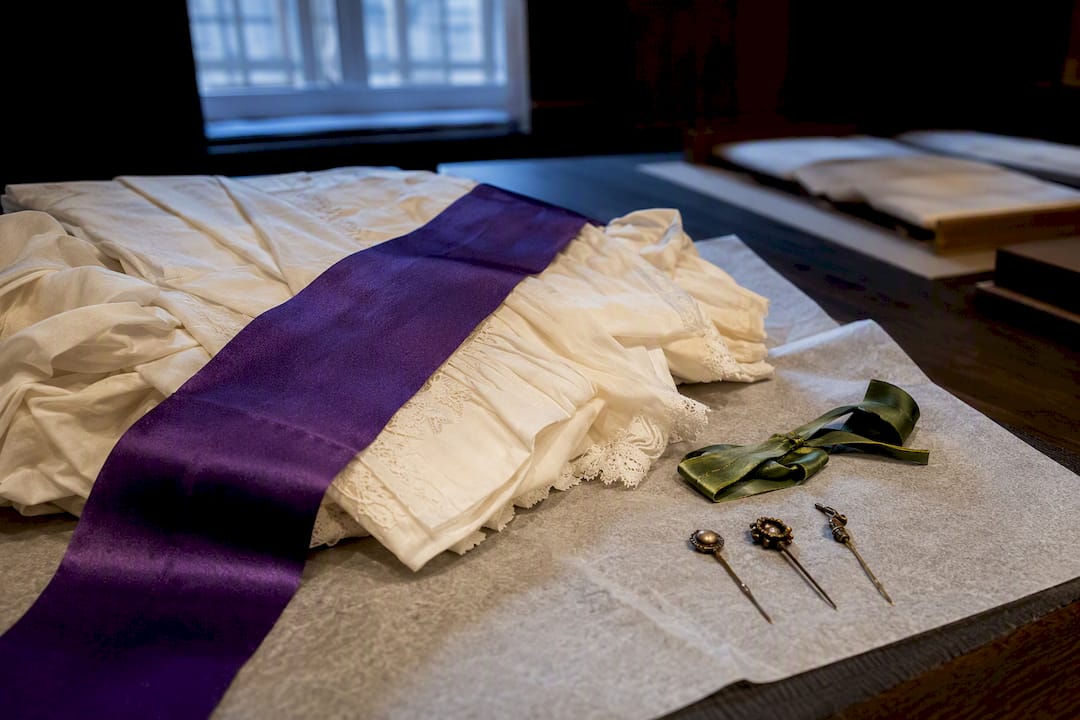
From suffragette sashes and Black Panther uniforms to Katharine Hamnett’s slogan tees and Conner Ives’s “Protect the Dolls” T-shirt, fashion has repeatedly driven social change. Each example works the same way: a garment turns a private belief into a public signal. This piece walks through the historical cases, the modern fundraising wins, and one mental health brand built entirely on that principle.
TL;DR:
- Effective fashion activism relies on clearly naming and funding specific organizations, not vague or superficial claims of support.
- Viral garment campaigns can raise substantial funds quickly when connected to trusted beneficiaries, but lasting change depends on ongoing efforts.
- Community-led initiatives and transparent donation reports build trust and ensure resources reach the intended causes effectively.
- Quiet activism, such as sustainable sourcing and community engagement, complements loud campaigns by fostering systemic change over time.
- Authentic mental health fashion emphasizes honest storytelling and resource sharing, moving beyond superficial messaging to real advocacy.
Table of Contents
- Fashion Activism Examples From History
- Contemporary Fashion Activism Examples With Measurable Impact
- How Fashion Activism Actually Creates Change
- Schizophrenic: Mental Health Fashion as Lived Activism
- What to Look for Before You Wear the Cause
- Why the Loud Examples Get Remembered and the Quiet Ones Get Ignored
- Sources
Fashion Activism Examples From History
Long before hashtags, clothing did the job of a protest sign. It marked who belonged to a movement, made allies visible to each other in a crowd, and forced bystanders to ask questions.
The suffragettes understood this better than most. Marchers wore purple for loyalty, white for purity, and green for hope, coordinating outfits and sashes so a procession of thousands read as one unified message rather than a scattered crowd. According to National Geographic’s breakdown of suffrage symbolism, that color code did more than decorate. It gave newspapers a visual shorthand and gave marchers a way to spot each other instantly in a hostile street.
Roughly six decades later, the Black Panther Party built its own uniform for a very different fight. Leather jackets, black berets, and powder blue shirts turned individual members into a recognizable, disciplined front. The National Museum of African American History and Culture documents how that dress code projected solidarity and signaled that members were organized, serious, and prepared to hold police accountable in their neighborhoods. The clothing was practical armor and political statement in one.

The Vietnam War era leaned on quieter signals. Peace symbol pins, tie-dye, and army jacket surplus worn by civilians blurred the line between soldier and protester, a visual argument against the war that required no words.
Then in 1984, British designer Katharine Hamnett skipped subtlety entirely. Her oversized cotton T-shirts printed with slogans like “58% DON’T WANT PERSHING” confronted UK nuclear policy in giant block letters, worn to meet the Prime Minister herself. That single T-shirt design is often credited with launching the modern slogan tee as a political tool, not just a fashion statement.
What connects these four moments across a century is:
- Suffragette colors turned a crowd into a movement people could see from a distance.
- Black Panther uniforms projected discipline and protection at once.
- Anti-war garb let ordinary citizens declare a position without a single spoken word.
- Hamnett’s slogan tees proved a T-shirt could put a policy demand directly in a politician’s face.
Contemporary Fashion Activism Examples With Measurable Impact
Modern fashion activism has an advantage the suffragettes never had: instant fundraising and viral distribution. The best contemporary examples pair a visible garment with a direct path to donate, so attention converts into dollars within days, not decades.
- Conner Ives’s “Protect the Dolls” T-shirt. Ives debuted the shirt backstage at London Fashion Week as a statement of trans solidarity. Celebrity photos amplified it overnight, and Vogue reported that Ives sold over a thousand shirts and donated tens of thousands of dollars to Trans Lifeline, a trans-led crisis support nonprofit. The production-to-donation pipeline moved fast because Ives had a clear beneficiary lined up before the shirt ever went viral.
- Fashion Revolution’s transparency campaigns. Rather than one garment, Fashion Revolution runs sustained public pressure, including its annual “Who Made My Clothes” campaign, pushing brands to publish supply chain data. This is fashion activism as slow institutional change rather than a single viral moment, and it has shifted how major retailers report labor practices.
- Statement tee and benefit merch partnerships. A growing model pairs a slogan design with a named nonprofit partner and a public donation percentage, so buyers can verify where their money goes before they check out. The Ives campaign is the clearest recent proof that specificity, naming Trans Lifeline directly, drives more trust and more sales than a vague “proceeds go to charity” line.
- Climate direct-action clothing. Extinction Rebellion activists have used branded red robes, “die-in” costuming, and repair-focused clothing swaps at demonstrations to dramatize environmental urgency, folding sustainable fashion initiatives directly into street protest rather than treating them as separate causes.
- Menhera-inspired mental health fashion. A subculture built around medical imagery like bandages, pills, and syringes printed on soft, pastel clothing, menhera style has become a genuine visibility movement. Vice reported that the hashtag has amassed a large number of posts across TikTok and Instagram, evidence that mental health fashion trends can spread with the same velocity as any celebrity-driven campaign.
How Fashion Activism Actually Creates Change
Every example above follows a rough sequence: visibility, then conversation, then funds or policy pressure. But the path splits into two distinct styles, and confusing them leads to disappointment.
Loud activism is the slogan tee, the runway statement, the celebrity photo that breaks the internet. It moves fast and raises money quickly, as Ives proved. Quiet activism is slower: ethical sourcing, sensory-friendly fabric choices, repair clinics, secondhand campaigns. Research on sustainable clothing describes this quieter form as building community agency over time rather than chasing a single viral spike. Neither style is superior. Loud campaigns raise emergency funds fast; quiet ones pressure entire supply chains to change permanently.
What separates effective examples from performative ones:
- The beneficiary is named and specific, not a vague “a portion of proceeds.”
- The organization leading the cause has a real voice in the design, not just a logo license.
- The messaging respects the community it represents instead of borrowing its imagery for aesthetics alone.
Pro Tip: Before buying an activism shirt, search the named nonprofit directly and check whether it confirms the partnership on its own site. Genuine campaigns are almost always mentioned by the beneficiary, not just the seller.
The biggest risk in this space is appropriation dressed up as allyship, borrowing a movement’s colors or symbols with no funding, no consent, and no lasting commitment behind it.
Schizophrenic: Mental Health Fashion as Lived Activism
Mental health fashion trends are increasingly following the Ives playbook: wearable, visible, and tied to a real cause. Schizophrenic built its entire model around that idea years before it became a trend.
Michelle Hammer founded Schizophrenic.NYC after her own schizophrenia diagnosis, turning bold, sometimes confrontational graphic art into apparel meant to be noticed and questioned in public. That impulse mirrors the “ice-breaker” effect researchers describe in menhera fashion: a wearable signal that invites a conversation without forcing anyone to explain their diagnosis first.
The product range reflects that same philosophy:
- Slogan T-shirts and tank tops designed to prompt questions rather than hide a diagnosis
- Pillboxes and accessories that normalize daily medication routines instead of treating them as shameful
- Original artwork sold as wearable pieces, extending Michelle’s own work beyond a canvas
- Community initiatives like The Schizophrenia Collective, which push the brand past merchandise into shared advocacy space
Moving from performative messaging to real community value means going further than a clothing line that just prints a slogan. It means public speaking, honest storytelling, and resources that outlast a single purchase.
What to Look for Before You Wear the Cause
Every example in this list, from a 1913 sash to a 2026 T-shirt drop, hinges on the same test: does the garment lead somewhere real?
- Verify the beneficiary. Confirm the named organization actually receives funds, not just a vague mention on a product page.
- Check donation transparency. Look for a stated dollar amount or percentage, the way Ives publicly reported his Trans Lifeline total.
- Favor community-led organizations. Causes run by the people they represent tend to direct resources more accurately than outside intermediaries.
- Watch for appropriation. A design borrowing a movement’s imagery without its involvement is a red flag, not a tribute.
- Participate beyond the purchase. Share the campaign, volunteer with the named nonprofit, or donate directly alongside buying.
A shirt starts the conversation. What happens after you put it on is what turns that conversation into support, funding, or policy pressure.
Ready to make your own wardrobe part of the conversation? Schizophrenic’s mental health awareness tank tops are built on the same principle behind every example in this article: visibility that opens a door instead of just making noise.
Why the Loud Examples Get Remembered and the Quiet Ones Get Ignored
The conventional wisdom treats fashion activism as a series of viral moments, and that framing does the movement a disservice. Conner Ives’s $70,000 result is remarkable, but it worked because Trans Lifeline already existed as a stable, trusted institution ready to receive that money the moment attention arrived. Viral moments without that infrastructure just generate noise.
What gets underrated is the unglamorous work: Fashion Revolution’s years of supply chain pressure, or a mental health brand that shows up at the same conversations long after a launch week ends. Those efforts rarely trend, but they change how entire industries behave.
If you take one thing from this list, prioritize the beneficiary over the design. A great slogan with no real partner behind it is just merchandise wearing activism as a costume. A modest shirt tied to a real organization, run by people with lived experience, will outlast every trend cycle built on aesthetics alone.
— Michelle
Sources
- Decoding the symbols of the women’s suffrage movement | National Geographic
- Black Panther Party: Challenging police and promoting social change | NMAAHC
- How Conner Ives raised tens of thousands for trans rights with a backstage T-shirt | Vogue
- Fashion Revolution
- Menhera fashion is opening conversations around mental health | Vice
Recommended
- The Role of Clothing in Advocacy: A 2026 Guide
- Wearable Art Activism: Make Fashion Your Message
- The Schizophrenia Collective: Reducing Stigma Through Fashion and Art
- Confronting schizophrenia stigma, one T-shirt at a time