Social contact between people with lived experience and the public is the single most reliable driver of stigma reduction, and it works best when survivors themselves lead the design and delivery. The most effective anti stigma campaign ideas combine that principle with a mix of story booths, video testimonies, peer-led workshops, myth-busting content, wearable-art pop-ups, workplace training, and community partnerships. Below, you’ll find a planning checklist, realistic ways to measure impact, and real-world examples to adapt.
TL;DR:
- Face-to-face social contact led by lived-experience individuals remains the most effective strategy for reducing stigma compared to education or protests.
- Campaign activities like peer-led social media takeovers, myth-busting posts, and wearable art generate higher engagement when prioritizing direct interaction with people who have lived experience.
- Measuring success requires tracking immediate engagement and conducting follow-up attitude or behavior surveys weeks later, recognizing the modest impact of one-off efforts.
- Ethical practices include securing explicit consent, fair payment, and post-event follow-up to prevent harm and ensure respectful storytelling.
- A phased plan starting with small, measurable activities within 30 to 90 days, aligned with the WHO four-step process, is key for sustainable stigma reduction efforts.
Table of Contents
- Anti Stigma Campaign Ideas Ranked by Effort and Impact
- How to Plan a Campaign Using the WHO Four-Step Process
- Messaging That Reduces Stigma (and What to Avoid)
- Choosing the Right Channels for Each Audience
- Measuring Whether Your Campaign Actually Worked
- Case Examples and a Publisher Template You Can Adapt
- Your Next 30, 60, and 90 Days
- What Wearable-Art Activism Actually Teaches You
- Wearable Merch as a Legitimate Campaign Tool
- Sources
Anti Stigma Campaign Ideas Ranked by Effort and Impact
Not every organization has a $50,000 media budget, and honestly, most of the campaigns that move people don’t need one. What matters more than budget is whether the activity puts people face to face, or at least screen to screen, with someone who has lived the experience they’re trying to understand. Research on stigma change strategies consistently ranks social contact above education-only or protest-only approaches, and face-to-face contact tends to produce the largest shifts in prejudice. That single fact should shape almost every idea on this list.
Here are the activities worth building, organized from lowest lift to biggest production.
- Peer-led social media takeovers. The goal is simple visibility with a human face attached. Hand your Instagram or TikTok account to someone with lived experience for a day, let them post unscripted, and pair it with a pinned Q&A. Budget: a small amount may be spent for boosted posts. Track one metric: saves and shares, which signal that people found the content worth passing along, not just scrolling past.
- Myth-busting carousel posts. Pick one persistent myth (people with schizophrenia are violent, medication changes personality, recovery is impossible) and dismantle it in five slides using plain language and a cited source. Involve a clinician and a peer reviewer so the tone stays accurate and warm. Budget: design time only. Track click-through to a resource page.
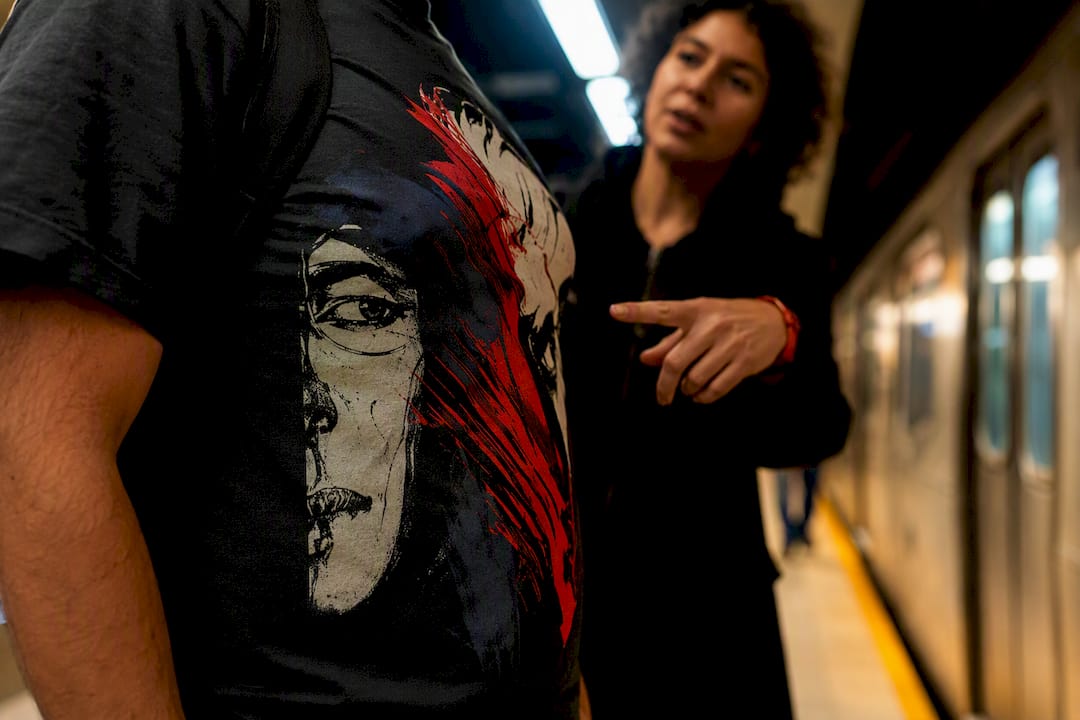
- Wearable conversation-starters. A T-shirt or tote with a bold, honest message does something a pamphlet can’t: it invites a stranger to ask a question in a grocery line. This is a low-cost, high-frequency form of wearable art activism that works because it puts the message on a body, not a billboard. Budget: low cost per item. Track anecdotal conversation reports through a simple sign-up form.
- Story booths at local events. Set up a small staffed booth at a farmers market, health fair, or campus event where a trained peer volunteer shares a two-minute recovery story and invites two-way conversation. This is where storytelling in mental health recovery earns its reputation as one of the strongest contact formats available, since it creates real dialogue instead of passive viewing. Budget: moderate cost for staffing, signage, and materials. Track number of conversations logged by volunteers.
- Panel discussions with mixed audiences. Bring together someone with lived experience, a family member, and a clinician for a moderated conversation at a library, church, or community center. Equal footing on the panel matters; if the clinician dominates, the contact effect weakens. Budget: $200-$600 including honoraria. Track post-event survey responses on attitude shift.
- Short filmed testimonies. A two-to-three-minute video, shot simply and honestly, extends the reach of a single story far beyond the room it was filmed in. Multiple studies point to indirect contact, including video testimonies, as an effective complement to face-to-face formats, especially for audiences that can’t attend in person. Budget: $500-$2,000 depending on production quality. Track view completion rate, not just view count.
- Workplace or classroom training sessions. Partner with an HR department or a school counselor to run a 60-90 minute session that mixes education with a lived-experience speaker. This reaches people where they already gather, which matters more than most planners assume. Budget: variable cost depending on speaker fees. Track pre/post attitude survey scores.
- Community festivals or awareness fairs. Combine several of the smaller ideas above (story booth, wearable merch table, myth-busting posters) into a single half-day event with multiple partner organizations. Budget: variable cost depending on venue and staffing. Track total attendance plus qualitative exit interviews.
- Multi-site media campaigns. For organizations with real reach, a coordinated push across transit ads, local news partnerships, and social video can extend a strong story to thousands of people. This only works if the story itself was built with lived-experience leadership from the start; a polished ad campaign built around a stock narrative tends to fall flat or, worse, reinforce stereotypes. Budget: larger budgets starting from a moderate baseline.
Every idea above works better when the person sharing their story controls the framing, the pacing, and the decision to stop. If a storyteller looks uncomfortable or the narrative starts to feel extractive, that’s a signal to pause and check in, not push through for content’s sake.
Pro Tip: Rotate which lived-experience voice leads each activity. A single spokesperson gets burned out fast, and audiences start to see one person’s story as the whole story instead of one version of many.
A few ground rules apply across every format on this list:
- Always compensate lived-experience contributors with honoraria, not just “exposure.”
- Get explicit, revocable consent before recording or publishing any personal story.
- Pair every myth-busting claim with a source a skeptical reader could actually check.
- Debrief with storytellers after public events; adrenaline crashes hit hours later, not during.
How to Plan a Campaign Using the WHO Four-Step Process
The WHO Mosaic Toolkit organizes anti-stigma work into four flexible stages: identify and define aims, plan and prepare, launch and learn, and reflect and proceed. It’s not a rigid checklist. The toolkit was built to bend around local culture, budget, and audience, which is exactly why it holds up across settings as different as a rural clinic and a university campus.
Step 1: Identify and define aims. Decide who you’re trying to reach and what specific belief or behavior you want to shift. “Reduce stigma” is too vague to plan around. “Increase help-seeking intent among male college students by exposing them to a peer recovery story” gives you something to build and measure.
Step 2: Plan and prepare. This is where most campaigns quietly fail before they launch. Run through this checklist before you schedule anything public:
- Consent forms signed by every storyteller, with a clear withdrawal option
- Honoraria set and budgeted, not left as an afterthought
- Safety plan in place if a storyteller becomes distressed during or after sharing
- Scripts or talking points reviewed by the storyteller, not written for them
- Partner organizations briefed on their role and any liability
- A designated point person for the storyteller to contact after the event
Step 3: Launch and learn. Run the activity, but build in a feedback loop from day one. A single feedback form or five-minute debrief after each session tells you more than any post-campaign report written months later.
Step 4: Reflect and proceed. Decide honestly whether to repeat, adjust, or retire the activity. A campaign that generated a lot of likes but zero real conversations probably needs a format change, not a bigger budget.
Here’s how the timeline looks in practice for two different scales:
Micro-scale example (30 days): Week 1, define audience and draft one myth-busting post. Week 2, recruit and brief one peer storyteller. Week 3, launch the social takeover and story post. Week 4, review engagement and decide whether to repeat monthly.
Small-scale example (90 days): Days 1-20, recruit a three-person panel and secure a venue. Days 21-45, prepare consent forms, honoraria, and promotional materials. Days 46-70, run the event and collect same-day feedback forms. Days 71-90, analyze results and draft a repeat-or-revise recommendation.

Messaging That Reduces Stigma (and What to Avoid)
Language choices decide whether a campaign humanizes someone or accidentally others them, and the difference is often a single word. The Lancet Commission’s framing specifically warns against “us versus them” language, since it reinforces the exact separation stigma campaigns are supposed to dismantle.
Do:
- Use person-first language (“a person living with schizophrenia,” not “a schizophrenic”)
- Center recovery and capability, not just diagnosis
- Let the storyteller define their own narrative arc
- Name shared goals (“we all want workplaces where people can ask for help”)
Don’t:
- Frame the public as saviors and people with mental illness as passive recipients
- Use clinical jargon in public-facing materials without translation
- Lead with worst-case scenarios or crisis imagery
- Promise a cure or imply recovery looks the same for everyone
A few sample framings you can adapt directly:
- Social post: “Recovery isn’t a straight line, and that’s okay. Here’s what mine looked like.”
- Event intro: “Tonight isn’t about fixing anyone. It’s about listening to someone who’s already done the hardest part.”
- Workplace notice: “Asking for support at work isn’t a weakness. It’s what strong teams do.”
- Myth-buster headline: “Medication doesn’t erase who you are. It gives you room to be more of who you are.”
Pro Tip: Skip specific diagnostic details or medication names in public materials unless the storyteller explicitly wants them included. Person-first, plain language builds more trust than clinical precision ever will.
Choosing the Right Channels for Each Audience
A story that lands with college students on TikTok will likely fall flat in a printed newsletter aimed at retirees, and that’s not a failure of the story. It’s a mismatch of channel. WHO’s own guidance puts it plainly: meet people where they already are instead of asking them to come to you.
Here’s a rough channel map by audience:
- Students: short-form video (TikTok, Instagram Reels), campus posters, orientation sessions
- Clinicians: continuing education credits, grand rounds presentations, professional newsletters
- Employers: HR-partnered lunch-and-learns, LinkedIn posts, printed workplace guides
- Families: community center events, faith-group partnerships, printed take-home materials
- General public: local news features, transit ads, farmers market booths, library talks
Accessibility deserves real attention here, not an afterthought line. Captioning every video is non-negotiable, since a large share of social video is watched with the sound off. Materials should sit around a sixth-to-eighth-grade reading level, and venues need to be physically accessible, not just centrally located. If your audience includes non-English speakers, translate core messages rather than relying on a single English-language flyer stapled to a bulletin board.
A low-cost channel plan might combine three Instagram posts, one printed flyer at a library, and one in-person story booth over a single week. A medium-reach plan could add a local news pitch, a short filmed testimony distributed across platforms, and a workplace training session booked a month out.
Measuring Whether Your Campaign Actually Worked
Most organizations either skip evaluation entirely or try to measure something unmeasurable, like “changed how the whole city thinks about mental illness.” Neither approach helps you improve. Realistic evaluation splits into two timeframes.
Short-term metrics include reach (views, attendance), engagement (shares, comments, conversations logged at a booth), and qualitative feedback collected immediately after an activity. Medium-term metrics require a validated attitude or help-seeking scale administered before and after exposure, ideally with a follow-up weeks later to check whether the shift held.
Keep evaluation cheap and specific:
- A five-to-ten item pre/post survey mixing attitude statements with a behavioral intention question (“How likely are you to encourage a friend to seek help?”)
- A brief feedback form at story booths asking what surprised the visitor most
- An A/B test of two message framings on the same platform to see which drives more saves or shares
- Six to ten exit interviews after a larger event to catch nuance a survey misses
Set your expectations honestly. Critical reviews of anti-stigma campaigns find that most produce only small-to-moderate short-term attitude changes, and single-exposure campaigns rarely create durable shifts on their own. That’s not a reason to skip the work. It’s a reason to plan for repetition instead of a one-off event and calling it done.
Case Examples and a Publisher Template You Can Adapt
Two patterns show up again and again in successful campaigns documented through the WHO Mosaic case studies. The first involves community-based contact programs where a small, consistent group of storytellers rotates through schools and workplaces over months, not weeks, building familiarity rather than relying on a single splashy event. The second involves partnerships between mental health organizations and local media, where a newsroom commits to ongoing, accurate coverage instead of a one-time feature timed to an awareness month.
Both share what researchers call the active ingredients of effective social contact: equal status between the storyteller and the audience, a real recovery narrative rather than a polished highlight reel, room for two-way conversation, and a shared goal that isn’t “fix the person with the diagnosis” but “build a community where asking for help is normal.”
A practical, low-cost version of this looks like a wearable-art pop-up, and it’s a format worth understanding in detail since it’s genuinely replicable at almost any budget.
The full activation typically runs on a one-to-two day timeline with a $500 to $5,000 budget, depending on venue size and whether you’re producing merch or sourcing it. Ethical practice throughout requires informed, revocable consent, fair payment for every storyteller’s time, a safety plan for anyone who becomes distressed, and a follow-up check-in days after the event, not just a thank-you email sent the same night.
- Consent forms should specify exactly where content will be used and for how long.
- Honoraria rates should be set before recruitment, not negotiated per person.
- A named point of contact should follow up with storytellers within a week.
Your Next 30, 60, and 90 Days
Start small enough to actually finish. In the first 30 days, define your audience and one measurable aim, then recruit a single lived-experience partner and draft your consent and honoraria process. In days 31 to 60, run a pilot activity, whether that’s a social takeover, a story booth, or a workplace session, and collect same-day feedback. In days 61 to 90, review what worked, adjust the format, and decide what to repeat monthly or quarterly.
Finding lived-experience collaborators usually starts closer than expected: local NAMI chapters, peer support organizations, clubhouse programs like Fountain House, and university disability or wellness offices all maintain networks of people willing to share their story, provided they’re paid fairly and treated as partners, not props.
For structure beyond this list, the WHO Mosaic Toolkit offers full planning templates, and reviewing real recovery stories can help you calibrate what an honest, non-exploitative narrative actually sounds like before you ask someone else to share theirs.
What Wearable-Art Activism Actually Teaches You
What surprised me most about running wearable-art campaigns wasn’t the fashion side. It was how often a stranger stopped me on the subway to ask about a shirt, and how that thirty-second exchange did more than a week of polished social content. Managing expectations matters here: a bold design starts conversations, it doesn’t end stigma in one afternoon, and treating it that way sets communities up for disappointment.
The transferable lesson is this: track conversations, not just impressions. A shirt seen by five hundred people that sparks zero real dialogue taught you less than one seen by fifty that sparked ten honest questions. Sustainability comes from converting those small conversations into repeat participation, whether that’s someone showing up to a second event or sharing their own story for the first time.
If you’re building something similar, look at how art has been used to express a journey with schizophrenia for a sense of what honest, first-person visual storytelling can look like in practice.
— Michelle
Wearable Merch as a Legitimate Campaign Tool
There are plenty of ways to run a stigma-reduction campaign without merch involved, story booths and panels work fine on their own. But if you want a tool that starts conversations passively, all day, without a staffed table, wearable art does something a flyer can’t: it travels. A mental health awareness brand built its model around that idea, designing pieces meant to spark a question from a stranger rather than sit quietly in a closet.
Used well, merch supports a campaign instead of becoming its whole point. Proceeds can help cover honoraria for lived-experience storytellers or fund peer program costs, and the message on the shirt should come from someone who’s actually lived it, not a marketing team guessing at what sounds edgy. Browse the mental health tank tops built for exactly this kind of conversation-starting use, or visit the stigma-reduction resource page for adaptable materials to pair with your next event.
Sources
A short set of resources will do more for your planning than a dozen generic guides:
- WHO Mosaic Toolkit to End Stigma and Discrimination in Mental Health
- Ending discrimination against people with mental and substance use disorders: The evidence for stigma change (NCBI / WHO report)
- A Call to Action. A Critical Review of Mental Health Related Anti-stigma Campaigns (Frontiers in Public Health)
- Developing the WHO Mosaic Toolkit to End Stigma and Discrimination in Mental Health (Springer Nature)
This article is general information, not a substitute for advice from a qualified doctor. Consult a qualified healthcare professional about your own circumstances before acting on anything here.
Recommended
- What Is Anti-Stigma Art? A Guide for Advocates
- Wearable Art Activism: Make Fashion Your Message
- The Schizophrenia Collective: Reducing Stigma Through Fashion and Art
- How I’ve used art to express my journey with schizophrenia and reduce stigma around mental illness