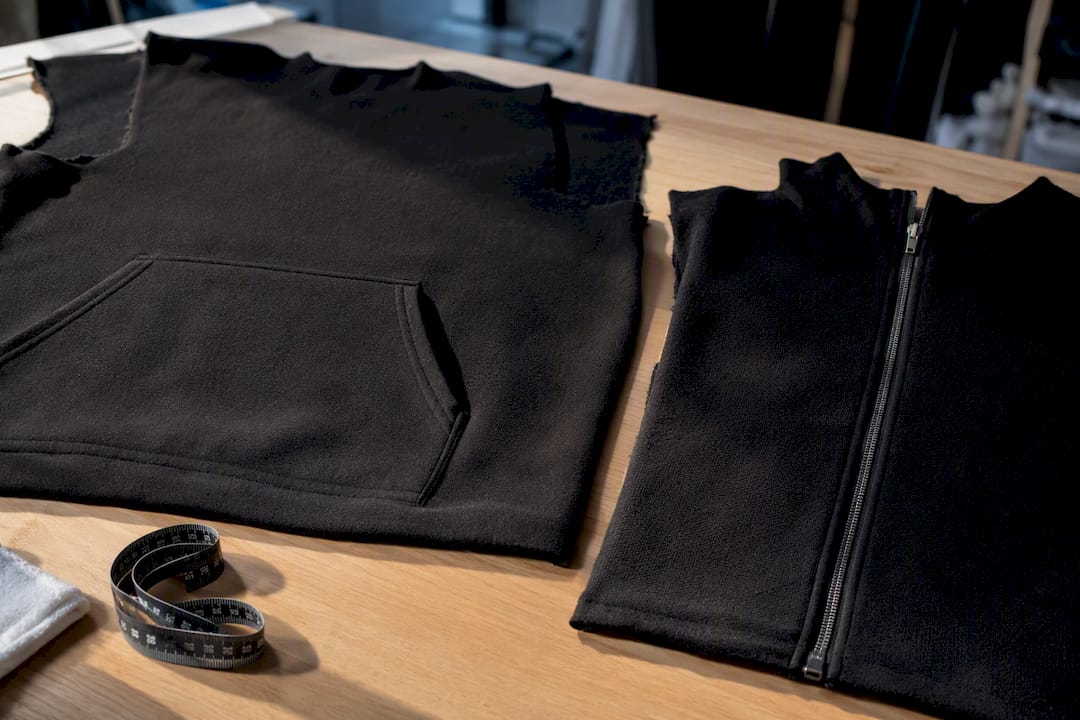
Pick a pullover when warmth and a clean graphic front matter most; pick a zip-up when you need temperature control and easy layering. If you spend long stretches outside in the cold, the pullover wins on heat retention. If your day moves between heated buildings, transit, and outdoor stops, the zip-up’s adjustability serves you better.
TL;DR:
- A pullover hoodie provides better insulation and a seamless front, making it ideal for cold weather or statement designs, especially with heavyweight fleece.
- Zip-up hoodies excel at temperature control and layering, making them more suitable for fluctuating weather and indoor-outdoor transitions.
- Fabric weight, indicated by GSM, ranges from lightweight (200-300 GSM) for breathability to heavyweight (350-500+ GSM) for winter, influencing warmth and bulk.
- Zippers in zip-ups can fail over time, so checking zipper quality and reinforcement is crucial before purchase; pullovers avoid this mechanical risk.
- The choice largely depends on use case: pullovers prioritize warmth and bold graphics, while zip-ups focus on versatility and layered wear.
Table of Contents
- Pullover vs Zip Hoodie: The Quick Comparison
- Pullover Hoodie: Strengths, Weaknesses, and When to Buy One
- Zip Hoodie: Strengths, Weaknesses, and When to Buy One
- Materials and Fabric Weight: What GSM Actually Tells You
- How to Choose: A Decision Framework and Shopping Checklist
- Style and Fit Tips: Wearing Each Hoodie on Purpose
- Where Each Hoodie Style Actually Comes From
- Washing, Drying, and Repairing Each Style
- What Should You Expect to Pay?
- Why Hoodies Matter for Advocacy Wear
- Shop Advocacy Hoodies Built for Real Comfort
- Sources
- FAQ
Pullover vs Zip Hoodie: The Quick Comparison
The two styles solve different problems, and the differences show up the moment you put one on.
A pullover hoodie traps more heat because its front panel has no gap. The continuous fabric eliminates the zipper seam that lets cold air sneak in on a zip-up, and its kangaroo pocket doubles as a wind block for your hands and midsection. A zip-up trades some of that warmth for control. You can leave it open, half-zipped, or fully closed, which matters more than raw insulation on days when the temperature swings 20 degrees between morning and afternoon.
Here’s how the two stack up on the factors that actually affect a purchase decision:
- Warmth: Pullover holds heat better at the same fabric weight.
- Versatility/layering: Zip-up adapts faster to changing temperatures and layers over shirts without removal.
- Ease of use: Zip-up goes on and off without disturbing hair, glasses, or earrings; pullover requires a head-first pull.
- Durability: Pullover has one less mechanical part to fail; zip-up depends on zipper quality.
- Pockets: Pullover’s kangaroo pocket is warmer but less secure; zip-up’s side pockets close more securely on some styles.
Pullover Hoodie: Strengths, Weaknesses, and When to Buy One
A pullover earns its reputation as the warmer option because there’s no interruption in the fabric across your chest. The heavier the fabric, the more that matters. Below roughly 300 GSM, the difference between a pullover and a zip-up narrows. Above 350 GSM, the pullover’s advantage becomes obvious, especially in wind.
The kangaroo pocket isn’t just cosmetic. It adds a second layer of fabric over your stomach, and it’s the reason pullovers show up so often in cold-weather streetwear. That same unbroken front is also why pullovers dominate as a canvas for bold graphics. If you’re buying a hoodie because the design on it matters, a pullover displays that design without a seam cutting through it.
On durability, pullovers often have a slight edge at lower price points simply because there’s one fewer moving part that can break. No zipper means no slider to jam, no teeth to misalign, no track to wear out.
Pro Tip: For maximum warmth without extra bulk, look for a double-layer hood and a mid-to-heavy GSM brushed fleece (roughly 350 to 450 GSM) rather than a single-layer budget fleece that looks thick but insulates poorly.
Buy a pullover for winter outer layers, statement pieces you want people to notice, or anything you’ll wear under a coat where zipper bulk would just get in the way.
Zip Hoodie: Strengths, Weaknesses, and When to Buy One
A zip-up’s biggest advantage is control. You decide how much heat to let out, minute by minute, without taking the thing off. Half-zip it on a brisk walk, zip it fully once the wind picks up, leave it open once you’re back inside. That flexibility is why zip-ups adapt better to variable weather and daily temperature swings than pullovers do.
Layering is where zip-ups genuinely shine. Wear one open over a T-shirt, a polo, or a button-down, and the shirt underneath stays visible. That makes a zip-up more of a layering tool than a standalone statement piece, and it’s a big reason commuters and gym-goers reach for one first.
The trade-off is mechanical risk. Zippers fail. Sliders jam, teeth misalign, and cheap zipper tape frays with repeated washing. Before buying, check whether the zipper is metal or molded plastic, whether the slider feels solid, and whether there’s reinforced stitching along the front seam to keep the zipper from sagging over time.
Pro Tip: Run the zipper up and down a few times before buying in-store, or check reviews for zipper complaints if you’re shopping online. A smooth zipper is often the difference between a hoodie that lasts three years and one that fails in three months.
Zip-ups fit commuters, gym-goers, and anyone whose day involves moving between indoor and outdoor spaces repeatedly.

Materials and Fabric Weight: What GSM Actually Tells You
GSM, or grams per square meter, is the one spec on a product page that tells you more than the marketing copy does. It measures how much fabric you’re actually getting, and it predicts warmth and bulk better than words like “cozy” or “premium.”
Rough bands to shop by:
- Lightweight (roughly 200 to 300 GSM): Breathable, good for layering, mild weather, or a zip-up you’ll wear over a shirt indoors.
- Midweight (roughly 300 to 350 GSM): The most common range for everyday hoodies, balancing warmth and breathability.
- Heavyweight (350 to 500+ GSM): Built for cold-weather outer layers, most common in pullovers meant to work as your primary winter jacket alternative.
Fabric type matters as much as weight. Fleece-backed cotton insulates well but breathes less, which makes it better for stationary cold than active movement. French terry is lighter and more breathable, which is why it shows up in zip-ups meant for layering rather than standalone warmth. Brushed cotton sits in between, offering a softer hand feel at a moderate weight.
The rule of thumb worth remembering: go heavier on GSM when you want a pullover to function as real winter warmth, and go lighter when you want a zip-up to slide easily under a coat or over a shirt.

How to Choose: A Decision Framework and Shopping Checklist
Start with one question: are you buying for warmth, or are you buying for flexibility? That single answer resolves most of the decision before you even open a product page.
From there, work through this checklist:
- Identify your primary use. Outdoor cold-weather wear points to a pullover; commuting or gym use points to a zip-up.
- Check your daily temperature range. A swing of more than 15 to 20 degrees favors a zip-up’s adjustability.
- Look for the GSM listed on the product page. No GSM listed is a small red flag. It often means the brand doesn’t want you comparing fabric weight to competitors.
- Inspect zipper details if buying a zip-up. Metal sliders and reinforced seams last longer than molded plastic.
- Check pocket type. Kangaroo pockets warm your hands better; side pockets on some zip-ups secure items more reliably.
- Consider graphic placement. A large front design reads cleaner on a pullover’s unbroken panel.
- Confirm fit against your layering plans. If you’ll wear it under a coat, size for the layers underneath, not just your bare frame.
Cheap-feeling snaps, a hood with no drawstring reinforcement, or vague fabric descriptions (“soft fleece feel”) without a GSM number are signs to move on to a different listing.
Style and Fit Tips: Wearing Each Hoodie on Purpose
A pullover reads as streetwear the moment the graphic takes over the front. Pair it with a structured coat, straight-leg denim, and clean sneakers, and it stops looking like loungewear and starts looking like a deliberate outfit.
Zip-ups work best as a layering frame rather than the star of the look:
- Wear one open over a plain tee for a casual, easy silhouette.
- Half-zip over a polo or button-down for a smarter, transitional look.
- Choose a slightly oversized pullover for a relaxed streetwear silhouette, or a fitted zip-up for a cleaner, athletic line.
- Watch hood size and shoulder seams. Oversized hoods can swallow a smaller frame, while narrow shoulder seams on a zip-up can restrict layering underneath.
Where Each Hoodie Style Actually Comes From
The pullover hoodie traces back to 1930s workwear, originally made by Champion for laborers in cold New York warehouses before it migrated into college athletics and, decades later, hip-hop and skate culture. Its unbroken front became a canvas almost by accident. Once graphic printing caught on in the 1970s and ’80s, brands realized nothing displayed a design better than a hoodie with no seam interrupting it.
Zip-up hoodies grew out of athletic wear, favored for their ease of removal between drills or workouts. Coaches and trainers liked them because a player could regulate body heat mid-session without pulling anything over their head. That functional root is still visible today. Zip-ups dominate gym locker rooms, running trails, and commuter routes for the same reason they were adopted decades ago.
Culturally, the two have split into slightly different roles. The pullover became the uniform of skate and hip-hop culture, largely because of its graphic real estate, while the zip-up carved out space in fashion-forward and athletic circles, now reappearing in cropped cuts and unexpected fabrics on runways. Neither style replaced the other. They just settled into different jobs, which is exactly why the “which one is better” debate never really resolves. It depends on what job you’re hiring the hoodie to do.
Washing, Drying, and Repairing Each Style
Pullovers are the lower-maintenance option simply because there’s nothing mechanical to protect. Wash inside out on cold or warm water to preserve any printed graphic, and skip high heat in the dryer, which breaks down both fabric fibers and ink over time. A tumble on low or a flat air-dry keeps a heavyweight fleece from matting.
Zip-ups need a bit more care. Always zip the hoodie fully before washing. An open zipper flops around in the machine and can snag on other fabric, its own drawstring, or the washer drum, which speeds up wear on the teeth and tape. Turn it inside out, wash cold, and avoid fabric softener on the zipper area, since residue buildup can make the slider stick over time.
Repairs differ sharply between the two. A pullover’s most common failure points are the drawstring and the cuffs, both easy fixes with a needle and thread or a quick trip to a tailor. A zip-up’s zipper is a more involved repair. A stuck slider can sometimes be freed with a little graphite or lip balm rubbed on the teeth, but a fully broken zipper usually means replacing the whole unit, which costs more in labor than the hoodie itself if it was a budget piece. That’s part of why zipper quality matters so much at the point of purchase, not after the fact.
What Should You Expect to Pay?
Price ranges for both styles overlap more than most shoppers expect. Budget pullovers and zip-ups both start around $20 to $35, usually in lighter fabric weights with basic screen-printed graphics. Midrange options, typically 300 to 350 GSM with better stitching and more durable zippers, run $40 to $70.
Above that, premium pullovers and zip-ups both climb into the $80 to $150+ range, where the difference in price usually reflects fabric quality, hood construction, and print methods like puff printing or embroidery rather than the style itself. A heavyweight pullover at 400+ GSM with a double-layer hood often costs more than a midweight zip-up, even though the zip-up has the added expense of hardware, because fabric weight drives cost more than the zipper does.
The one consistent pattern: a zip-up with a premium metal zipper and reinforced tape often costs more than a comparable pullover in the same fabric weight, due to zipper hardware costs. If a zip-up seems suspiciously cheap for its advertised GSM, the zipper is usually where the corner got cut.
Why Hoodies Matter for Advocacy Wear
Comfort isn’t a side note when clothing carries a message. As the founder of Schizophrenic.NYC, I built this brand around the idea that what you wear can start a conversation about mental illness before you say a word. That only works if the piece actually gets worn, at a march, a support group, or just walking down the street.
Fit and fabric decide whether a hoodie becomes a daily piece or sits in a drawer. A pullover’s unbroken front makes a message impossible to miss, which is exactly why we lean on that silhouette for our boldest designs.
— Michelle
Shop Advocacy Hoodies Built for Real Comfort
Schizophrenic.NYC’s sweatshirts and hoodies put the same warmth-versus-versatility choice you just read about into pieces designed to start a conversation, not just cover you up. Every design leans into that unbroken front-panel advantage pullovers offer, giving our schizophrenia and mental health messaging room to actually land, whether you’re at a support group, a march, or just running errands. If you’d rather show your support in a lighter layer, our mental health awareness tank tops work as an under-layer piece for warmer days or indoor events. Browse the current hoodie and sweatshirt lineup, pick the fit and message that feels like yours, and add it to your cart. Wearing the message is often the easiest way to start the conversation you’ve been putting off.
Sources
- Pullover vs Zip-Up Hoodie: Which One Should You Get? – ComfyThreads
- Zip-Up vs Pullover Hoodie: Settling the Debate Once and For All — WEAR2AM Blog
- Pullover Vs Zip-Up Hoodies: Outerwear Guide | USA Teamwear
- Hoodie — Wikipedia
FAQ
What are the key differences between pullover and zip-up hoodies?
Pullovers run warmer thanks to their unbroken front panel and kangaroo pocket, while zip-ups offer more temperature control and easier layering since you can open or close them as needed.
What is the difference between a pullover and a hoodie?
A hoodie is any hooded sweatshirt, and a pullover is one style of hoodie, specifically the version without a front zipper that you pull on over your head.
What do Americans call a pullover?
Americans typically call it a “pullover” or simply a “pullover hoodie,” though regional slang exists, like “bunny hug” in parts of Saskatchewan.
What is a hoodie with a zipper called?
It’s called a “zip-up hoodie” or “full-zip hoodie,” terms that are standard and widely understood across the U.S.
Does Schizophrenic.NYC sell both pullover and zip-up styles?
Schizophrenic.NYC’s sweatshirt and hoodie collection features advocacy-focused designs; check the category page directly for current styles and availability.
Recommended
- How to Use a Hoodie Size Guide to Get a Perfect Fit
- 10 Advocacy Apparel Ideas That Fund Causes and Keep Wearers Safe
- The Role of Clothing in Advocacy: A 2026 Guide