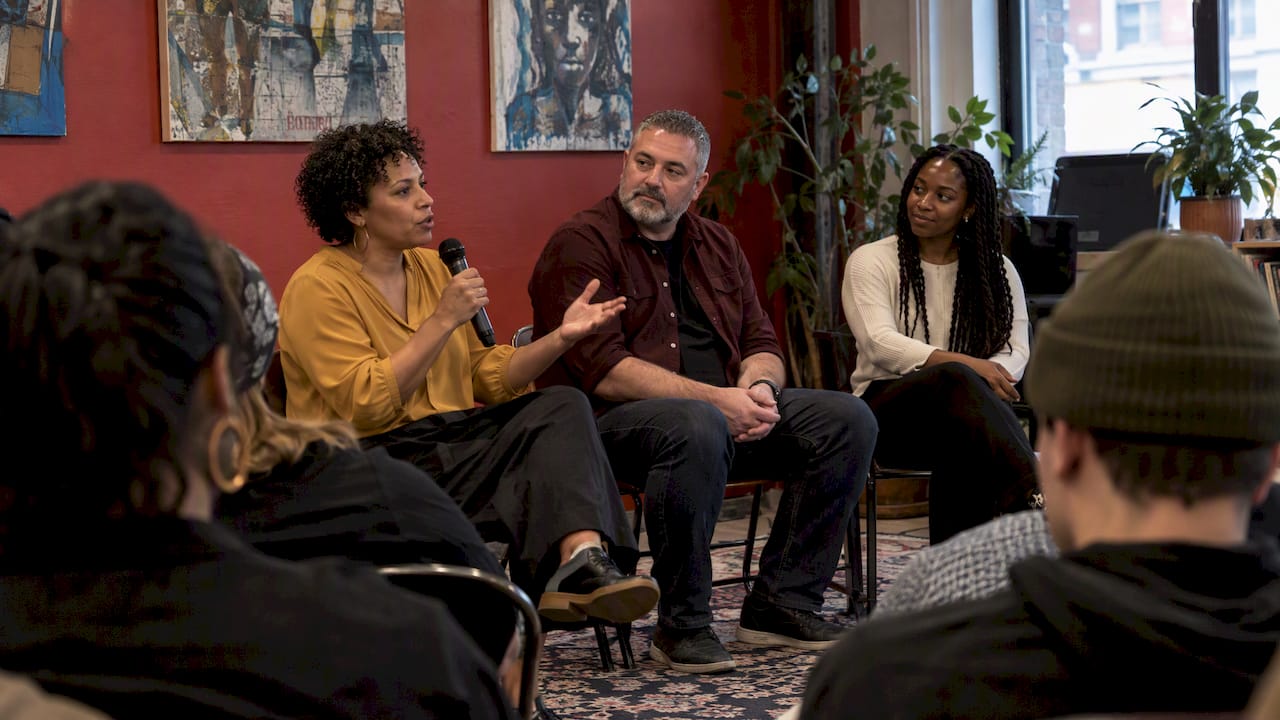
The best mental health panel questions are specific, invite a story instead of a lecture, and never ask a panelist to hand over more than they chose to share. This guide gives you question sets you can use today, grouped by the part of the event they serve, plus the safety steps that make a panel worth attending.
We built these around lived experience, because that is where we work. Schizophrenic.NYC was created by Michelle Hammer, a schizophrenia activist, and our mission is to change how people see mental illness. A good panel does the same thing in one room, in about an hour.
TL;DR
- Start with warm, low-risk questions, then move toward lived experience, then toward practical support and action.
- Ask about what helped, what hurt, and what people wish others knew. Avoid questions that demand a diagnosis, a symptom list, or graphic detail.
- Tell panelists the questions in advance and let them skip any of them.
- Panelists share stories, not medical advice. Have a printed list of resources, including 988, ready for the audience.
- Save time for audience questions and for the informal conversation before and after the event.
Table of Contents
- What makes a mental health panel work
- Before you write a single question
- Opening questions: warm and easy
- Lived-experience questions that invite honesty
- Questions for different panelists
- Questions about hope and action
- Moderator questions for follow-up
- Audience Q&A: how to run it safely
- Safety and crisis planning for your panel
- Do not turn the panel into a screening
- Our perspective
- Bring a speaker, or wear the message
- A sample 60-minute run of show
- FAQ
- Sources
What makes a mental health panel work
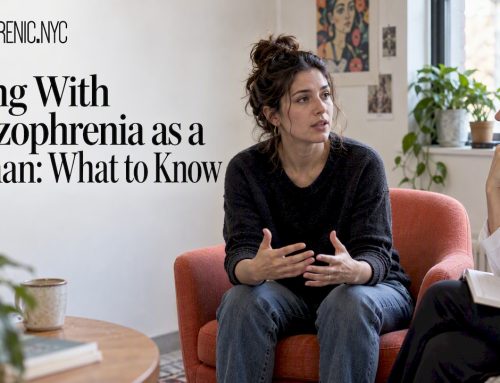
A panel is a small event: 2 to 5 panelists and a moderator discussing a set topic or list of topics. That small size is the strength. People in the audience hear someone who sounds like them, or like someone they love, speak plainly about something most of us whisper about.
Three things separate a panel people remember from one they forget:
- Questions built for stories. “What is depression?” gets a definition. “What did people around you get wrong about it?” gets a moment the room can feel.
- Preparation. Panelists who know the questions, and know their own limits, speak with more confidence and less risk to themselves.
- A plan for the audience. Some of the people listening are struggling right now, not just thinking of a friend.
The need is not abstract. In the CDC’s 2025 National Health Interview Survey, 5.4% of US adults did not receive needed mental health care because of cost, and 13.4% had been counseled by a mental health professional in the previous 12 months. Chances are that many people in your audience are somewhere in that picture.
Before you write a single question
Decide three things first, because they shape every question after.
Who is the audience? Students, employees, caregivers, clinicians, and a general community crowd need different questions. A campus panel can ask about finals and roommates. A workplace panel can ask what managers say that helps or harms.
What should people leave with? Pick one: less stigma, knowing where to get help, or knowing how to support someone. A panel that tries all three usually delivers none.
Who is on the panel? Mix perspectives if you can: a person with lived experience, a family member or friend, and a clinician or peer-support worker. Each answers the same question differently, and the contrast is where the learning happens.
If you want more on helping people tell their stories well, our guide on how to share mental health stories that reduce stigma pairs well with this one.
Opening questions: warm and easy
The first two or three questions should be easy to answer, so panelists settle in and the audience learns who is speaking.
- What brought you to this panel today?
- What do you do outside of everything we are about to discuss? What do you love?
- When you hear the words “mental health,” what is the first thing that comes to mind?
- What is one thing you hope someone in this room takes home?
Notice what these do. They treat each person as a whole human being before they are a diagnosis. That matters: guidance for NAMI-style discussions stresses that moderators should keep the space safe and avoid labels that reduce a person to a condition.
Lived-experience questions that invite honesty
This is the heart of the panel. Ask open questions and let panelists decide how deep to go.
Questions about the early days
- What did you notice first, and who, if anyone, did you tell?
- What do you wish you had known about mental health before things changed for you?
- What did you believe about mental illness back then that you no longer believe?
Questions about stigma
- What is the most hurtful thing someone has said to you about your mental health? What would you want them to say instead?
- Where have you felt stigma most: at work, at school, in your family, online?
- Do you think society treats mental health and physical health differently? Why do you think that is?
Questions about care and coping
- What helped you more than you expected?
- What coping skills do you lean on on a hard day? (Our coping skills checklist can give your panel ideas.)
- What has your experience been with medication, therapy, or peer support, and what would you tell someone just starting out?
- What does a good day look like now?
Questions about being supported
- What did the people closest to you do that helped? What did they do that, with good intentions, did not?
- If a friend suspected you were struggling, what is the best way for them to start the conversation?
These questions lean on what we know from our own work. Michelle has spoken publicly about living with schizophrenia, and the stories that land hardest are not the dramatic ones. They are the honest ones about confidence, medication, and the people who stayed. We explore why in the role of storytelling in mental health recovery.
Questions for different panelists
Not every question fits every seat. Tailor them.
| Panelist | Good question to ask | Question to avoid |
|---|---|---|
| Person with lived experience | What helped you feel understood? | What were your worst symptoms? |
| Family member or friend | What did you learn about listening? | Whose fault was it? |
| Therapist or psychiatrist | What are signs it may be time to reach out for help? | Can you diagnose what the audience member is describing? |
| Peer-support worker | What does support look like between appointments? | What medication should I ask about? |
| Employer or educator | What is one practical change that helps people stay connected? | How do you handle “problem” employees or students? |
The last column matters. Questions that ask for graphic detail, blame, or a diagnosis can hurt panelists and mislead the audience.
Questions about hope and action
End the main discussion on something people can do. Hope is not cheerfulness. It is a next step.
- What is one small thing someone in this room could do this week to support their own mental health, or someone else’s?
- What would a community that handles mental health well look like?
- What do you want people to stop doing or saying?
- What has your own journey taught you that you did not expect?
For ideas on turning a good discussion into ongoing action, see our piece on mental health community engagement ideas that work.
Moderator questions for follow-up
A moderator’s best tool is a short follow-up. Keep a few ready:
- Can you say more about that?
- What did that feel like?
- What would you say to someone hearing that for the first time?
- How did that change what you did next?
Also keep a graceful exit ready. If an answer heads toward details that could distress the audience, you can say, “Thank you for trusting us with that. Let’s shift to what helped.” Agree on this signal with panelists beforehand.
Audience Q&A: how to run it safely
Audience questions are often the most moving part and the least predictable. Collect them on index cards or through an anonymous form, and the moderator reads them aloud. This screens out personal disclosures, arguments, and requests for individual advice.
Common audience questions include:
- How do I know if what I am feeling is normal or something more?
- How can I help a friend who will not talk to me?
- Where can I find affordable care?
- What do I say if someone tells me they are thinking about suicide?
The last one deserves a prepared answer. Panelists should not give personal medical advice. Active Minds’ planning guide is direct that panelists should never give mental health advice. When a question calls for it, the moderator says something like: “We can share what worked for us, but we are not a substitute for a professional. Here is where to go.” Then point to the resource card.
Safety and crisis planning for your panel
Treat this as part of the event design, not a footnote.
Brief your panelists. Let them decide in advance what they will and will not discuss. Active Minds recommends giving presenters time to prepare their introductory statements and set boundaries, so they can share in a way that is safe for them and the audience.
Hand out a resource card. Facilitators often forget that audience members may need help for themselves. A card people can take home works better than a slide that disappears. The CDC notes that people can call or text 988, or chat at 988lifeline.org, and TTY users can use a relay service or dial 711 then 988. Add your local crisis center and support groups such as NAMI chapters.
Have a person, not just a card. Assign a trusted staff member or volunteer, ideally someone trained, to step aside with anyone who seems distressed.
Know what real crisis support looks like. Safety planning is collaborative and ongoing. NIMH’s suicide safety assessment materials describe creating a safety plan together with the patient instead of relying on a signed “no-harm contract.” That means discussing coping strategies, limiting access to lethal means, and naming personal reasons for living. If your audience includes people who want to learn how to help, crisis text support is one more way to reach someone who finds talking on the phone too hard.
If you or someone at your event is in immediate danger, call or text 988 or call 911. Do not wait for the panel to end.

Do not turn the panel into a screening
Panel questions are for discussion, not diagnosis. It is tempting to read out a checklist, a quiz, or a popular technique and call it an assessment. Don’t.
The U.S. Preventive Services Task Force states that screening for anxiety and depression is only a first step, and a positive screen is not a diagnosis. It leads to further evaluation with a health professional. The same goes for tools like the 12-item General Health Questionnaire, which researchers note can miss distress in people with long-term conditions who perceive their symptoms as their usual state.
Grounding exercises are another place to be careful. The 3-3-3 technique (name three things you see, three sounds you hear, and move three parts of your body) can help interrupt an anxiety spiral, but it is not a treatment for chronic anxiety disorders. If worry lasts for weeks, disrupts daily life, or comes with thoughts of self-harm, the person should see a psychiatrist, psychologist, or other licensed professional. Say that when you share the technique, not afterward.

Our perspective
We have sat on panels and watched what happens in the room. The questions matter, but what matters more is whether the people answering feel respected.
Here is what we have learned:
- Lead with the person. Michelle is a designer, a speaker, and an advocate who also lives with schizophrenia. A panel that introduces people by their whole lives gets more honest answers.
- Normalize the everyday. Talking about medication, routines, and coping skills as ordinary parts of life makes it easier for the audience to talk about their own.
- Make room for humor and hope. Seriousness and warmth can sit together. Laughing with someone is not laughing at them.
- Let the conversation continue. Some of the best moments happen at the coffee table afterward. Build in time for that.
We also believe in meeting people where they are. Some people will never raise a hand at a panel, but they might wear a shirt or carry a pillbox that starts a conversation for them. That is why we make wearable art, and why we keep writing about how to foster open dialogue on mental illness.
— Michelle
Bring a speaker, or wear the message
If you are planning an event and want a voice with lived experience on your stage, you can hire Michelle for public speaking. We also have a practical guide to public speaking for advocacy if your panelists are new to the microphone.
For organizers, volunteers, and panelists who want to show support, our mental health T-shirts and pillboxes are designed to spark exactly the kind of conversation this article is about. If you are setting up a table at your event, our event booth ideas can help.
A sample 60-minute run of show
| Time | Segment |
|---|---|
| 0:00 to 0:05 | Welcome, ground rules, resource card mention |
| 0:05 to 0:15 | Introductions and warm-up questions |
| 0:15 to 0:35 | Lived-experience questions |
| 0:35 to 0:45 | Support and stigma questions |
| 0:45 to 0:55 | Audience questions from cards |
| 0:55 to 1:00 | Hope and action question, thanks, resources again |
Leave extra time before and after for people to talk. That informal time often matters as much as the formal panel.
FAQ
What are some good panel questions for a mental health event?
Start with open, story-based questions such as “What do you wish people understood about your experience?” and “What helped you most?” Mix in questions about stigma, support, and next steps. Avoid anything that asks for a diagnosis or graphic detail.
How many questions should a moderator prepare?
For a 60-minute panel, prepare eight to ten main questions and a few follow-ups, then expect to use about six. Reserve at least ten minutes for audience questions. Share the list with panelists beforehand.
What is the 3-3-3 rule in mental health?
It is a grounding technique: name three things you can see, identify three sounds, and move three parts of your body. It can help interrupt an anxiety spiral, but it is not a diagnosis or a substitute for professional care.
Should panelists give advice to the audience?
No. Panelists share their own experiences and point people toward professionals and resources. If someone is in crisis, direct them to 988 or 911 and involve your designated support person.
Sources
- Active Minds: Planning a Panel Discussion
- CDC: Early Release of Selected Estimates, 2025 NHIS
- CDC: Get Help Right Now
- NIMH: Brief Suicide Safety Assessment worksheet
- USPSTF: Anxiety and depression screening in adults
- PubMed Central: General Health Questionnaire (GHQ-12)
- ILTY: The 3-3-3 Rule for Anxiety
Recommended
- How to Foster Open Dialogue on Mental Illness
- Mental Health Conversation Starters: Friends, Teens, and Wearable Art
- Mental Health Community Engagement Ideas That Work
- Serious Questions About Life with Bipolar Disorder