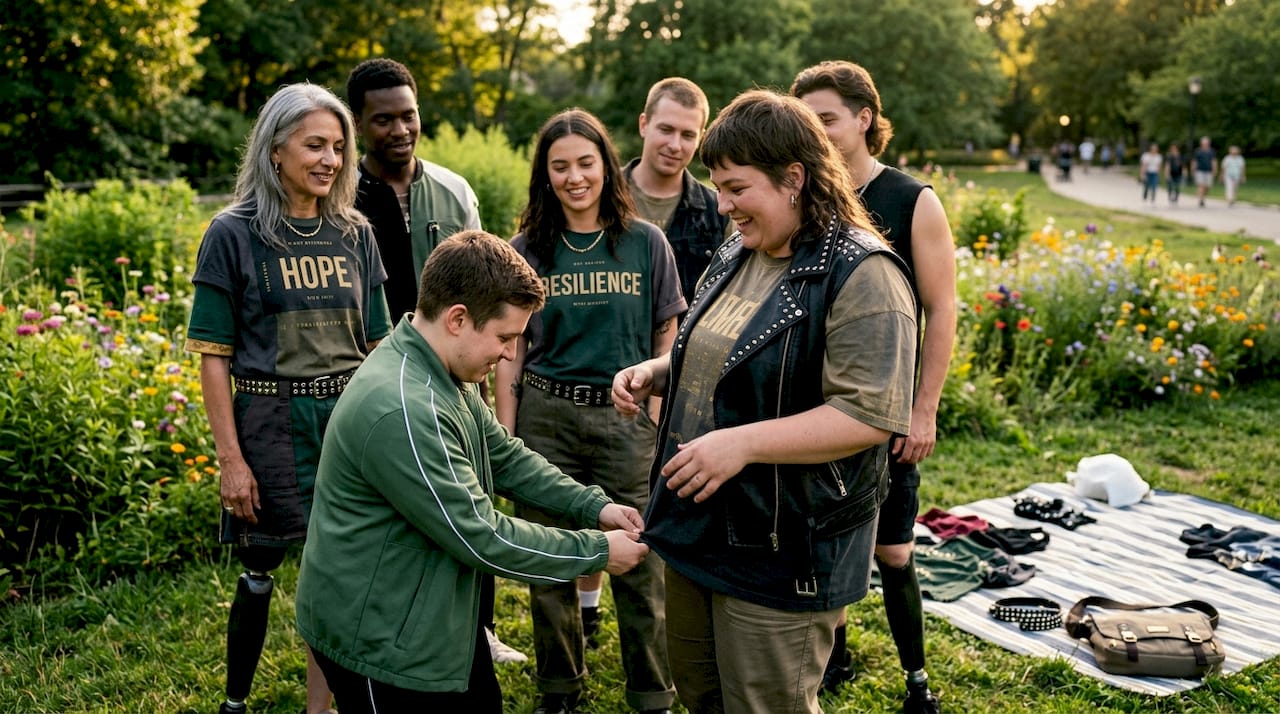
Inclusive fashion is defined as clothing designed to embrace diverse body sizes, abilities, genders, and identities, making style accessible and representative for everyone. The best examples of inclusive fashion go far beyond extended sizing. They include adaptive closures for people with disabilities, gender-neutral silhouettes, and campaigns that feature real bodies across the full spectrum of human experience. Brands like Snag Tights, Designed By Debz, and Aurushi show what genuine commitment to inclusion looks like in practice. This article breaks down the most meaningful examples, so you can recognize and support the brands doing this work right.
1. What are the best examples of inclusive fashion for size diversity?
Size inclusivity is the most visible form of inclusive fashion, but the gap between marketing and reality is wide. True size inclusivity means designing garments that fit well across every size offered, not just scaling up a sample size.

Some brands now offer sizing from 3XS to 10XL and cup sizes from A to O. That range reflects a genuine commitment to fit, not just a broader tag on the label. Designing across that spectrum requires pattern grading expertise that most mainstream brands skip entirely.
Snag Tights takes a different approach by conducting real-body fit testing across UK sizes 4 to 38. That process means actual people in every size wear and stress-test the product before it ships. The result is a garment that performs consistently, not just one that technically comes in more sizes.
- Look for brands that publish their fit-testing process, not just their size range.
- Check whether garments are graded proportionally or simply scaled up.
- Read reviews from people in larger sizes to verify real-world fit quality.
- Prioritize brands that show diverse body types in their product photography, not just on a separate “plus” page.
Pro Tip: Search for a brand’s “size guide” page and look for language about grading or fit testing. If it only lists measurements with no mention of how those measurements were verified, treat the size range with skepticism.
2. Which adaptive fashion examples show real innovation for disabilities?
Adaptive fashion is clothing designed specifically for people with physical disabilities, chronic illness, or mobility limitations. The best adaptive fashion examples come from designers who worked directly with disabled communities to understand what independence in dressing actually requires.
Designed By Debz integrates magnetic snaps and front zippers into garments that look like standard fashion pieces. These features let people dress independently without needing fine motor control. That is not a small detail. For many people, it is the difference between needing assistance every morning and not.
Singapore-based designer Elisa Lim took a participatory approach, co-creating garments with disabled individuals to address specific needs like wheelchair-appropriate cuts and easy-to-use fastenings. Her process involved diverse disabled participants informing every design decision. That method produces clothing that solves real problems rather than assumptions about what disabled people need.
“Adaptive clothing should not look like a medical product. It should look like something you chose to wear because you love it. When design starts with the person wearing it, that is exactly what happens.” — Elisa Lim’s participatory design philosophy
Aurushi goes further by subjecting their adaptive joggers to independent durability testing for friction and contact with carbon prosthetics. Standard fashion brands never conduct this kind of testing. For someone wearing a prosthetic limb, fabric durability at contact points is a functional necessity, not an aesthetic preference.
- Magnetic closures replace buttons for people with limited hand dexterity.
- Front-opening designs allow dressing from a seated or reclined position.
- Enlarged openings accommodate braces, casts, or orthotic devices.
- Adjustable waistbands and hems serve people whose bodies change due to medical conditions.
Pro Tip: When evaluating adaptive clothing brands, look for evidence of participatory design processes. Brands that interviewed or co-designed with disabled people produce more useful garments than those that adapted existing patterns.
3. How gender-neutral fashion is reshaping identity and inclusion
Gender-neutral fashion is defined as clothing designed without reference to binary gender categories, making it wearable and affirming for people of any gender identity. This is one of the fastest-growing areas of inclusive style trends, and its impact extends well beyond aesthetics.
Collections built around fluid silhouettes, neutral palettes, and unisex sizing challenge the assumption that clothing must signal gender. For non-binary and trans consumers, finding clothes that match their identity without compromise has historically required significant effort. Gender-neutral lines remove that barrier.
Runway representation of diverse identities, including models with prosthetics and visible disabilities, shifts public perception over time. Model Michael Hopkinson has advocated publicly for showing prosthetics on runways as a way to move the conversation from shame to pride. That visibility matters because fashion sets cultural norms, not just dress codes.
- Unisex sizing systems replace gendered S/M/L with body measurement charts.
- Fluid silhouettes avoid design elements coded as exclusively masculine or feminine.
- Campaign imagery features non-binary, trans, and gender-nonconforming models prominently.
- Some brands use gender-neutral language across their entire website and product descriptions.
The role of clothing in advocacy extends to identity. When a brand chooses to feature diverse identities in its campaigns, it sends a message that those identities belong in fashion. That message reaches people who have spent years feeling excluded.
4. Key features that define genuinely inclusive clothing brands
Not every brand that uses the word “inclusive” earns it. Certain design and business features separate genuine inclusive clothing brands from those using the term as marketing language.
| Feature | Why it matters |
|---|---|
| Extended sizing (3XS–10XL) | Covers the full range of human body diversity, not just a token plus-size line |
| Adaptive closures (magnetic, front-zip) | Enables independent dressing for people with limited mobility or dexterity |
| Sensory-friendly fabrics | Removes tactile barriers for people with sensory processing differences |
| Diverse modeling across all sizes | Validates fit and representation for customers who do not see themselves in standard campaigns |
| Participatory design process | Ensures garments solve real problems rather than assumptions |
| Durability testing for assistive devices | Protects people who wear prosthetics or orthotics from premature fabric failure |
Inclusive fashion campaigns increasingly feature models with disabilities, different body types, and diverse backgrounds. That shift in imagery is not cosmetic. It changes who feels welcome in a store and who believes a product will work for them.
True inclusion also requires addressing intersectionality. Disabled Muslim women, for example, face a combination of barriers that standard adaptive fashion rarely addresses. Modest adaptive clothing that also accommodates mobility aids represents a design challenge most brands have not yet solved.
5. How to choose the right inclusive fashion based on your needs
The right type of inclusive fashion depends on what you need it to do. Size inclusivity, adaptive design, and gender-neutral construction each solve different problems, and the best choice depends on your specific situation.
For broad body diversity, prioritize brands with extended sizing and documented fit-testing processes. Look for detailed size guides with actual body measurements, not just S through 4XL. Brands that show their garments on diverse bodies in standard product photography, not just a separate section, are more likely to have genuinely designed for those bodies.
For physical disabilities or mobility limitations, adaptive features matter more than size range. Seek out brands that used disability-led design to develop their products. A garment with magnetic closures designed by someone who has never spoken to a disabled person will perform differently than one co-created with twenty disabled participants.
- For wheelchair users: look for back-free designs, shorter back hems, and seated-position fit testing.
- For prosthetic users: prioritize brands that test fabric durability at contact points.
- For sensory sensitivities: seek tagless construction, flat seams, and natural fiber blends.
- For gender expression: choose brands with unisex sizing charts and gender-neutral campaign imagery.
Budget is a real factor. Disabled households face significant financial pressure. Research shows disabled households require substantially more monthly income than non-disabled households to achieve the same living standard. Affordable adaptive and inclusive options are not a luxury preference. They are a matter of equity.
Pro Tip: Community-based design is the strongest signal of quality in adaptive fashion. Before buying, search for the brand name alongside “co-design” or “disabled community” to see whether real people shaped the product.
Key Takeaways
The most effective inclusive fashion combines extended sizing, adaptive design features, and authentic representation to serve people who have historically been excluded from mainstream fashion.
| Point | Details |
|---|---|
| Size range alone is not enough | True size inclusivity requires proportional grading and real-body fit testing across the full range. |
| Adaptive design starts with community | Garments co-created with disabled people solve real problems; those designed without input often miss the mark. |
| Representation changes culture | Diverse modeling and runway inclusion shift societal norms, not just brand perception. |
| Intersectionality matters | Inclusive fashion must address overlapping identities, such as disability combined with religious or cultural needs. |
| Budget equity is part of inclusion | Affordable adaptive options are necessary because disabled households already face higher living costs. |
Why tokenism is the enemy of real inclusive fashion
I have spent years watching brands add a plus-size model to one campaign and call themselves inclusive. It does not work that way. Real inclusion shows up in the design process, not the marketing budget.
What strikes me most about the best adaptive fashion examples is how different they feel from the inside out. When Elisa Lim sat down with twenty disabled people before drawing a single pattern, she was doing something most fashion brands have never done once. That process is not complicated. It just requires caring enough to ask.
The mental health community knows this feeling well. People living with schizophrenia, depression, or anxiety are often represented in media as symbols rather than full human beings. The same thing happens in fashion. A single wheelchair user in a campaign does not mean the brand designed its clothes for wheelchair users. It means the brand knows what inclusion looks like in a photograph.
What I want to see more of is mental health intersectionality recognized in fashion spaces. Mental illness intersects with disability, identity, and body image in ways that fashion rarely acknowledges. Clothing that makes someone feel seen, capable, and proud is not a small thing. For someone managing a chronic condition, it can be the difference between a good day and a hard one.
The progress is real. Designers like Destiny Pinto are reimagining assistive devices as expressive accessories rather than medical equipment to hide. That shift in framing matters enormously. But the industry still has a long way to go before inclusion is the default rather than the exception.
— Michelle
Fashion as advocacy: what Schizophrenic does differently
Schizophrenic was built on the idea that clothing can start a conversation that changes how people think about mental illness. Founded by Michelle Hammer, the brand combines bold graphic art with mental health awareness apparel designed to reduce stigma around schizophrenia and other mental health conditions.

Every piece in the Schizophrenic collection carries a message. The T-shirts, tote bags, and accessories are not just products. They are tools for advocacy, designed to spark real conversations in real spaces. If you believe fashion can do more than cover a body, Schizophrenic’s mental health T-shirts are a place to start. Wearing your values is one of the most direct ways to show the world what you stand for.
FAQ
What is inclusive fashion?
Inclusive fashion is clothing designed to fit and represent diverse body sizes, abilities, genders, and identities. It encompasses size-inclusive designs, adaptive features for disabilities, and gender-neutral construction.
What are examples of adaptive fashion for disabilities?
Adaptive fashion examples include garments with magnetic snaps, front zippers, enlarged openings, and wheelchair-appropriate cuts. Brands like Aurushi also conduct durability testing for prosthetic contact points, which standard fashion brands do not.
How do I know if a brand is truly size inclusive?
A truly size-inclusive brand publishes its fit-testing process, uses proportional grading across its full size range, and features diverse bodies in standard product photography rather than a separate section.
What is gender-neutral fashion?
Gender-neutral fashion uses unisex sizing, fluid silhouettes, and gender-free language to create clothing that works for any gender identity. It removes the assumption that garments must signal binary gender categories.
Why does representation in fashion campaigns matter?
Representation in campaigns signals to consumers that a brand designed its products for them. Research shows that inclusive campaign imagery featuring models with disabilities and diverse body types shifts cultural norms and reduces stigma over time.
Recommended
- The Role of Clothing in Advocacy: A 2026 Guide
- Top 3 Freudian Fashion Alternatives 2026
- Schizophrenia awareness just got fashionable thanks to this clothing line | Schizophrenic.NYC Mental Health Clothing Brand
- The Schizophrenia Collective: Reducing Stigma Through Fashion and Art | Schizophrenic.NYC Mental Health Clothing Brand