Mental health community engagement is defined as the collaborative process of connecting individuals, organizations, and local networks to reduce stigma, share resources, and build lasting support systems around mental wellness. The most effective mental health community engagement ideas share three qualities: they are low-pressure, accessible, and anchored in trusted relationships. Whether you are a community organizer, a mental health advocate, or someone who simply wants to help, the strategies below draw on guidance from SAMHSA, NAMI, and NNLM to give you a practical, repeatable playbook.
1. What are the most effective mental health community engagement activities?
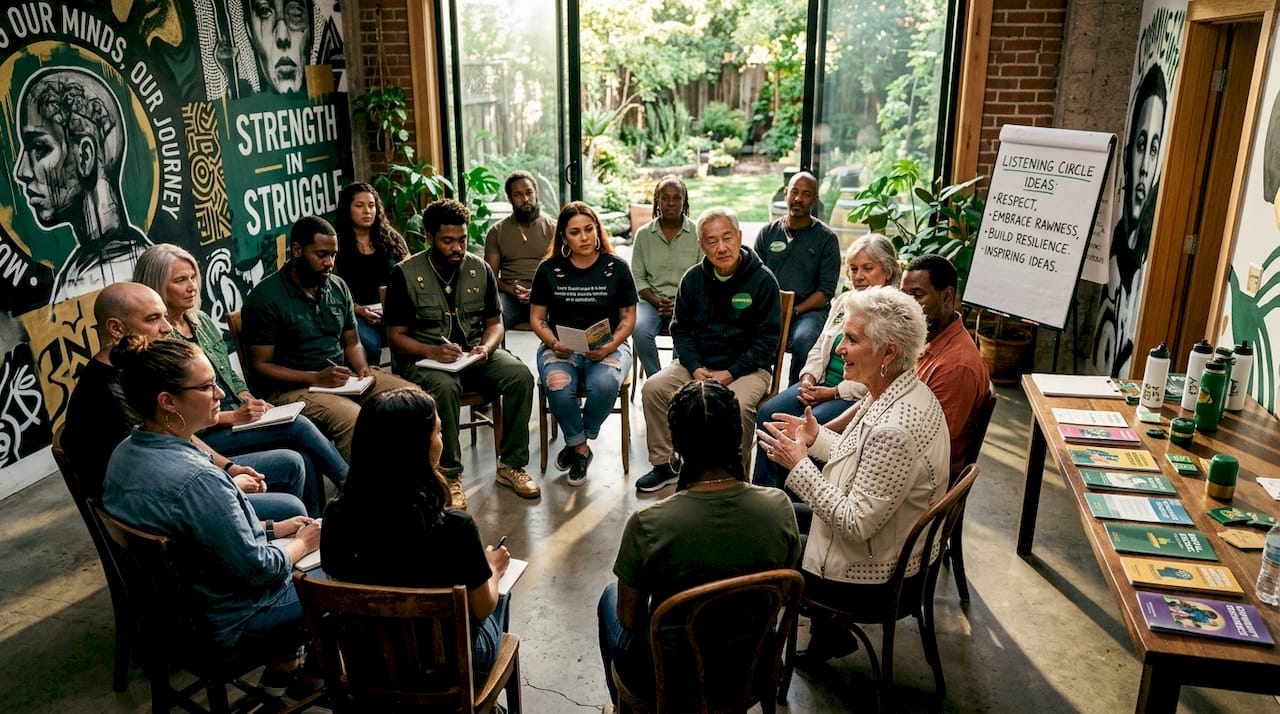
The strongest community mental health engagement ideas work because they meet people where they already feel comfortable. Peer mentoring groups, educational workshops, and recreational programs all reduce stigma by normalizing conversation rather than clinicalizing it. Below are the activities that consistently deliver results.
Peer support groups and mentoring
Peer mentoring is the single most trust-building activity available to community organizers. When someone with lived experience of mental illness guides a newcomer, the message lands differently than any pamphlet or professional presentation. SAMHSA guidance emphasizes stigma reduction through peer mentoring and trauma-informed community development. This means your first investment should be identifying and training peer mentors from within the community itself.
Art, music, and mindfulness workshops
Creative workshops give people a non-verbal way to process emotions and connect with others. Art therapy, music circles, and guided mindfulness sessions lower the barrier to participation because attendees do not need to talk about their diagnosis to benefit. These formats also produce shareable outputs, such as murals or recorded sessions, that extend your reach beyond the room.

Recreational sports and fitness groups
Physical activity and mental health are directly linked, and group sports add the social dimension that solo exercise cannot. Community running clubs, yoga in the park, or weekend basketball leagues create repeated touchpoints between participants. Those repeated touchpoints are exactly what builds the trust needed for deeper mental health conversations later.
Family-friendly, low-pressure community events
McLean County’s first Mental Health Field Day combined games and resource booths to attract people not already connected to services. That model works because it frames self-care as fun rather than clinical. When you remove the white-coat atmosphere, people who would never walk into a clinic will walk up to a resource table.
Technology-based and online engagement
Video game counseling programs, virtual support groups, and social media campaigns like NAMI’s #NAMI10for10 bring mental wellness engagement to people who cannot or will not attend in-person events. Online formats also allow you to reach younger audiences who spend significant time on platforms like Instagram, TikTok, and Discord.
Pro Tip: Start with one recurring activity rather than five one-off events. A monthly peer group builds more trust and community than five separate awareness days spread across a year.
2. How to build sustainable community partnerships for ongoing mental health engagement
Sustainable mental health engagement depends on structured partnerships, not one-time outreach. NNLM’s partnership toolkit provides templates and guides specifically designed to help communities build and maintain these relationships with local libraries, health providers, and faith organizations. Here is how to put that structure into practice.
- Map your local ecosystem. Identify libraries, faith groups, schools, and health clinics already trusted by your target population. These institutions carry credibility you cannot manufacture from scratch.
- Define roles in writing. Every partner should know exactly what they are responsible for, whether that is hosting a monthly meeting, distributing flyers, or staffing a resource table. Ambiguity leads to outreach fatigue.
- Schedule repeated touchpoints. A quarterly check-in call between partners keeps momentum alive between major events. Sustained partnerships with clear roles and repeated touchpoints prevent the drift that kills most community initiatives.
- Involve people with lived experience. Caregivers, family members, and individuals managing mental health conditions should sit at the planning table, not just attend the events. Their input shapes programming that actually resonates.
- Use programming templates. Reusable session outlines, communication scripts, and event checklists reduce the planning burden on volunteers and make it easier to hand off responsibilities without losing quality.
“Community leaders are most effective when they educate and connect through trusted social roles, making mental health relatable rather than distant.” — SAMHSA
Faith leaders, in particular, hold a unique position. They can educate congregations and connect individuals to services through relationships built over years. Partnering with a local pastor, imam, or rabbi gives your mental health initiative an immediate trust transfer that no marketing campaign can replicate.
3. What accessibility considerations maximize meaningful participation?
Accessibility is not a checklist you complete once before an event. A Springer Nature study on meaningful engagement highlights that accessibility needs evolve and require continuous check-ins to remain effective. That means your community engagement workflow for mental health must include regular reviews, not just an initial accommodation form.
The core supports to plan for include:
- Language interpretation and translation for non-English-speaking participants
- ASL interpretation and live captioning for Deaf and hard-of-hearing attendees
- Technology assistance for older adults or those with limited digital access
- Scheduled breaks during longer sessions to support people managing anxiety or sensory sensitivities
- Stigma-free communication guidelines shared with all facilitators and volunteers in advance
Flexibility in participation mode matters just as much as physical accommodations. Offering both in-person and virtual attendance options, asynchronous contribution methods, and varied scheduling times removes the barriers that prevent working parents, caregivers, and people with irregular schedules from showing up. Fair compensation for participants, including dependent care support, signals that you value their time and lived experience.
Designing a trauma-informed environment means training facilitators to recognize distress, avoid retraumatizing language, and create physical spaces that feel safe rather than institutional. Soft lighting, comfortable seating, and clearly marked exits are small details that communicate safety to people who may have had difficult experiences with clinical settings.
Pro Tip: Send a brief accessibility needs survey two weeks before every event. Ask specifically about language, mobility, sensory, and technology needs. Then follow up personally with anyone who responds.
4. How to design mental health awareness campaigns that turn awareness into action
Awareness without a clear next step is just noise. The campaigns that convert attention into real support share one trait: they make the next action obvious and easy.
| Campaign Element | Passive Awareness | Active Engagement |
|---|---|---|
| Core ask | “Learn about mental health” | “Complete one small act today” |
| Tools provided | General information page | Downloadable PDFs, sample captions, hashtags |
| Direct contact | None | NAMI Family Caregiver HelpLine number |
| Social component | Share a post | Tag a friend, use #NAMI10for10 |
| Follow-up | None | Resource distribution and check-in |
NAMI’s #NAMI10for10 campaign is the clearest example of this model in action. Participants choose from categories like Connect, Share, Learn, Care, and Act, completing small daily steps that are easy to do and easy to post online. The campaign provides ready-to-use materials including flyers, social captions, and direct contact numbers for the NAMI Family Caregiver HelpLine. That combination of small asks plus immediate resources is what separates campaigns that create momentum from those that fade after a week.
When you build your own campaign, distribute the NAMI Family Caregiver HelpLine number in both print and digital formats. The HelpLine offers free, confidential support via call or text, and including it in your materials means someone who gets curious at your event has a direct path to real help. Pair every awareness push with a resource distribution plan and a follow-up touchpoint, whether that is an email, a social post, or a second event.
Key takeaways
Effective mental health community engagement requires combining approachable activities, sustained partnerships, living accessibility plans, and action-oriented campaigns to create lasting impact.
| Point | Details |
|---|---|
| Start with peer mentoring | Peer mentors with lived experience build trust faster than any professional-led program. |
| Build structured partnerships | Use tools like the NNLM toolkit to define roles and maintain repeated touchpoints with local organizations. |
| Treat accessibility as ongoing | Schedule regular check-ins to update accommodations as participant needs evolve. |
| Design campaigns for action | Pair every awareness message with a direct contact option and a simple, immediate next step. |
| Use low-pressure events | Family-friendly, playful formats like McLean County’s Field Day reach people who would never enter a clinical setting. |
What I’ve learned about meeting communities where they are
I started Schizophrenic.NYC because I knew firsthand that the clinical approach to mental health outreach leaves most people cold. When you walk into a room that feels like a waiting room, your guard goes up. When you walk into a block party with a resource table tucked between a face-painting booth and a food truck, you stop and talk. That difference is not cosmetic. It is the whole strategy.
The thing I see most often in community mental health work is the assumption that one big event equals engagement. It does not. One event equals one conversation. Real engagement is what happens when you show up again the next month, and the month after that. The reducing bias and stigma work I care about most happens in the repeated, low-stakes moments, not the marquee awareness days.
Accessibility is the piece that gets cut when budgets get tight, and it is the piece that determines whether your most vulnerable community members can actually participate. I have seen events designed with the best intentions that were completely inaccessible to non-English speakers or people with hearing loss. That is not a minor oversight. It is a message about who you think belongs in the conversation.
The campaigns that have moved me most are the ones that hand you something concrete to do right now. Not “raise awareness.” Not “start a conversation.” A phone number. A hashtag. A specific act you can complete in five minutes. That specificity is what turns a moment of openness into a real connection with support.
— Michelle
Wear the conversation: advocacy through Schizophrenic.NYC
If you are looking for a way to carry mental health advocacy into your daily life and spark conversations without saying a word, Schizophrenic.NYC was built for exactly that.

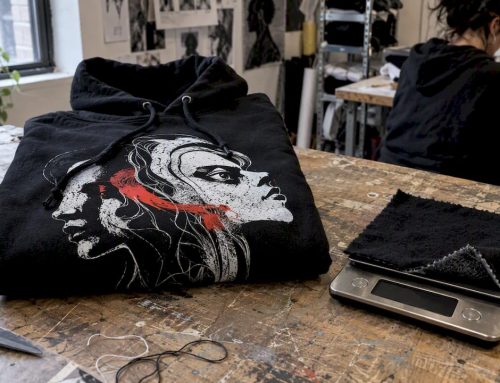
Michelle Hammer created Schizophrenic.NYC to turn bold art into a tool for destigmatization. The mental health awareness tank tops and accessories are designed to start the kind of conversations that community events aim for, every single day. Every product supports the mission of ending mental health stigma through visibility and open dialog. Shop the collection, share the message, and become a walking resource for the people around you.
FAQ
What is community engagement in mental health?
Community engagement in mental health is the collaborative process of connecting individuals, organizations, and local networks to reduce stigma, share resources, and build peer support systems. It includes activities like peer mentoring, educational workshops, and awareness campaigns designed to make mental health support accessible to everyone.
How do you build a mental health community from scratch?
Start by mapping trusted local institutions such as libraries, faith groups, and schools, then use structured tools like the NNLM partnership toolkit to define roles and create repeatable programming. Involve people with lived experience from the beginning to shape outreach that genuinely resonates.
What makes a mental health awareness campaign effective?
Effective campaigns pair a simple, specific ask with a direct contact resource, such as the NAMI Family Caregiver HelpLine, and provide ready-to-use materials like hashtags and downloadable flyers. The goal is to make the next step obvious so that curiosity converts into real action.
How do you make mental health events more accessible?
Offer language interpretation, ASL, captioning, and both in-person and virtual attendance options, and send an accessibility needs survey before every event. Treat accommodations as a living plan that you update regularly based on participant feedback rather than a one-time checklist.
Why are low-pressure events important for mental health outreach?
Low-pressure, playful events like McLean County’s Mental Health Field Day attract people who would never enter a clinical setting, reaching populations new to mental health services. Removing the clinical atmosphere reduces intimidation and opens the door to conversations that would not happen otherwise.
Recommended
- Properly Taking Care of Your Mental Health in the World of Social Work | Schizophrenic.NYC Mental Health Clothing Brand
- How to Celebrate the Social and Mental Health Workers Who’ve Helped You | Schizophrenic.NYC Mental Health Clothing Brand
- Building Stronger Communities: Collaborative Solutions for Rural Mental Health Care | Schizophrenic.NYC Mental Health Clothing Brand
- Why Mental Health Conversations Need to Go Deeper Than Hashtags | Schizophrenic.NYC Mental Health Clothing Brand