Multimedia is defined as the combined use of video, animation, interactive digital art, and AI-generated content to communicate and teach complex ideas. The role of multimedia in mental health is to transform abstract, stigmatized topics into experiences people can actually connect with emotionally. Viewers retain 85% of information from video compared to just 10% from text alone. That gap is not a minor difference. It means a well-made mental health video can do in three minutes what a printed pamphlet cannot do in thirty. Short-form content on platforms like TikTok and Instagram Reels sees 42% higher engagement than other mental health topics online, proving that format is as important as message.
How does multimedia shape mental health education?
The most direct evidence comes from a controlled study comparing animation-based psychoeducation to traditional print leaflets. Students who received animation-based lessons scored a median of 80 on knowledge assessments, compared to just 45 for the leaflet group. That is nearly double the learning outcome from the same content delivered differently. The sessions ran twice a week over four weeks, which means the format, not just the frequency, drove the result.
Video storytelling adds another layer beyond information delivery. Narratives that show agency and personal meaning correlate with higher hope and lower depressive symptoms in viewers. This is grounded in narrative-identity theory, which holds that people process their own experiences through the stories they encounter. When a mental health video shows someone moving from crisis to recovery with clarity and purpose, it does not just inform. It reshapes how the viewer thinks about their own situation.

Interactive digital art takes this further by making the audience a participant rather than a passive observer. Multisensory digital design transforms health information into emotional, immersive experiences that promote behavior change. A viewer who clicks, responds, or creates within a mental health platform is far more likely to internalize the message than one who simply watches.
Pro Tip: When designing mental health videos or digital content, use soft pastel colors, keep background music at around 20% volume, and avoid flashing subtitles. These choices signal safety to the nervous system before a single word is spoken.
Comparing multimedia formats for mental health education
| Format | Engagement Level | Best Use Case |
|---|---|---|
| Animated psychoeducation | High | Classroom and clinic settings |
| Short-form social video | Very High | Public awareness campaigns |
| Interactive digital art | High | Emotional processing and advocacy |
| Printed leaflets | Low | Supplementary reference only |
| AI-guided narrative film | High | Personalized therapeutic support |

What are the main multimedia therapy techniques?
Multimedia therapy techniques are specific, structured methods that use video, animation, or digital tools within a clinical or educational context to support mental health treatment. These are not just creative additions. They are evidence-informed approaches with measurable outcomes.
The most promising techniques currently in use include:
- AI-guided narrative self-films. Participants create short personal videos with AI assistance, building coherent and redemptive life stories. Research shows these personalized AI narratives reduce depressive symptoms by helping people find meaning and agency in their own experiences.
- 360-degree video. This format places the viewer inside a scene without requiring expensive VR hardware. 360-degree video is a more accessible and cost-effective alternative to full virtual reality for immersive mental health education and therapy.
- Abstract animation over hyper-realistic avatars. Hyper-realistic AI avatars can trigger what researchers call the “uncanny valley” effect, where near-human visuals create unease. Abstract animated visuals reduce viewer anxiety and build trust, especially for trauma and anxiety content.
- Video-based psychoeducation in clinics and schools. Digital video interventions outperform printed materials in diverse populations for improving mental health literacy and increasing help-seeking behavior.
- Social media storytelling. Platforms like TikTok serve as primary health information sources for young adults, making short-form video a legitimate therapeutic communication channel.
Pro Tip: If you are a therapist or educator building video content, start with abstract animation rather than realistic human avatars. Your audience will feel safer, and that safety is what makes the message land.
What challenges exist in multimedia mental health education?
Multimedia tools for mental health education carry real limitations. Knowing them upfront helps you design better content and avoid common failures.
-
Cultural responsiveness. Western-developed multimedia interventions often fail cross-culturally without significant adaptation. A video that resonates in New York may carry entirely different connotations in Lagos or Manila. Language, imagery, family dynamics, and attitudes toward help-seeking all vary. Effective global content requires community-informed design from the start, not translation as an afterthought.
-
Data limitations and ethics. Multimodal AI tools for mental health are growing fast, but research on youth applications faces serious ethical constraints around data collection from minors. Consent, privacy, and algorithmic bias are not abstract concerns. They directly affect whether a tool helps or harms the people it is meant to serve.
-
Engagement retention. Short-form video grabs attention, but sustained behavior change requires more than a 60-second clip. Content must be sequenced thoughtfully, with each piece building on the last. Advocates and educators working on mental health community engagement consistently find that ongoing, layered content outperforms one-off campaigns.
-
Poor design triggering stress. Flashing text, loud audio, and jarring transitions can increase viewer stress rather than reduce it. This is especially harmful when the audience is already vulnerable. Therapeutic design principles, such as calm pacing, muted color palettes, and gentle transitions, are not aesthetic preferences. They are clinical considerations.
Addressing these challenges requires collaboration between clinicians, designers, and the communities being served. Content built without that input tends to miss the mark, regardless of production quality. Populations facing disparities in mental health care are often the least represented in content development, which compounds existing gaps.
How is multimedia shaping the future of mental health care?
The future of multimedia in mental health treatment and awareness is moving in several clear directions. Each one has practical implications for therapists, educators, and advocates working right now.
Multimodal AI for personalized monitoring. AI systems that combine video, audio, text, and behavioral data are being developed to detect early signs of mental health deterioration. Research on multimodal AI in youth mental health is growing steadily, though ethical guardrails around data use remain a priority concern.
Social media as a primary education channel. TikTok and Instagram Reels are no longer supplementary. They are where young adults first encounter mental health information. Advocates who understand this are building content strategies around short, emotionally resonant clips that direct viewers toward deeper resources. The impact of social media on mental health is complex, but the platform itself is a tool, and tools can be used well or poorly.
Online learning models for mental health education. Digital courses, interactive modules, and video-based curricula are expanding access to mental health education in schools and communities that lack trained professionals. This is especially significant for improving psychiatric help accessibility in underserved areas.
Here is a quick comparison of where multimedia mental health tools stand today versus where they are heading:
| Dimension | Current State | Emerging Direction |
|---|---|---|
| Delivery format | Short-form video, animation | Multimodal AI, 360-degree immersive video |
| Personalization | General audience content | AI-adaptive, individualized narratives |
| Access | Urban, English-language focus | Multilingual, culturally adapted platforms |
| Measurement | Views and engagement metrics | Clinical outcome tracking |
The future trends in mental health care point toward tools that are not just engaging but genuinely therapeutic. The gap between awareness content and clinical intervention is closing, and multimedia is the reason why.
Key takeaways
Multimedia is the most effective medium for mental health education because it combines emotional storytelling with cognitive learning in ways that text and print simply cannot replicate.
| Point | Details |
|---|---|
| Video outperforms text | Viewers retain 85% of video content versus 10% from text, making format a clinical decision. |
| Animation doubles learning | Animation-based psychoeducation produced nearly double the knowledge scores of printed leaflets in controlled studies. |
| Design affects outcomes | Calm colors, low-volume audio, and abstract visuals reduce anxiety and build trust in mental health content. |
| Cultural adaptation is required | Western multimedia tools fail cross-culturally without community-informed redesign from the start. |
| AI narrative therapy shows promise | AI-guided personal story films reduce depressive symptoms by building coherent, meaning-driven life narratives. |
Why storytelling is the real engine here
I have lived with schizophrenia my whole adult life, and I can tell you from personal experience that a pamphlet never once made me feel less alone. What changed things for me was seeing real stories told with honesty and without shame. That is what multimedia does at its best. It puts a human face on something that most people are afraid to talk about.
What I find most underestimated is the power of who tells the story. A clinically accurate video narrated by a professional is useful. A video where someone says “I heard voices that told me I was worthless, and here is how I got through it” is transformative. The difference is not production quality. It is authenticity.
The part that frustrates me is how much mental health multimedia still defaults to generic, sanitized content that does not reflect the actual experience of people living with serious mental illness. Schizophrenia, bipolar disorder, and psychosis are rarely shown with any complexity. That absence is its own form of stigma. When we do not see ourselves in the content, we assume we are too broken to be helped.
What I believe, and what the research supports, is that culturally specific, community-built multimedia is the only kind that actually moves people. You cannot outsource that work to a design agency that has never sat in a waiting room at a psychiatric clinic. The people who have lived it need to be in the room where the content is made.
Multimedia will not solve the mental health crisis on its own. But it is one of the most powerful tools we have to make people feel seen, reduce stigma, and get more people to ask for help. That is worth every bit of effort we put into it.
— Michelle
Wear the conversation forward
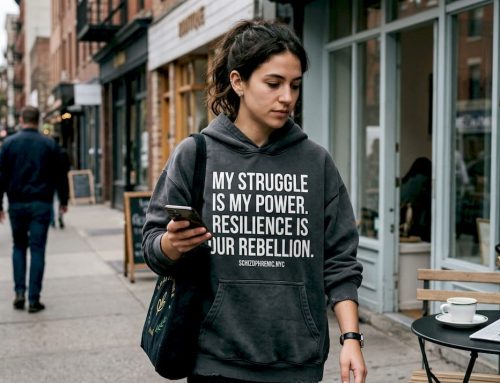
If this article resonated with you, there is a way to carry that message beyond the screen. Schizophrenic creates bold, graphic mental health apparel designed to start real conversations and reduce stigma wherever you go. Every piece is made with advocacy in mind.

Browse the mental health tank tops at Schizophrenic.NYC and find something that says what you believe. The mental health buttons are a small but powerful way to show up for awareness every single day. When you wear your values, you become part of the conversation that multimedia starts. That is how stigma actually ends, one person, one conversation, one piece of wearable art at a time.
FAQ
What is the role of multimedia in mental health education?
Multimedia improves mental health education by combining video, animation, and interactive content to increase retention and emotional engagement. Studies show animation-based psychoeducation nearly doubles knowledge scores compared to printed materials.
How do multimedia therapy techniques work in clinical settings?
Multimedia therapy techniques include AI-guided narrative films, 360-degree video, and video psychoeducation, all used to improve mental health literacy and reduce depressive symptoms. These formats work by combining emotional storytelling with structured information delivery.
Does social media help or hurt mental health awareness?
Social media platforms like TikTok and Instagram Reels drive 42% higher engagement on mental health topics than other formats, making them effective awareness tools when content is thoughtfully designed. The impact depends heavily on content quality and design choices.
What are the biggest challenges in using multimedia for mental health?
The main challenges are cultural responsiveness, ethical data use with minors, engagement retention, and poor design that can increase viewer stress. Community-informed content development is the most reliable way to address all four.
Are telehealth and multimedia tools replacing traditional therapy?
Multimedia tools and telehealth approaches supplement traditional therapy rather than replace it. They expand access, improve literacy, and increase help-seeking behavior, especially in underserved communities.
Recommended
- Future Trends in Mental Health Care | Schizophrenic.NYC Mental Health Clothing Brand
- Types of Mental Health Support: Your 2026 Guide
- A Practical Guide to Teaching Mental Health in Schools
- Mental Health in America: Reducing Bias & Stigmas | Schizophrenic.NYC Mental Health Clothing Brand