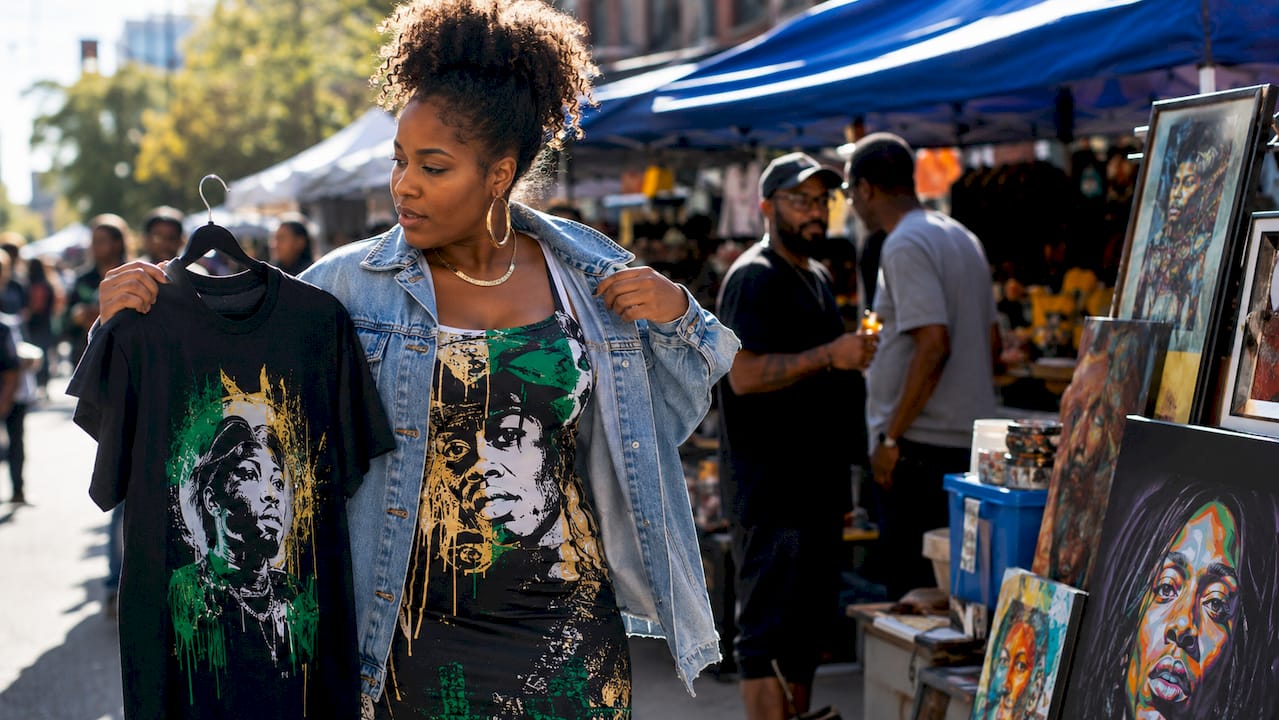
Clothing in advocacy is defined as the deliberate use of garments, accessories, and wearable art to communicate social and political messages, signal group identity, and shift public discourse. What you wear is a statement before you say a single word. The role of clothing in advocacy spans everything from Rosa Parks choosing her Sunday best for a civil rights protest to the ACLU partnering with designer Willy Chavarria to challenge harmful policy narratives. Fashion and activism have always been intertwined. This guide breaks down how that relationship works, why it matters, and how you can use it with intention.
How has clothing historically been used as a political and social statement?
Fashion activism, the recognized term for using clothing as a vehicle for social change, has deep roots in American and global history. Long before graphic T-shirts existed, marginalized communities used dress as a deliberate political strategy.

Rosa Parks and civil rights activists dressed with precision and care for protests and demonstrations. Their “Sunday best” was not vanity. It was a direct challenge to racist stereotypes that portrayed Black Americans as undeserving of dignity or respect. Historian Einav Rabinovitch-Fox has noted that marginalized activists used fashion deliberately to influence public perception and rally support. The clothing said: we are serious, we are dignified, and we demand to be treated as such.
The feminist movement of the 1960s and 1970s took a different approach. Activists reclaimed garments that had been used to restrict women, like aprons and domestic dress, and reframed them as symbols of resistance. Later, the pink pussy hat worn at the 2017 Women’s March became one of the most photographed protest symbols in American history.
“Clothing has always been a political act. The question is whether you are making that choice consciously or not.” — Einav Rabinovitch-Fox, fashion historian
Key milestones in fashion activism history include:
- 1955–1968: Civil rights movement uses formal dress to assert dignity and legitimacy at protests and sit-ins
- 1960s–1970s: Feminist activists reclaim domestic clothing as symbols of resistance and identity
- 1980s–1990s: ACT UP and LGBTQ+ activists use T-shirts, pins, and red ribbons to demand AIDS research funding
- 2017: The pink pussy hat becomes a global symbol of resistance at the Women’s March
- 2020–present: Black Lives Matter merchandise and protest apparel fund legal defense and community aid
What are the contemporary ways activists leverage clothing for advocacy?
Today, graphic T-shirts are the most accessible and impactful medium for political expression and grassroots fundraising. That accessibility matters because it lowers the barrier to participation. You do not need a platform, a budget, or a megaphone. You need a shirt.
Here is how modern activists are using clothing most effectively:
- Themed apparel drops tied to protests. Organizations sell limited runs of advocacy clothing during high-visibility moments. These runs often sell out quickly, with proceeds funding legal support, bail funds, and community aid.
- Fashion collaborations with advocacy organizations. The ACLU and March For Our Lives have used fashion partnerships to control cultural narratives, linking law, policy, and public opinion through wearable art. ACLU’s collaboration with designer Willy Chavarria and activist Chase Strangio is a direct example of fashion and legal advocacy merging into one message.
- Cultural hijacking of major events. The Bulletproof Dress campaign used the Met Gala, one of fashion’s most globally watched events, to highlight gun violence. The campaign gained earned media without ad spend by embedding its message inside a cultural spectacle that the press was already covering.
- Citizen-led consumption advocacy. Fashion Revolution, a global movement, frames every purchase as a political act. Their citizen-led approach demands supply chain transparency and positions consumers as advocates for systemic change.
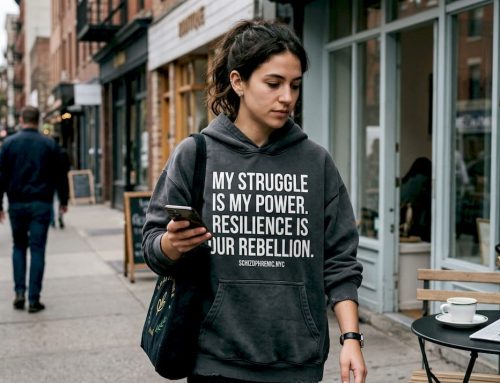
- Mental health and disability visibility clothing. Brands like Schizophrenic use bold graphic art on T-shirts, tote bags, and accessories to normalize conversations about schizophrenia and reduce stigma. The advocacy T-shirts put mental health front and center in everyday public spaces.
Pro Tip: Time your apparel release to a cultural moment, a legislative vote, a national awareness month, or a major protest. Timing and cultural alignment drive reach far more than ad budgets do.
How do different styles and designs impact advocacy clothing effectiveness?
Not all advocacy clothing works equally well. Design choices determine whether a message travels or gets ignored.

| Design approach | Strengths | Weaknesses |
|---|---|---|
| Bold typography, high contrast | Readable in photos, strong at protests, shares well on social media | Can feel aggressive or alienating to undecided audiences |
| Subtle, sustainable fabrics | Signals values without confrontation, commands dignity | Message may not reach beyond the wearer’s immediate circle |
| Artistic illustration | Emotionally resonant, conversation-starting | Message can be misread without context |
| Slogan-only text | Clear and direct | Risks feeling mass-produced or performative |
High-contrast designs and bold typography maximize readability both at physical protests and in digital images. This matters because a photo of a protest can reach millions of people online. If the shirt is unreadable in a compressed image, the message disappears.
The quieter end of the spectrum is equally valid. Subtle fashion activism uses sustainable fabrics, formal styling, or understated symbols to assert identity and values without overt slogans. This approach is especially powerful in professional settings where a bold protest tee would be out of place.
The biggest risk in advocacy fashion is commodification. Mass-produced protest merchandise can dilute the original message when brands adopt activist aesthetics without genuine commitment. Authenticity is not optional. Audiences, especially younger ones, recognize performative activism quickly and respond with skepticism.
Pro Tip: Before finalizing a design, photograph it with a phone camera and shrink the image to thumbnail size. If the message is still readable, it will work online. If it blurs into noise, simplify.
How can activists practically incorporate clothing into their advocacy efforts?
Using clothing strategically does not require a fashion background. It requires clarity about your message and your audience. Here are the most effective ways to incorporate fashion activism into your work:
- Create or source themed apparel for your campaign. Choose designs that reflect your cause’s values and visual identity. Work with artists from your community when possible. This keeps the message authentic and supports the people most affected by the issue you are advocating for.
- Use apparel as a fundraising tool. Timed drops tied to specific campaigns or awareness months generate both revenue and visibility. Mental health advocates, for example, can align releases with Mental Health Awareness Month in May to maximize reach.
- Build community identity through shared clothing. When a group of people shows up wearing the same shirt or pin, it signals solidarity and strength. Shared apparel creates a visible community that draws attention and invites questions from bystanders.
- Leverage cultural moments for earned media. You do not need a PR budget. A well-designed piece of advocacy clothing worn at the right event, a hearing, a rally, a public forum, can generate press coverage organically. Timing is the strategy.
- Choose sustainable and ethical production. The fashion industry’s supply chain is itself a site of advocacy. Sourcing from ethical manufacturers reinforces your message and avoids the contradiction of advocating for justice while supporting exploitative labor practices.
- Use clothing as a teaching tool. Advocacy fashion works in classrooms, workshops, and community events. A T-shirt with a bold mental health message can open a conversation that a pamphlet never would. Schizophrenic’s mental health clothing line is specifically designed to do exactly that.
Key takeaways
Clothing in advocacy works because it transforms everyday dress into a visible, portable, and conversation-starting medium for social change.
| Point | Details |
|---|---|
| Historical roots run deep | Civil rights and feminist movements used deliberate dress to assert dignity and challenge stereotypes. |
| Graphic T-shirts lead modern activism | They are the most accessible tool for political expression and grassroots fundraising in 2026. |
| Design determines reach | High-contrast, bold typography travels furthest in protest photos and social media images. |
| Authenticity is non-negotiable | Mass-produced protest merch without genuine commitment dilutes the message and loses audience trust. |
| Timing multiplies impact | Releasing advocacy apparel during cultural moments or awareness campaigns drives reach without ad spend. |
Why I believe clothing is one of the most honest forms of advocacy
I started Schizophrenic because I needed a way to talk about schizophrenia that did not feel clinical or shameful. I was living with the diagnosis, and I wanted people to see it differently. A T-shirt felt like the most direct way I knew to start that conversation.
What I have learned since then is that clothing does something a speech or a pamphlet cannot. It puts the message on a body, in public, in real time. When someone wears a shirt that says something true about mental illness, they are not just sharing information. They are saying: I am not ashamed of this. That is a different kind of advocacy. It is personal and visible at the same time.
I have also learned that the design has to be honest. People can tell when a message is manufactured for attention versus when it comes from a real place. The art I put on Schizophrenic’s clothing comes from my own experience. That is not a marketing strategy. It is the only way I know how to do it.
My advice to any advocate thinking about using fashion: start with what is true for you. Do not chase what looks good on someone else’s campaign. The most powerful advocacy clothing I have ever seen carries a message that the person wearing it actually believes. Confidence in your cause shows up in the design. And confidence, I have found, can get you anywhere.
If you are working on mental health advocacy specifically, I encourage you to think about how you can reduce stigma through fashion in your own community. The conversation starts the moment someone reads your shirt.
— Michelle
Start your advocacy wardrobe with Schizophrenic
Schizophrenic was built on the belief that bold art and honest messaging can change how the world sees mental illness. Every piece in the collection is designed to spark real conversations and push back against the stigma that keeps people silent.

Whether you are looking for a mental health awareness tank top to wear to your next rally or a graphic tee that opens a dialogue at work, Schizophrenic has clothing designed with purpose. Each item is wearable advocacy, created by someone who lives with schizophrenia and wants the world to understand it better. Browse the full mental health T-shirt collection and find the piece that speaks for you.
FAQ
What is advocacy through clothing?
Advocacy through clothing, also called fashion activism, is the practice of using garments and accessories to communicate social or political messages and raise public awareness. It ranges from graphic T-shirts at protests to formal dress used to assert dignity in hostile environments.
What is the role of T-shirts in advocacy?
T-shirts are the most accessible and widely used tool in advocacy fashion because they are low-cost, highly visible, and easy to photograph and share on social media. Organizations like March For Our Lives and ACLU have used them to fund campaigns and shift cultural narratives.
How do I incorporate activism into my wardrobe without it feeling performative?
Choose clothing that reflects causes you are genuinely committed to, and prioritize pieces made by artists or organizations directly connected to the issue. Authenticity shows, and audiences recognize the difference between lived advocacy and trend-driven messaging.
Can advocacy clothing work for mental health awareness?
Yes. Mental health advocacy clothing, like the pieces created by Schizophrenic, puts stigmatized conditions into public view in a way that invites curiosity rather than judgment. A well-designed shirt can open conversations that traditional outreach methods rarely achieve.
What design principles make advocacy clothing most effective?
High-contrast graphics and bold typography are the most effective design choices because they remain readable in protest photos and compressed social media images. Simple, clear visuals travel further than complex designs, both offline and online.
Recommended
- What Is a Mental Health Clothing Line? | Schizophrenic.NYC Mental Health Clothing Brand
- What Disabled People Are Actually Looking For When Shopping For Clothing | Schizophrenic.NYC Mental Health Clothing Brand
- The Schizophrenia Collective: Reducing Stigma Through Fashion and Art | Schizophrenic.NYC Mental Health Clothing Brand
- Schizophrenic.NYC: NYC’s Premier Mental Health Awareness Clothing Brand