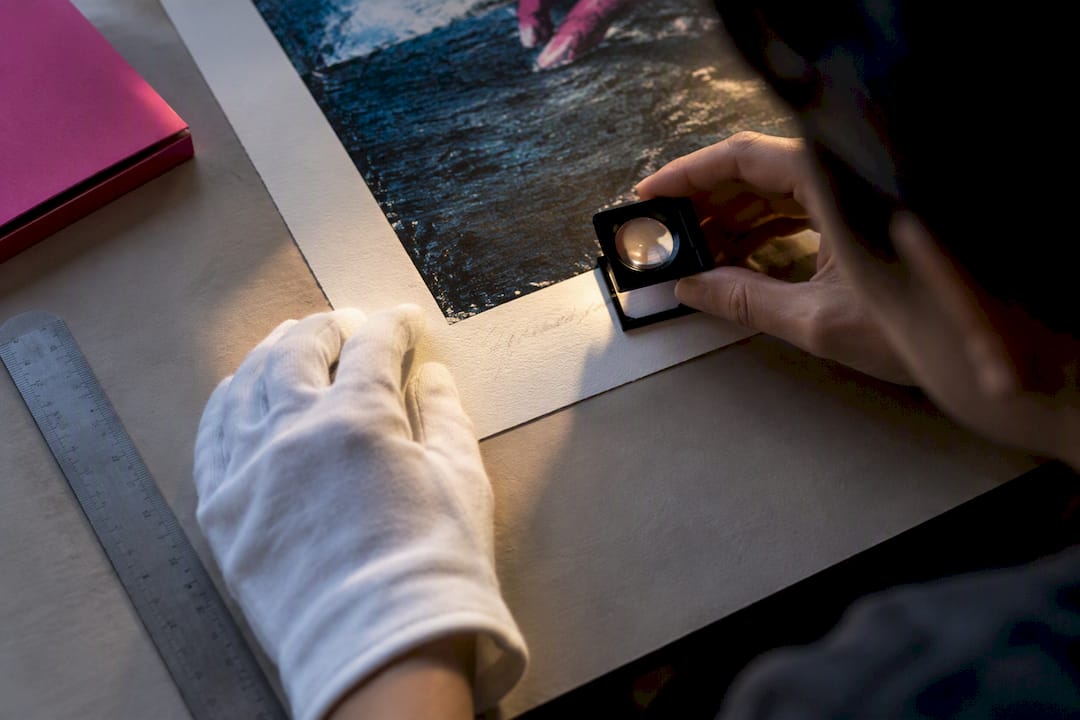
A genuine limited edition print is signed by the artist, numbered against a fixed edition size, and backed by an edition statement that spells out exactly how many exist. Before you buy anything, confirm two things: the seller can produce that edition statement or certificate of authenticity, and they can show you a clear photo of the actual signature and number on the piece. If they can’t, walk away.
TL;DR:
- Small edition sizes can increase scarcity, but demand, provenance, and condition are more important for long-term value.
- Confirm the edition statement, certificate of authenticity, and request high-resolution photos of signatures and numbers before purchasing.
- Resale value depends more on condition, paperwork, and artist demand than on the edition number alone.
- Buying from established galleries, trusted online dealers, or directly from the artist ensures better documentation and authenticity.
- Proper conservation framing, environmental care, and organized documentation help preserve a print’s value over time.
Table of Contents
- What Does “Limited Edition” Actually Mean?
- How to Verify Authenticity and Provenance Before You Buy
- What Determines Resale Value and Long-Term Demand?
- Where and How to Buy Limited Edition Prints Safely
- How to Protect Your Print’s Condition and Value
- How Schizophrenic.NYC Documents Its Signed Prints
- An Honest Take on Buying Limited Editions
- Ready to Buy a Signed Print?
- Primary Sources Worth Reading
- Sources
- FAQ
What Does “Limited Edition” Actually Mean?
An edition statement is the fingerprint of a print. It tells you the total edition size, the numbering format (usually written as a fraction, like 12/50), who published or printed the work, and the year it was made. Read it carefully, because it’s the single most reliable piece of information you’ll get before you buy.
Signatures matter almost as much as the numbers. Artists typically sign in pencil on the front (recto) below the image, though some sign on the back (verso) or within the plate itself. You’ll also run into a few abbreviations worth knowing:
- AP (Artist’s Proof): Prints set aside for the artist, outside the numbered run, usually a small percentage of the total edition.
- HC (Hors Commerce): Literally “not for commerce,” these are proofs used for exhibitions or records rather than retail sale.
- Edition size: The total run should not change once printed. Artsy’s specialist guidance on buying limited editions notes that artists or printers sometimes destroy plates or negatives specifically to prevent later additions, though additional editions can occasionally surface, which is exactly why confirming first-edition status matters.
A small edition size can add scarcity appeal, but it’s only one variable. Demand for the artist, condition of the piece, and documentation all carry weight too.
How to Verify Authenticity and Provenance Before You Buy
Before any money changes hands, request a specific packet of paperwork. A seller who hesitates to provide it is telling you something.
- Ask for the edition statement and a certificate of authenticity (COA).
- Request the original invoice or a copy of publisher and printer records.
- Get high-resolution photos of the signature, the numbering, and the overall condition, front and back.
- Compare the signature against verified examples from the artist or publisher.
- Contact the publisher or the artist’s studio directly if the seller can’t answer basic questions.
- Search auction databases and gallery archives for the same edition to confirm it matches what’s being sold.
Watch for red flags: numbering that doesn’t match the stated edition size, missing or vague paperwork, a price far below what similar pieces have sold for, or a seller who won’t answer direct questions about provenance. Any one of these should slow you down. Two or more, and you should probably pass.
Pro Tip: Email the publisher listed on the edition statement before you buy. Most legitimate publishers keep production records and will confirm or deny a specific edition number within a day or two, often for free.
What Determines Resale Value and Long-Term Demand?
Edition size shapes value, but it doesn’t determine it. A tiny edition by an artist nobody wants doesn’t outsell a larger edition by someone collectors are actively chasing. First-edition status, the presence and count of artist’s proofs, the publisher’s reputation, and current demand for the artist all interact with edition size to set the market price. Artsy’s guidance is blunt about this: a smaller run can matter, but it isn’t an automatic price guarantee.
There’s also a gap between what you see at retail and what a piece actually sells for. Gallery and publisher prices are asking prices. Auction results are what someone actually paid. Both are useful research tools, but neither alone tells the full story, and reporting from ArtTactic on the prints and editions market points out that auction data covers only part of total sales activity, since dealers and galleries account for a large share of transactions that never show up in public auction records.
For resale, the paperwork matters as much as the print. Condition, original framing quality, a valid COA, the invoice, and, ideally, a professional appraisal all support a stronger sale price down the line.
The IRS treats any work of art as a collectible for retirement account purposes. Buying one inside an individually directed qualified plan can trigger distribution tax consequences, so check IRS guidance on collectibles in qualified plans before you use retirement funds to buy art.
- Edition size and AP count together, not the fraction alone, determine real scarcity.
- Publisher reputation and printer records add credibility auction listings can’t replicate.
- Condition and complete paperwork often matter more to resale than the edition number itself.
Where and How to Buy Limited Edition Prints Safely
Buying direct from the artist or an established publisher usually gets you the cleanest paper trail: signed edition statement, invoice, and a direct line to ask questions later. Established galleries and museum shops carry similar weight, since they typically vet the work before it goes on the wall or the shelf. Reputable online dealers can be just as reliable, provided they document the same details a gallery would.
Before completing any online purchase, run through this checklist:
- Confirm the edition statement is listed on the product page or available on request.
- Ask for a photo of the actual signature and numbering, not a stock image.
- Verify the shipping method includes insurance for the piece’s value.
- Read the return and condition policy before you pay, not after.
- Save the invoice and any correspondence about provenance.
For higher-value purchases, it’s worth involving a tax advisor or requesting a professional appraisal built on fair-market-value methodology before or shortly after the sale, particularly if the piece will sit inside a retirement account or estate.
How to Protect Your Print’s Condition and Value
Framing choices you make in year one affect what the piece is worth in year twenty. Use conservation framing: acid-free matboard, archival mounting that doesn’t rely on adhesive directly on the paper, and UV-filtering glazing to slow fading from light exposure.
- Keep prints away from direct sunlight and stable in humidity, not near vents, radiators, or damp basement walls.
- Photograph the piece’s condition the day it arrives, before framing, so you have a baseline record.
- Store the COA, invoice, and any publisher correspondence together in one place you can find in five years, not five minutes of searching.
Pro Tip: Take condition photos in natural, even light and keep the originals in cloud storage. A future appraiser or buyer will want to compare “as received” against “as is,” and a phone photo from years ago can settle disputes fast.
How Schizophrenic.NYC Documents Its Signed Prints
Schizophrenic.NYC’s signed prints, including the Pink signed print, follow the same logic collectors should expect from any legitimate publisher: signature details and product specifics are listed on the product page itself, so you know what you’re buying before you commit. The broader collection of artwork and prints includes formats beyond the standard signed print for buyers who want more display options. If you have questions about a specific piece, shipping, or returns, the site provides a direct way to reach the team rather than leaving you guessing.

An Honest Take on Buying Limited Editions
Most advice about limited edition prints treats edition size like a magic number, as if 25/100 is automatically worth more than 25/500. That’s backwards. I’d rather see a collector buy a larger edition with airtight paperwork and real demand behind the artist than a tiny edition with no provenance trail and no market history to check against.

The conventional wisdom also underweights how much preservation matters after the sale. A collector who spends carefully on verification and then frames the piece with cheap, non archival materials is undoing their own homework. Condition drives resale as much as scarcity does, and it’s the part buyers control completely.
If you’re new to this, prioritize the paperwork before the purchase price. A signed, numbered piece from an artist whose story and process you actually understand, documented properly from day one, tends to hold both meaning and value better than a chase for the “right” edition number ever will.
— Michelle
Ready to Buy a Signed Print?
Schizophrenic sells directly from the artist, which means no gallery markup and no guessing about who actually signed your piece. Michelle Hammer’s signed prints, including the Pink signed print, list signature and format details right on the product page, and the wider collection of artwork and small-format prints gives you room to compare before you commit. If you’re buying online, check the product page for edition information, request a photo of the signature if it isn’t already shown, and confirm shipping protection before checkout. For custom design work or speaking bookings, reach out through the main shop page to start that conversation, and browse the mental health canvas prints if you want a larger display piece for your space.
Primary Sources Worth Reading
- Artsy’s specialist guidance on buying limited editions
- IRS guidance on collectibles in qualified plans
- IRS Art Appraisal Services
- U.S. Copyright Office Circular 40a
Sources
- Artsy specialist guidance: buying limited editions
- Investments in collectibles in individually directed qualified plan accounts (IRS)
- Art Appraisal Services (IRS Appeals)
- Circular 40a: Deposit Requirements for Visual Arts Works (U.S. Copyright Office)
FAQ
Are Limited Edition Art Prints Worth Money?
They can be, but edition size alone doesn’t guarantee it. Value depends on the artist’s demand, first-edition status, condition, and documentation together, and Artsy’s specialist guidance is clear that a small edition isn’t an automatic price guarantee on its own.
Where Can I Buy Limited Edition Art Prints?
The safest sources are artists selling direct, established galleries, museum shops, and reputable online dealers who provide full documentation. Schizophrenic.NYC sells signed prints directly from the artist, with edition and signature details listed on the product page.
What Are the Rules for Limited Edition Prints?
There’s no single legal threshold; the U.S. Copyright Office’s Circular 40a shows that “limited edition” carries different meanings across contexts, so the specific edition statement for that work is what actually governs the terms. Always confirm the total size, numbering, and proof count listed for that exact print rather than assuming a standard.
What Are the Best-Selling Art Prints Right Now?
Demand shifts by artist and gallery, and no single list applies across the market. What tends to sell consistently is work with strong provenance, clear signatures, and an artist with an active following, which is why documentation matters as much as the image itself.
What Does the Edition Number Fraction Actually Mean?
The fraction, like 12/50, shows the print’s position in the numbered run and the total edition size, not its quality or rank. Artist’s proofs (AP) and hors commerce (HC) copies sit outside that numbered count entirely, so a full picture of scarcity requires knowing the complete structure, not just the fraction on the print.
Recommended
- Green Signed Print (8.5" x 11")
- Blue Signed Print (8.5" x 11")
- Red Signed Print (8.5" x 11")
- Yellow Signed Print (8.5" x 11")