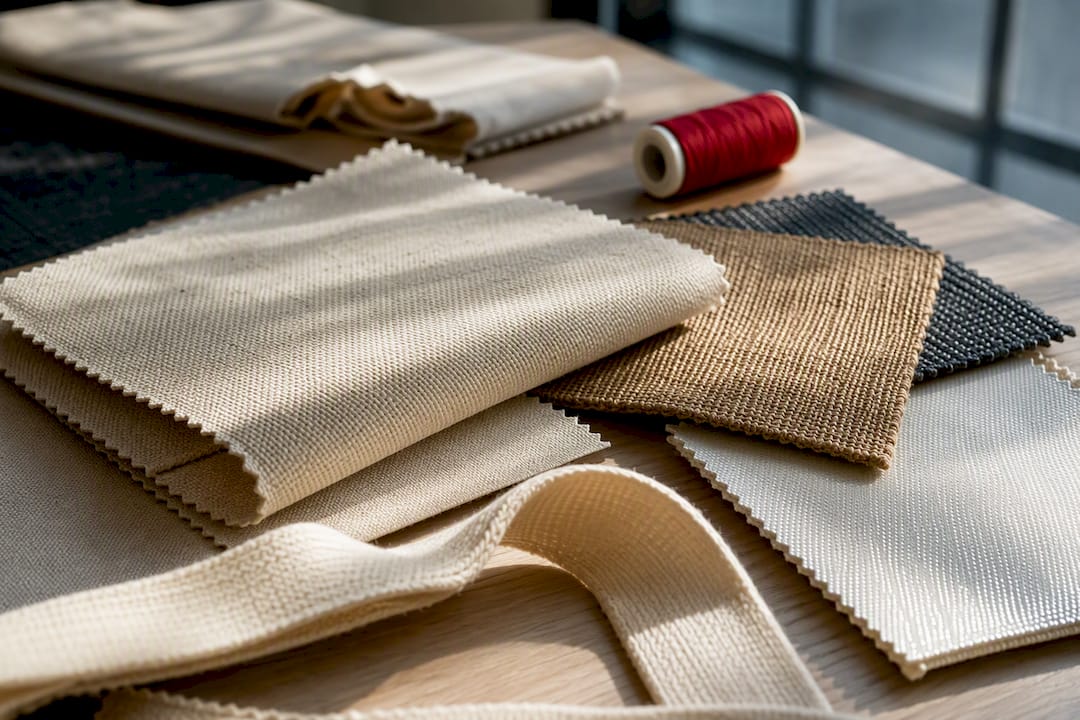
For most everyday tote needs, a 10 to 12 oz cotton canvas or a recycled-PET canvas gives you the best balance of strength, printability, and long-term sustainability. If your tote is heading somewhere wet, nylon or 600D polyester wins on weather resistance. For a one-time event giveaway on a tight budget, non-woven polypropylene (NWPP) gets the job done, with limits. The sections below break down weights, care, and which fabric fits which use.
TL;DR:
- Using 10 to 12 oz cotton or recycled PET canvas provides the best balance of durability, print quality, and sustainability for everyday totes.
- Nylon or 600D polyester excels in wet conditions due to their water-resistant properties, making them ideal for travel or outdoor use.
- Heavier canvas (14 to 16 oz) offers doubled resistance to tearing and sagging, suitable for carrying heavier loads like books or groceries.
- Construction details such as box-stitch handles and high stitch density (8 to 10 SPI) significantly impact a tote’s longevity more than fabric type alone.
- Durable fabrics like heavier canvas or reinforced woven polypropylene are essential for advocacy or messaging bags to ensure they remain functional over long-term circulation.
Table of Contents
- What Are Tote Bags Made Of? A Quick Material Rundown
- Cotton Canvas, Nylon, and Jute: How the Major Materials Stack Up
- Weight, Stitching, and Handles: What Actually Makes a Tote Last
- Matching Print Methods to Tote Fabric
- The Best Tote Material for Every Use Case
- Sustainability Tradeoffs: Natural Fiber vs. Recycled vs. Virgin Synthetic
- How Schizophrenic.NYC Thinks About Tote Materials
- Why I Push for Durable Fabric Over the Cheapest Option
- Get a Durable Tote That Carries a Message Too
- Sources
- FAQ
What Are Tote Bags Made Of? A Quick Material Rundown
A tote bag is, at its core, a sturdy, open-top carrier made from cloth, and that simple design is exactly why the fabric choice matters so much. Change the material and you change everything about how the bag performs, feels, and ages. Here’s what you’re actually choosing between when you shop for cotton canvas tote bag options or scan a supplier’s fabric list.
- Cotton canvas: A tightly woven, plain-weave cotton fabric with a matte, slightly textured hand. It’s the workhorse of tote construction and the surface most people picture when they hear “canvas tote.”
- Recycled PET canvas: Woven from fibers reclaimed from post-consumer plastic bottles, this fabric mimics cotton’s look but resists fading and moisture better. Best for brands that want a sustainable story with cotton-like aesthetics.
- Nylon / 600D polyester: Smooth, tightly woven synthetics with genuine water resistance and a slight sheen. Best for travel totes, gym bags, or anything that needs to survive rain.
- Jute: A coarse, natural plant fiber with a rustic, woven texture. Best for eco-conscious retail packaging and rustic-style giveaways, though it’s not built for daily heavy use.
- Non-woven polypropylene (NWPP): A pressed synthetic sheet rather than a true woven fabric, with a slightly stiff, papery feel. Best for high-volume conference or trade-show handouts.
- Waxed canvas: Cotton canvas treated with a wax coating that adds water resistance and a stiff, broken-in look over time. Best for outdoor, farmers-market, or heritage-brand totes.
- PU / faux leather (vinyl): A polyurethane coating applied over a fabric backing to mimic leather’s sheen and structure. Best for boutique retail and gift totes that need a polished look.
- Genuine leather: Real hide, supple and durable with a natural grain that improves with age. Best for premium, long-life totes where cost is not the deciding factor.
Each of these shows up constantly in “best tote bag textiles” comparisons, and for good reason: they cover nearly every practical need from a $3 conference giveaway to a $150 leather carryall.
Cotton Canvas, Nylon, and Jute: How the Major Materials Stack Up
The material name on a spec sheet tells you less than the weight and finish behind it. Two bags both labeled “canvas” can behave completely differently depending on whether they’re 8 oz or 16 oz, treated or untreated.
Cotton canvas remains the most versatile of all durable materials for totes. Lightweight canvas around 7 to 9 oz works fine for lined tote bags or occasional-use gift bags, but it will show wear faster under daily grocery loads. The benchmark worth memorizing: 10 to 12 oz canvas is the standard for daily use, while 14 to 16 oz steps into heavy-duty territory built for hauling books or a week’s groceries. Canvas takes screen printing and direct-to-garment printing beautifully because of its smooth, absorbent surface, and it washes well on a gentle cycle, though heavier weights take longer to dry. Retailers lean on it for branded shopping bags precisely because it looks premium without costing like leather.
Statistic Callout: Canvas weight in ounces per square yard is one of the most reliable predictors of how long a tote survives daily use. A jump from 10 oz to 16 oz roughly doubles the bag’s resistance to tearing and sagging under load, based on industry weight benchmarks.
Recycled PET canvas performs close to cotton in hand-feel but pulls ahead in colorfastness and moisture resistance, since it’s woven from reclaimed plastic bottles rather than a natural fiber. Prints stay vivid longer, and the fabric shrugs off light rain that would leave a cotton bag damp for hours. The tradeoff: it’s not biodegradable, so its environmental case rests on diverting plastic waste rather than returning to soil.
Nylon and 600D polyester are the materials to reach for when water is the enemy. A 600D weave (denier, not ounces, is the relevant spec here) resists abrasion and beads water rather than soaking it in, which makes it the default for travel totes, beach bags, and produce-market carriers in wet climates. Printing works best through sublimation or heat transfer rather than screen printing, since ink sits on top of a synthetic surface instead of soaking in. Care is simple: wipe down or machine wash cold, then air dry.

Jute brings a natural, textured look that reads as eco-friendly at a glance, and it genuinely is biodegradable at end of life. The catch is durability: jute fibers weaken when they get wet repeatedly, and the coarse weave limits fine-detail printing to bold, simple graphics. It’s a strong choice for a farmers-market bag used occasionally, a weaker one for a daily commuter tote.
Non-woven polypropylene is the material behind most convention swag bags. It’s inexpensive to produce in bulk and accepts low-cure screen printing reasonably well, but it tears more easily at the seams and isn’t designed for regular washing. Treat it as disposable-adjacent rather than a long-term carry bag.
Waxed canvas takes standard cotton canvas and adds a wax finish that repels water and develops a patina with age, similar to raw denim breaking in. It’s heavier to work with and needs re-waxing occasionally to maintain water resistance, but it delivers a rugged, outdoorsy look that ages well rather than looking worn out.
PU and vinyl coatings turn any base fabric waterproof instantly, though that waterproofing comes at the cost of breathability, so these bags can feel stiff or trap moisture inside on humid days. They’re a reasonable middle ground between canvas and genuine leather for retail totes that need a polished look on a mid-range budget.
Weight, Stitching, and Handles: What Actually Makes a Tote Last
The fabric name gets all the attention, but construction details often matter more than material alone for how long a tote actually survives. A premium canvas with weak stitching fails faster than a mid-grade fabric assembled well.

Canvas weight is measured in ounces per square yard, and it’s a direct stand-in for thread density and fiber thickness. Heavier canvas resists stretching under load, holds its shape when set down, and shows less abrasion at contact points like corners and the bottom seam.
Handles matter just as much. Look for these construction signals before buying or committing to a design:
- Box-stitch reinforcement at the handle base, where an X pattern inside a square distributes stress across multiple stitch lines instead of one weak point.
- Bartack stitching, a dense zigzag cluster used at stress points, which prevents the handle from tearing free under a heavy load.
- Stitch density of at least 8 to 10 stitches per inch (SPI) along main seams, since lower density leaves gaps that unravel over time.
- Gussets at the bottom corners, which let the bag expand for bulkier loads without straining the side seams.
- A reinforced or double-layered bottom panel, since the base takes the most abrasion and weight over a tote’s life.
Pro Tip: Zoom in on product photos before you buy. If you can’t tell whether the handle attachment uses a box stitch or just a straight line of stitching, assume the cheaper option and adjust your expectations for how long the bag will last.
Matching Print Methods to Tote Fabric
Decoration method and fabric choice aren’t independent decisions. Pick the wrong pairing and you’ll get faded logos or a print that cracks after three washes.
- Cotton canvas takes screen printing and direct-to-garment (DTG) printing well, since the fabric absorbs ink into the weave rather than sitting on top of it, producing sharp, long-lasting graphics.
- Recycled PET canvas performs similarly to cotton for screen printing, with the added benefit of holding color longer against sun exposure.
- Polyester canvas and nylon work best with sublimation or heat transfer, where dye bonds to the synthetic fibers under heat instead of soaking into a porous surface.
- NWPP accepts low-cure screen printing at a lower cost, but the print is not designed to survive regular washing, so treat these as single-season promotional pieces.
- Jute’s coarse, textured surface limits fine detail, so bold single-color logos print far more reliably than photographic or multi-color designs.
The Best Tote Material for Every Use Case
Matching material to purpose is where all the specs above turn into an actual buying decision.
- Everyday carry: 10 to 12 oz cotton canvas or recycled-PET canvas. Strong enough for daily use, prints cleanly, and washes without falling apart.
- Groceries and books: 14 to 16 oz cotton canvas or a reinforced woven polypropylene. The extra weight resists sagging under real load.
- Travel or wet climates: Nylon or 600D polyester. Water resistance and abrasion resistance outweigh the slightly less “natural” look.
- Event giveaways: NWPP for volume pricing, accepting a shorter useful life in exchange for low cost per unit.
- Retail or gift-focused totes: Waxed canvas for a rugged, natural aesthetic with genuine water resistance, or PU/vinyl for a sleeker, boutique finish.
When one use case demands two things at once, coated options split the difference. Waxed canvas covers water resistance and a natural look in a single fabric, which is why outdoor brands lean on it instead of choosing between cotton and nylon.
Sustainability Tradeoffs: Natural Fiber vs. Recycled vs. Virgin Synthetic
No material wins outright on sustainability. Every option trades one environmental benefit for another.
Cotton and jute biodegrade at end of life and come from renewable plant sources, but conventional cotton farming is water-intensive, and jute’s shorter lifespan means more frequent replacement. Recycled PET canvas diverts plastic bottles from landfills and holds up better than natural fiber against moisture and fading, but it will not break down naturally and still sheds microplastics over decades. Virgin polyester and nylon offer no recycled input at all, making them the least defensible choice on raw material sourcing, even though their durability is excellent. NWPP sits at the bottom of the sustainability stack: cheap, synthetic, and not built to survive repeated washing or long-term use, which means more bags end up in landfills faster.
Statistic Callout: A tote that lasts five years of weekly use has a smaller environmental footprint per use than three “eco-friendly” jute bags that each fall apart within a year. Longevity is often the more honest sustainability metric than the raw material label.
- Favor recycled content when the material’s durability matches or beats the virgin alternative.
- Ask suppliers directly about post-consumer content percentages rather than trusting a green-sounding label.
- Treat a longer-lived bag as the greener choice by default, even when its raw material sounds less “natural.”
How Schizophrenic.NYC Thinks About Tote Materials
Every design decision at Schizophrenic starts with a simple question: will this bag still be visible in public two years from now? Advocacy only works if the message stays in circulation, and a tote that falls apart after a few grocery runs stops doing its job.
- Canvas artwork totes are chosen specifically for their print clarity, since original artwork needs a surface that holds fine detail and color without fading.
- Construction is checked for handle reinforcement and seam quality before any design goes into production.
- Readers who want to inspect the exact weight and construction specs behind a given tote can review the artwork tote bag collection directly on the product page.
- The goal is a bag people keep using, not one they toss after a season, because a tote in a landfill isn’t starting any conversations about mental health.
Why I Push for Durable Fabric Over the Cheapest Option
Choosing tote materials for advocacy work isn’t the same as choosing them for a one-off party favor. A bag with a mental health message on it only starts a conversation if someone’s still carrying it a year later, and that means durability and print longevity aren’t nice extras. They’re the whole point.
I’d rather see a heavier canvas that costs a little more per unit than a bag that rips at the handle after two months and ends up in the trash with the message unseen. That’s not really a fabric preference so much as a belief that advocacy merchandise has one job: stay visible, stay wearable, stay in circulation. Before you buy anything meant to carry a message, check the weight, check the stitching, and ask whether it will still be around when you need it most.
— Michelle
Get a Durable Tote That Carries a Message Too
Most totes on the market are picked for price alone. Schizophrenic builds its artwork tote bags around the same durability standards covered in this guide: a canvas weight built for daily use, printed to hold color, and constructed to survive far longer than a giveaway bag. Every tote carries original artwork by Michelle Hammer, so the bag itself becomes part of the mission to normalize conversations about schizophrenia and mental illness.
Before you order, check the product page for the specific weight and construction notes on your chosen design. Browse the tote bag collection now and pick a design that fits the causes you want to keep visible.
Sources
These sources back the specific claims made throughout this guide:
- Tote bag — Wikipedia
- What Are Tote Bags Made Of | Material Guide & Comparison
- How to Choose and Customize the Right Tote Bag – Custom Ink Blog
- What Is a Canvas Bag? Types, Materials, Differences & Uses – KimEcopak
FAQ
What materials are tote bags made of?
Tote bags are most commonly made from cotton canvas, recycled PET canvas, nylon or 600D polyester, jute, and non-woven polypropylene, with waxed canvas and PU or leather used for premium options. Each material trades off differently on durability, water resistance, and printability, as covered in the material overview above.
What kind of fabric is good for a tote bag?
Cotton canvas between 10 and 12 oz is the standard choice for daily-use totes because it balances strength, printability, and cost. For wet conditions or travel, nylon or 600D polyester performs better due to its water resistance.
Is 1 yard of fabric enough to make a tote bag?
One yard of typical fabric width is generally enough for a standard-size tote bag with handles, though a larger tote with gussets or a lined interior may require more fabric. Always check your specific pattern’s yardage requirement, since designs vary in size and seam allowance.
Which tote material is best for printing artwork?
Cotton canvas and recycled PET canvas offer the smoothest, most absorbent surfaces for screen printing and direct-to-garment printing, which is why Schizophrenic’s artwork totes rely on canvas rather than jute or NWPP. Nylon and polyester need sublimation or heat transfer instead of screen printing to get comparable results.
How do I know if a tote bag will hold up over time?
Check the canvas weight first, since 10 to 12 oz is the daily-use benchmark and 14 to 16 oz is heavy-duty, then inspect the handle attachment for box stitching or bartack reinforcement. A heavier fabric with weak stitching will still fail faster than a mid-weight fabric assembled well.
Recommended
- 10 Advocacy Apparel Ideas That Fund Causes and Keep Wearers Safe
- Wearable Art That Reduces Schizophrenia Stigma, Backed by Trials
- Wearable Art Activism: Make Fashion Your Message