Yes, credible schizophrenia success stories exist, and they hold up under scrutiny. A published first-person account on Psychology Today documents sustained remission after clozapine treatment. The CURESZ Foundation tracks similar long-term outcomes. Cleveland Clinic backs the pattern with clinical guidance on what actually helps people manage the condition and rebuild a life.
What you’ll find below isn’t a highlight reel. It’s a set of real, sourced accounts, the practices behind them, and the honest parts nobody puts on a poster.
- Published first-person recoveries with named sources
- Common paths to stability: medication, therapy, peer support
- Where to find help today, plus what setbacks really look like
Pro Tip: Read one full story before you read the summaries below. Context changes how you hear the outcome.
Key Takeaways
Credible schizophrenia success stories share three ingredients: consistent treatment (often including clozapine for treatment-resistant cases), structured peer or vocational support, and family engagement sustained through relapses.
| Point | Details |
|---|---|
| Recovery means remission, not cure | Most credible stories describe sustained symptom management and functional rebuilding, not a total absence of illness. |
| Clozapine drives major turnarounds | Both the Psychology Today and CURESZ Foundation accounts credit clozapine after other antipsychotics failed. |
| Setbacks are part of the process | Anosognosia and grief over lost time are common, expected parts of long-term recovery, not signs of failure. |
| Start with NAMI or a Clubhouse program | Both offer peer support, education, and local chapters as low-barrier first steps toward stability. |
| Schizophrenic.NYC turns advocacy into daily action | Wearable art and storytelling initiatives like Connected by Schizophrenia give readers a way to reduce stigma every day. |
Table of Contents
- Schizophrenia Success Stories Worth Reading in Full
- What Recovery Actually Looks Like Day to Day
- The Treatments and Supports Behind These Stories
- Where to Find Help: First Steps That Actually Work
- The Honest Part: Relapses and Grief Are Normal
- Michelle Hammer and Schizophrenic.NYC
- Why Sharing These Stories Matters
- Wear Your Advocacy, Not Just Your Diagnosis
- Sources
Schizophrenia Success Stories Worth Reading in Full
These are short snapshots. Each one links to the full, original account so you can read the details in the person’s own words.
The Psychology Today clozapine story. A writer describes months of disability, five failed antipsychotic trials, and then a turnaround on clozapine that led to finishing college and building an advocacy career. The account doesn’t skip the hard middle part, which is exactly why it reads as credible.
Bethany Yeiser, CURESZ Foundation. Yeiser’s story is one of the most cited recovery narratives in schizophrenia advocacy. She attributes more than 15 years of stability to clozapine, and she went on to co-found programs that now support other patients through the CURESZ Foundation. Her path from homelessness and acute psychosis to leadership in patient advocacy is documented in detail on the foundation’s site.
Chris, Rethink Mental Illness. Diagnosed with schizoaffective disorder, Chris combined medication, CBT, community psychiatric nurse visits, and peer support to eventually finish university, build a career, and compete in triathlons. His story on Rethink is proof that “success” can look like an ordinary, full life rather than a dramatic before-and-after.
Peer voices on lived experience. Michelle Hammer’s own account of opening up about her diagnosis, and pieces like what it’s actually like living with schizophrenia day to day, round out the picture with the texture that clinical summaries usually leave out.
Each of these accounts comes from a named source, published between 2024 and 2026, and each one is checkable. That matters more than it sounds. A lot of “inspiring recovery” content online is anonymous or vague on purpose. These aren’t.
What Recovery Actually Looks Like Day to Day
Recovery from schizophrenia rarely means the total disappearance of every symptom. Most clinicians and the people living this describe it as sustained remission, meaning symptoms are managed well enough that daily life is no longer built around them. Psychology Today’s coverage frames this as functional rebuilding rather than a cure, and that framing shows up across nearly every credible account.
In practice, success tends to show up as:
- Steady employment, school enrollment, or meaningful volunteer work
- Living independently or semi-independently, sometimes with support
- Stable friendships, romantic relationships, or reconnecting with family
- Involvement in a community, whether that’s a Clubhouse program, a faith group, or an advocacy network
- Advocacy or peer mentoring, which shows up again and again as both an outcome and a source of continued stability
Chris’s triathlons map to that first bullet. Bethany Yeiser’s foundation leadership maps to the last one. Our own guide on what recovery in schizophrenia really means breaks this down further if you want a longer read.
The Treatments and Supports Behind These Stories
Almost every credible success story shares a small set of ingredients, even when the details differ.

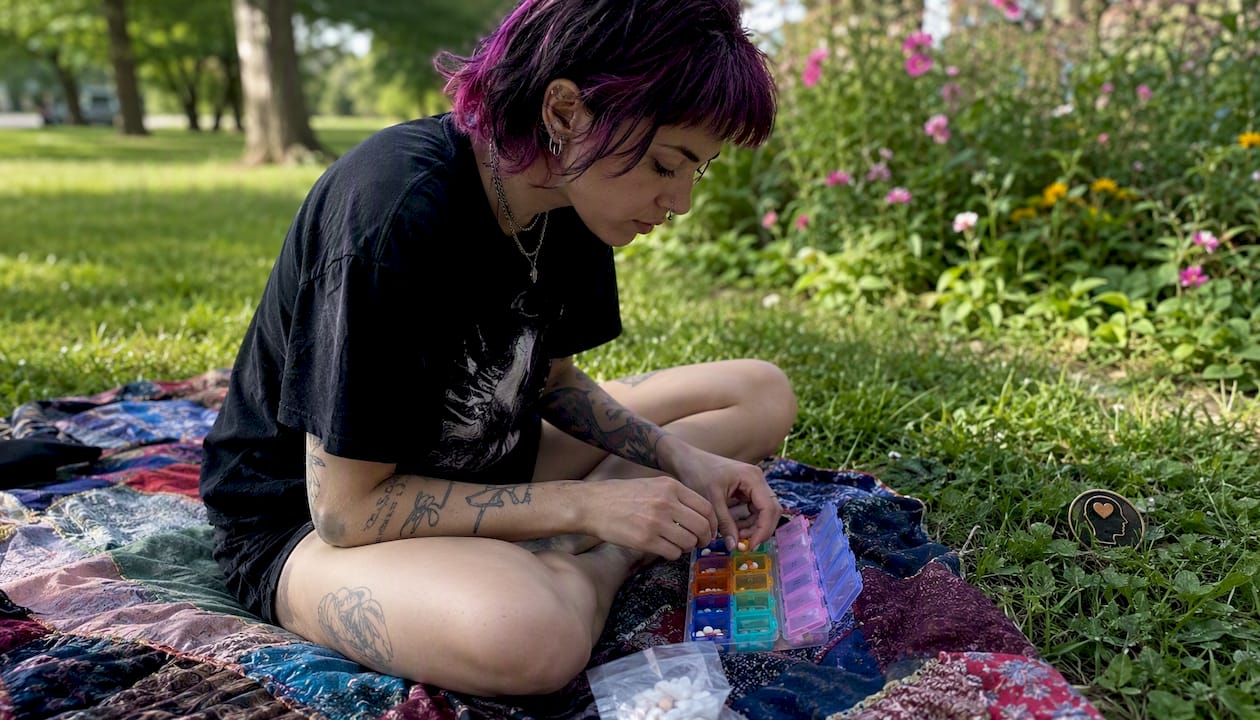
Medication, including clozapine when needed. Consistent medication use is the foundation in nearly every account cited here. Clozapine specifically tends to come up in the most dramatic turnarounds, particularly for people who didn’t respond to earlier antipsychotics. It typically requires regular blood monitoring, which is part of why it’s underused relative to how effective it can be for treatment-resistant cases.

Therapy. Cognitive behavioral therapy and other psychosocial approaches appear alongside medication in most stories, not instead of it. Our guide to therapy types for schizophrenia covers what CBT and family therapy actually involve.
Peer support and Clubhouse-style programs. Structured psychosocial rehab programs give people a place to rebuild routine, skills, and social connection at a manageable pace.

Vocational support and physical health. Employment programs, exercise, and diet all show up in Cleveland Clinic’s guidance, which quotes psychiatrist Travis Krew, MD, on why lifestyle factors aren’t secondary to medication, they’re part of the same plan.
Family support. Nearly every story mentions at least one person who stayed engaged through the hardest stretch.
Pro Tip: If you’re bringing up clozapine with a psychiatrist, ask directly: “Am I a candidate for clozapine, and what would monitoring look like?” That question alone moves the conversation faster than describing symptoms alone.
Where to Find Help: First Steps That Actually Work
You don’t have to figure this out alone, and you don’t have to start with a crisis.
- NAMI (National Alliance on Mental Illness) runs peer support groups, family education programs, and local chapters you can search by zip code through NAMI’s Get Involved page.
- Clubhouse International and Fountain House-style programs offer structured, member-run psychosocial rehab, often including job placement and social connection built around routine rather than clinical sessions alone.
- Community mental health teams typically coordinate medication management, therapy, and case management in one place, and are usually the fastest route to consistent care if you don’t already have a psychiatrist.
- Crisis lines exist for moments that can’t wait for an appointment.
If you’re calling on behalf of a family member: say plainly that you’re seeking support for a loved one with schizophrenia and ask what intake looks like. If you’re calling for yourself: naming the diagnosis and saying you want ongoing support, not just a one-time consult, usually gets you routed faster. These organizations are trustworthy because they’re either federally recognized nonprofits, peer-run and transparent about it, or directly tied to published clinical guidance like Cleveland Clinic’s.
The Honest Part: Relapses and Grief Are Normal
Recovery isn’t a straight line, and every credible story here includes a stretch where things got harder before they got better.
Anosognosia, a lack of insight into one’s own illness, is one of the biggest barriers to staying in treatment. It isn’t stubbornness or denial. It’s a neuropsychiatric symptom of the illness itself, which is why compassionate, creative approaches to adherence tend to work better than confrontation.
There’s also a harder truth many stories touch on only briefly: gaining insight can trigger grief. Realizing what psychosis cost you, in time, relationships, or opportunities, is its own kind of loss to process.
Pro Tip: Build a relapse plan while things are stable, not during a crisis. List early warning signs, who to call, and what worked last time. Write it down somewhere both you and a trusted person can find it.
Michelle Hammer and Schizophrenic.NYC
I’m Michelle Hammer, founder of Schizophrenic.NYC, and I built this platform after my own diagnosis to prove that people living with schizophrenia can still lead full, creative, outspoken lives. Our mission is simple: use bold clothing, art, and honest storytelling to make schizophrenia something people can talk about instead of something they hide.
Ways to engage with that mission:
- Public speaking, including talks like my speech at This Is My Brave in NYC
- Wearable art designed to spark conversation rather than blend in
- Story-sharing through the Connected by Schizophrenia initiative
If you want to share your own story with us or elsewhere, a couple of things matter. Always get consent before posting someone else’s experience, even a family member’s. Add a content note if your story includes psychosis, suicidal ideation, or hospitalization. Your story is yours to tell, but detail is optional, and you never owe anyone the hardest parts.
Why Sharing These Stories Matters
Stories like these don’t replace treatment, they make people willing to start it. Someone newly diagnosed who reads Bethany Yeiser’s account or Chris’s triathlon finish line is more likely to stay in therapy, take medication seriously, and ask about clozapine instead of giving up on treatment altogether. Every story here should be read alongside real clinical care and local resources, never as a substitute for either.
Wear Your Advocacy, Not Just Your Diagnosis
There are other ways to support this work, donating to nonprofits, attending awareness walks, sharing a post. But if you want something you can put on every single day that starts a conversation instead of ending one, that’s exactly what Schizophrenic.NYC’s clothing was built for. Every tank top or piece from our mental health awareness apparel turns a private diagnosis into a public statement, on your terms, when you’re ready.
This article is informational and isn’t a substitute for care from a licensed mental health professional.
Ready to make advocacy part of your wardrobe? Browse our tank top collection or learn how to get involved through Becoming Schizophrenia Advocates.
Sources
- My Schizophrenia Recovery Today | Psychology Today
- The Story of Bethany Yeiser – CURESZ Foundation
- Living With Schizophrenia: Strategies and Self-Help | Cleveland Clinic
- Get involved | NAMI
This article is general information, not a substitute for advice from a qualified doctor. Consult a qualified healthcare professional about your own circumstances before acting on anything here.
Recommended
- Using My Schizophrenia to Help Others | Schizophrenic.NYC Mental Health Clothing Brand
- What Is Recovery in Schizophrenia: A Real Guide
- PsychCentral.com Stories Of Recovery Video Interview | Schizophrenic.NYC Mental Health Clothing Brand
- How A Determined Schizophrenic Woman From NYC Is Breaking Stigma About Mental Illness | Schizophrenic.NYC Mental Health Clothing Brand