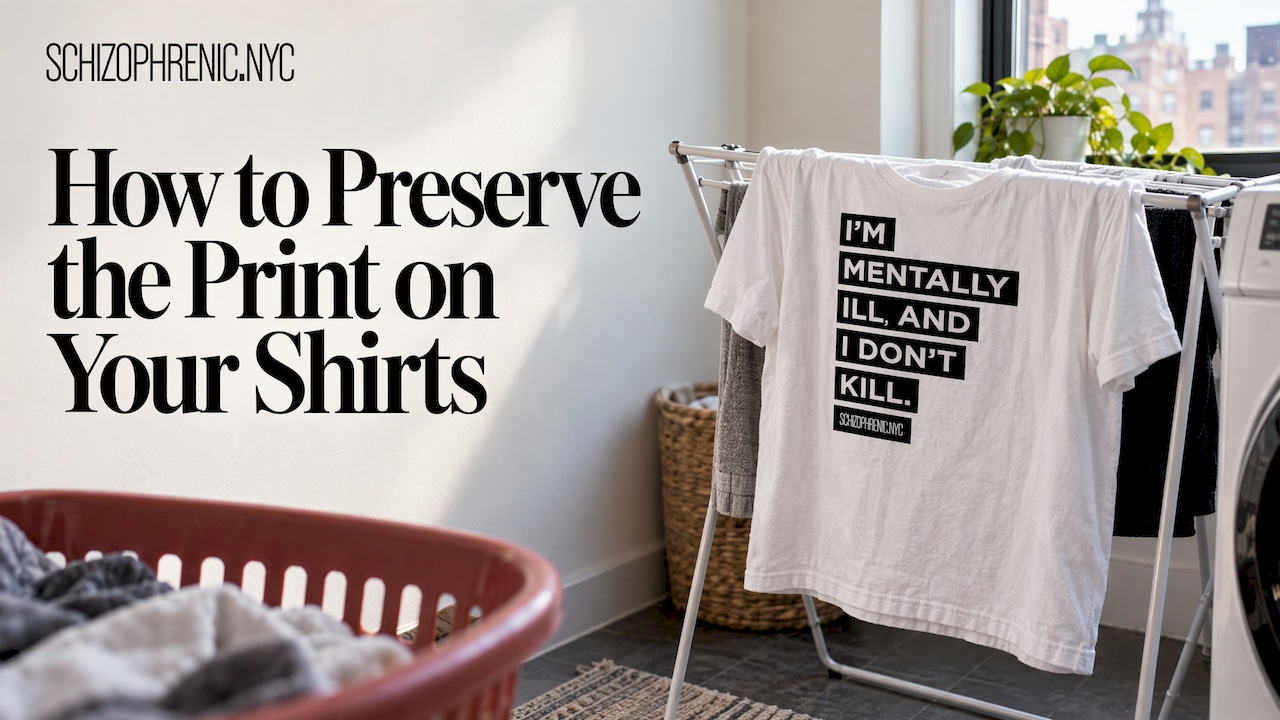
Turn the shirt inside out, wash it cold on a gentle cycle with mild detergent, skip the fabric softener and let it air dry away from direct sun. Those four habits protect almost every printed shirt, because heat, friction and harsh chemicals are what break a design down. A shirt with a message you care about deserves to last, and with a little routine it will.
If you wear your advocacy on your chest, the print is part of how you start conversations. Here is how to keep it bold, wash after wash, from the first wear to the back of the closet.
TL;DR
- Wash inside out, in cold water, on a gentle cycle, with mild detergent. No bleach, no fabric softener.
- Air dry flat or on a hanger in the shade. If you use a dryer, choose the lowest heat and take the shirt out while it is still slightly damp.
- Never put an iron directly on the design. Iron inside out or use a thin cloth between the iron and the print.
- Treat stains from the back, blot instead of rubbing, and avoid acetone, alcohol and chlorine bleach near a print.
- Store shirts completely dry, away from sun and humidity, and check the care label first: it always wins over general advice.
Table of Contents
- Why prints crack, fade and peel
- Before the first wash
- How to wash a printed shirt
- How to dry it without damage
- Ironing and steaming
- Treating stains around a print
- Storing shirts so the print lasts
- Not every print is the same
- Fixing a print that is starting to go
- Our perspective
- Shop pieces made to be worn and re-worn
- A simple weekly routine
- FAQ
- Sources
Why prints crack, fade and peel
Most printed shirts carry a thin layer of ink or film bonded to the fabric with heat. A shirt can be cured, or fixed, at roughly 290 to 350°F, and putting high heat back on the ink after that point is what produces the fading, cracking and peeling people blame on “cheap shirts.” The same logic explains why fabric softener and dry-cleaning solvents are risky: they interact with or dissolve the ink.
So the goal is simple. Keep the print cool, keep it from rubbing, and keep chemicals away from it. Everything below is a version of that.
Before the first wash
If your shirt is brand new, give it a day. Guidance for screen printed shirts is to wait 24 hours before the first wash so the ink can fully settle. It is a small pause that costs nothing.
Then look at the care label inside the collar or side seam. Printing methods differ, and the label is the maker’s instruction for that exact garment. Where it says do not tumble dry, believe it: that warning is usually there because heat could affect the print or fabric.
How to wash a printed shirt
- Turn it inside out. This keeps the design from rubbing against zippers, other clothes and the drum.
- Use cold water and a gentle cycle. One manufacturer’s guidance for printed products is cold water, gentle cycle, mild detergent, no fabric softener. A guide with specific numbers puts the sweet spot at 60 to 80°F (15 to 30°C).
- Pick mild detergent. Choose one without bleach or optical brighteners. Use the amount on the bottle, not extra.
- Don’t overload the machine. A crowded drum means more friction. Skipping dryer sheets matters too, since softener residue can weaken ink and leave it dull over time.
- Use a mesh bag if you have one. It adds another layer of protection for graphic tees.
Wash printed shirts with similar colors and soft fabrics. Jeans, towels and anything with hooks or zippers are the usual culprits for scuffed designs.
A note on hoodies and sweatshirts
Thicker fabric holds more water and takes longer to dry, which tempts people into the hot dryer. If hoodies are your daily uniform, our guide to washing hoodies without shrinking or fading goes deeper on fabric care.
How to dry it without damage
Air drying is the gentlest option. Lay the shirt flat or hang it in a shaded, ventilated spot. Direct sun speeds up fading, especially on rich reds, blues and blacks, so a shady rack beats a sunny windowsill.
Sometimes you need the dryer, and that is fine if you do it carefully:
- Turn the shirt inside out.
- Choose the lowest heat and the shortest cycle.
- Take it out while it is slightly damp, and let it finish on a hanger. Prolonged high heat can cause early cracking.
- Use wool dryer balls instead of dryer sheets. Sheets leave a waxy coating that interferes with print adhesion.
For a new screen printed shirt, the same source suggests that the first three to five drying cycles matter most, so air dry during those first washes before moving to low heat.
Ironing and steaming
Wrinkles happen, and you can handle them without harming the design. Never iron directly on the print. Turn the shirt inside out and use low heat, or place a clean cotton cloth between the iron and the design. Skip the steam setting. If you prefer a handheld steamer, hold it 8 to 10 inches from the print so moisture doesn’t build up on the design.

The reason is plain physics: one guide notes that plastisol ink melts at 160°C and will transfer onto an iron or pressing cloth if you press it directly. A household iron on a medium setting can reach that range easily.
Treating stains around a print
The golden rule: work on the fabric, not the design. Act quickly, and follow this routine:
- Blot, don’t rub. Rubbing grinds the stain in and scuffs the ink.
- Work from the back. Treat the stain from the inside of the shirt when you can, dabbing gently with a mild liquid detergent.
- Choose gentle products. For oily food, makeup or sunscreen, mild dish soap and a cool rinse from the back of the fabric work well.
- Let it sit, then wash cold. After a few minutes, wash on a gentle cycle and air dry first. Dryer heat can set a stain for good.
- Test first. Try any pre-treatment on a hidden or undecorated spot.
Keep acetone, paint thinner and pure alcohol away from prints, because they can dissolve or discolor the design. Chlorine bleach is just as harsh: it can destroy nearly any decoration method. For mud or grass, let it dry and brush the particles off before a cold soak.
Sweat and deodorant marks
Underarm stains are the most common trouble on a favorite tee. A baking soda and water paste applied to the fabric and left for 30 minutes is one approach, and we have a full walkthrough for fresh and set-in deodorant stains.
Storing shirts so the print lasts
Many shirts fail in the closet, not the washer. Follow these habits:
- Make sure the shirt is completely dry before folding or hanging. Damp storage invites mildew.
- Keep the design from rubbing. Store with the design facing inward or hang them so the print doesn’t scrape against other surfaces.
- Choose a cool, dry spot. Heat and humidity speed up ink breakdown, so avoid attics and garages with big temperature swings.
- Don’t overpack drawers. Pressure creates creases that turn into crack lines. Upright folding spreads the pressure more evenly.
- Mind the hanger. Hanging can stretch some fabrics, so folding flat is often kinder to heavy shirts. If you hang, choose a rounded, properly sized hanger.
Avoid dry cleaning. Harsh solvents can make plastisol ink crack and peel.
Not every print is the same
Methods differ, and so does their tolerance. In general, screen prints can be tumble dried on low, while DTF (direct-to-film) and heat transfer vinyl prints should be air dried. Here are lifespans reported for well-cared-for prints:
| Print method | Reported lifespan with proper care | Care note |
|---|---|---|
| Screen print (plastisol) | 50 to 100+ washes | Cold or warm wash, hang dry preferred |
| DTG (direct-to-garment) | 30 to 75 washes | Cold water only, gentle cycle, no direct ironing |
| DTF | 25 to 60 washes | Air dry, because high heat can re-melt its adhesive |
| Heat transfer vinyl | 25 to 50 washes | Air dry |
| Sublimation | 100+ washes | Very durable, rarely peels |
These are estimates, and your own washing habits matter more than the number. One guide reports that hot water and high dryer heat can cause visible cracking in as few as 10 to 20 washes. Another says low-heat drying can be the difference between about 30 and 100 washes for DTF.
When in doubt, use the strictest routine: cold, inside out, gentle, air dry. It is safe for every method in the table.

The fabric matters too
The shirt underneath changes how a print looks over time. If you are curious about how blends hold up, read our comparison of tri-blend and cotton tees after 20 washes, or how garment dye and pigment dye behave across 100 washes.
Fixing a print that is starting to go
Some fading is natural. One manufacturer’s support page says that gradual fading over time is normal for printed garments, but peeling after just a few washes is not what you should expect.
What can you do when a print starts to wear?
- Hairline cracks in a print that is still stuck down: place parchment paper over the design and press with a dry iron on medium-high for about 30 seconds. Let it cool completely before you lift the paper. Lifting it hot is a common way this repair fails.
- Deeper cracks: filling with matching fabric marker or textile paint and heat-setting it can create a lasting bond.
- Flaking or peeling in chunks: the bond is gone, and a heat fix won’t be permanent.
Repair depends on the method. Edge lifting on less than 10% of a print’s perimeter is repairable, while cracking through the body of the design is not. If your shirt cracks within the first few washes despite cold water and low heat, contact the seller with photos and your order number. That is a reasonable thing to ask, and it is better than quietly retiring a shirt you love.
Our perspective
A shirt with a message on it is not just clothing to us. It is a conversation you carry into a room. When I started making wearable art about schizophrenia, the idea was simple: if people can see the words and the artwork, talking about mental illness gets a little easier for everyone.
That is why I care about how long a design stays readable. A faded print is a quieter conversation. The routine above is not fussy. It is a few seconds at the washer, and it keeps a bold graphic bold. Wash cold, hang it up, and wear it proudly.
The same care applies across what we make: tees, hoodies, tank tops, totes and more. Our designs come from lived experience, and we hope they get worn for years, not seasons.
Michelle
Shop pieces made to be worn and re-worn
If you are ready to add to your rotation, start with our mental health T-shirts, hoodies and sweatshirts or awareness tank tops. Each carries original advocacy artwork by Michelle Hammer, a schizophrenia activist, and is meant to start a conversation. Prefer something for the wall? Our mental health canvas prints bring the same art home. Browse the whole collection at Schizophrenic.NYC.
If you carry your message in a tote, our guide to waterproofing a canvas tote and protecting its print covers the bag side of the same care.
A simple weekly routine
Habits stick when they are easy. Here is a version you can run on laundry day:
- Sort printed shirts into their own load, with soft fabrics only.
- Flip each one inside out and zip them into a mesh bag if you have one.
- Set the machine to cold and gentle, add the normal amount of mild detergent, and skip the softener.
- Check for stains as you unload. Treat from the back while the shirt is still damp.
- Hang or lay flat in the shade. If you must use the dryer, go low and stop while the shirt is slightly damp.
- Fold or hang only when it is bone dry.
That is it. Six steps, no special products, and no extra time once it becomes habit.
FAQ
How do I keep a printed shirt from cracking?
Avoid the two main causes: heat and friction. Wash inside out in cold water on a gentle cycle, and air dry or use the lowest dryer heat. Repeated high heat makes cotton fibers contract and prints lose flexibility, which is how tiny cracks begin.
Can I put a printed shirt in the dryer?
Often yes, if you do it carefully. Turn it inside out, use low heat, and remove it while slightly damp. Air drying is gentler, and DTF and heat transfer prints should be air dried, so check your care label first.
Can I iron a shirt with a graphic on it?
Yes, as long as the iron never touches the design. Iron inside out on low heat, or lay a thin cotton cloth over the print. You can also steam gently from the back.
Is it normal for a print to fade over time?
Gradual softening over years is normal wear. Early cracking or peeling after only a few cold, gentle washes is not what you should expect. Send photos and your order number to the seller so they can look into it.
Can I restore a cracked print?
Hairline cracks on a print that is still attached can sometimes be pressed back down with parchment paper and a dry iron. Deep cracks can be filled with matching textile paint. Once ink is peeling in chunks, the repair will not last.
Sources
- How to take care of printed products: cold, gentle, no softener
- Custom apparel care guide: curing and first wash
- Screen printed apparel care: washing, drying, ironing and stains
- Printed apparel care instructions: softener, ironing and steaming
- Washing graphic tees: mesh bags and drying
- Printed shirts and dryers: heat and the care label
- Washing graphic tees: stain treatment
- Caring for custom shirts: ironing and solvents
- Laundry symbols guide: ink chemistry and stains
- Custom shirt care: drying and dryer balls
- Caring for printed T-shirts: storage and dry cleaning
- Graphic T-shirt longevity and closet storage
- Washing graphic tees: curing temperatures and heat
- Washing printed T-shirts: durability by print method
- Garment care guide: wash temperatures
- Custom print durability and care guide
- Fixing a cracked screen print
- Washing shirts and hoodies to keep the print: normal fading
- Repairing peeling prints by print type
Recommended
- Stop Shrinkage and Fading When You Wash Hoodies with Fabric First Care
- Stay Sharp After 20 Washes: Tri Blend vs Cotton for Advocacy Tees
- Pick Heather or Solid T Shirts That Print Clean for Advocacy Tees