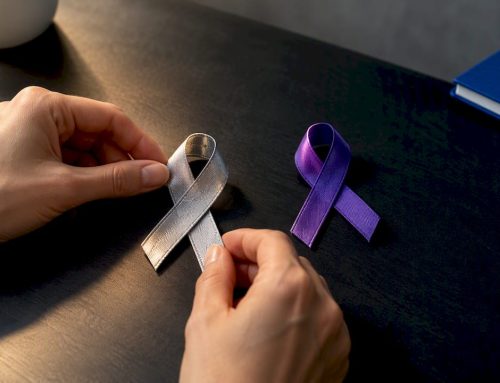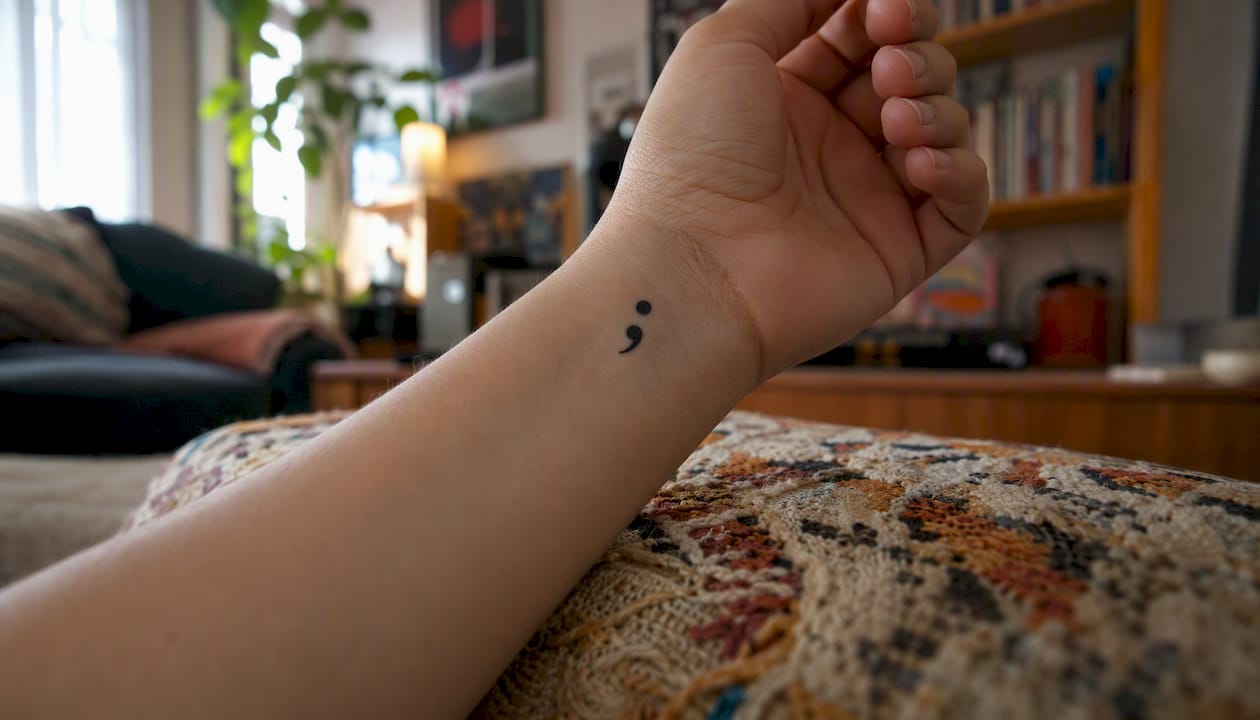
In mental-health contexts, the semicolon means that a person’s story continues. A writer could have ended the sentence there. They chose the semicolon instead, and the sentence went on. The mark traces back to Project Semicolon, founded by Amy Bleuel in 2013 as a suicide-prevention and mental-illness awareness movement. If you or someone you know is in immediate danger, call 988 (the U.S. Suicide & Crisis Lifeline) or 911 right now. Everything else in this article matters. That doesn’t.
Key Takeaways
The semicolon means the story isn’t over: it signals continuation and authorship, not a cure, and it works best paired with real crisis resources and professional care.
| Point | Details |
|---|---|
| Core meaning | The semicolon marks a sentence, and a life, that could have ended but didn’t. |
| Origin | Amy Bleuel founded Project Semicolon in 2013 as an advocacy movement, not a clinical service. |
| Urgent resources | Call 988 for the U.S. Suicide & Crisis Lifeline, or 911 for immediate danger. |
| Ask, don’t assume | A tattoo or symbol can mean survival, memorial, or something unrelated to mental health entirely. |
| Complement, not cure | Pair the symbol with therapy or crisis support rather than treating it as the endpoint. |
| Advocacy wearables | Schizophrenic’s buttons and tank tops offer conversation-starting tools, not treatment substitutes. |
Table of Contents
- What Does the Semicolon Mean in Mental Health?
- Where Did the Semicolon Symbol Come From?
- What Do Semicolon Tattoos Usually Mean?
- Semicolons, IGY6, and Other Related Symbols
- Why Suicide-Prevention Advocates Rely on the Semicolon
- What to Do If Someone Shows You a Semicolon Symbol
- Where the Semicolon Movement Falls Short
- Why This Matters to Me
- Wearable Ways to Start the Conversation
- Frequently Asked Questions
- Sources
What Does the Semicolon Mean in Mental Health?
A semicolon connects two clauses that could have stood as separate sentences. Grammatically, a period would have worked. So would ending things there. The writer decided the thought wasn’t finished, and used a semicolon to keep going instead.
That’s the whole metaphor, and it’s why it landed so hard with people who’d thought about ending their own sentence. Project Semicolon frames it directly: the author is you, and the sentence is your life. You are still the one writing it.
People have stretched that core idea into several overlapping meanings, depending on what they’re carrying:
- Survival: I thought about ending it, and I didn’t.
- Authorship: I’m still in control of what happens next in my own story.
- Solidarity: I see you, and you’re not the only one who has felt this way.
- Ongoing recovery: This isn’t finished, and neither am I.
- Memorial: I carry someone I lost, and I keep going for both of us.
You’ll see the phrase “the author is you; the sentence is your life” on tattoos, jewelry, and social posts almost verbatim, because it captures the idea in one line better than most people can paraphrase it themselves.
One thing the symbol does not do: guarantee anything. Psychology Today’s coverage of the movement points out that its real strength is how little it promises. It doesn’t claim recovery is easy or linear. It says the story continues, full stop, and leaves the hard parts of continuing to the person actually living it.
Where Did the Semicolon Symbol Come From?
Amy Bleuel started Project Semicolon in 2013, after her father died by suicide in 2003. She built the project around a punctuation mark and a simple challenge: draw a semicolon on your wrist, post it, tell someone your story if you wanted to. It cost nothing and required no clinical credentials to participate in.
The mission was never to function as a treatment provider. Project Semicolon describes itself as a community built on hope, love, and support, not a substitute for therapy, medication, or crisis care.
| Milestone | What happened |
|---|---|
| 2013 | Amy Bleuel founds Project Semicolon as an awareness and suicide-prevention movement. |
| 2013 | Semicolon tattoos and drawings circulated widely on social media as a visible, shareable symbol. |
| — | Bleuel dies; the movement continues under the nonprofit she built. |
The spread wasn’t driven by advertising budgets or press campaigns. It was driven by photos. Images of semicolon tattoos have been shared online millions of times since the project’s founding, turning a punctuation mark into one of the most recognizable mental-health symbols of the last decade. Few advocacy campaigns achieve that kind of organic reach without a celebrity endorsement or a corporate sponsor behind them.
What Do Semicolon Tattoos Usually Mean?
Placement often says something about how open a person wants to be about it. Wrists and forearms are visible, easy to show, and often chosen by people who want the tattoo to prompt a conversation. Behind the ear or on the ankle tends to signal something more private, a reminder meant for the wearer more than for anyone who happens to glance over.
Embellishments layer in extra meaning without changing the core message:
- A heartbeat line through the semicolon usually points to survival, literally staying alive through something.
- A butterfly often signals transformation or growth after a hard period.
- A name or date typically marks a loss, a memorial for someone the wearer lost to suicide.
- Color choices, like teal or purple, sometimes tie the tattoo to a specific cause, such as suicide prevention or a particular diagnosis.
Here’s the clinical caution worth sitting with: a semicolon tattoo doesn’t come with a decoder ring. The American Journal of Psychiatry Residents’ Journal notes that the tattoo can be clinically significant, but it can just as easily be decorative, a tribute to a friend, or something the wearer chose for reasons that have nothing to do with their own mental-health history. Assuming a story from ink alone is a mistake even trained clinicians are told to avoid.
Semicolons, IGY6, and Other Related Symbols
Multiple semicolons in a row, or semicolons combined with numbers, show up often enough to notice, but they don’t carry one fixed meaning. Project Semicolon itself acknowledges that people personalize the symbol constantly, mixing it with dates, initials, or repeated marks that only make sense to the wearer or their close circle.
IGY6 (“I got your six”) is a related but distinct symbol, popular among veterans and first responders, that draws on military language for “watching your back.” It shares the same underlying goal, prevention and solidarity, but grew out of a different community with different origins than Bleuel’s project.
It’s also worth knowing the semicolon isn’t exclusively a mental-health symbol at all. Some patients with Crohn’s disease or those who’ve had colon surgery use a semicolon tattoo for entirely literal reasons tied to their diagnosis, unconnected to suicide or mental illness. That overlap is exactly why asking rather than assuming matters, a point worth carrying into how you actually respond to someone wearing one.
Why Suicide-Prevention Advocates Rely on the Semicolon
The symbol succeeded as a prevention tool for reasons that are more practical than sentimental. It works because it’s small, visible, and easy to adopt without any barrier to entry.
- It’s a visual invitation. A tattoo, sticker, or piece of jewelry opens a door to conversation without forcing anyone to say the word “suicide” first.
- It signals solidarity. Seeing the mark on someone else tells a struggling person they’re not the only one who has been where they are.
- It’s low-barrier. No membership, no clinical referral, no cost beyond a tattoo or a bracelet. Anyone can adopt it the same day they decide it means something to them.
- It’s shareable. A photo travels faster and farther than a pamphlet ever could, which is exactly how the movement built its reach in the first place.
None of that makes it a treatment. Coverage of the tattoo’s broader use across depression, addiction, and trauma communities is consistent on this point: the symbol is a bridge to support, not a stand-in for it.
What to Do If Someone Shows You a Semicolon Symbol
If a friend shows you a semicolon tattoo, or tells you they’ve thought about not being here anymore, what you say next matters more than you might think. Here’s a straightforward sequence to follow.
- Ask directly. “Are you thinking about suicide?” is a clearer, safer question than a vague “Are you okay?” Direct language doesn’t plant the idea; it opens the door.
- Listen without fixing. Let them talk before you problem-solve. Try: “Thank you for telling me. Can you tell me more about what’s been going on?”
- Ask what the symbol means to them. Something like “Can you tell me what that means to you?” respects that meaning is personal instead of assuming you already know it.
- Escalate when needed. If they describe a plan, a timeline, or access to means, treat it as urgent. Call 988 together, or 911 if there’s immediate danger.
- Encourage professional support. A tattoo or a conversation can open a door, but ongoing care, therapy, medication, psychiatric support, is what actually carries someone through.
Pro Tip: Clinicians and allies alike can treat a semicolon tattoo as a low-resistance conversation starter. Research in the American Journal of Psychiatry Residents’ Journal found that gently asking about a patient’s tattoo can surface a suicide history they might not have volunteered otherwise. It works because it’s the patient’s symbol, on their terms, not a clinician’s checklist question.
Where the Semicolon Movement Falls Short
The symbol isn’t beyond criticism, and it shouldn’t be treated that way. A few limitations are worth naming plainly.
- It can oversimplify. Reducing years of clinical struggle to a punctuation mark risks flattening something far more complicated than a tattoo can hold.
- It can retraumatize. For some people, a symbol tied to suicide is a trigger, not a comfort, especially if it’s used casually in marketing or fashion without context.
- It invites performative use. A symbol that goes viral inevitably gets adopted by people, and brands, with no real connection to the cause, which can dilute what it originally meant.
- It’s not diagnostic. A tattoo tells you nothing certain about someone’s current mental state. Treating it as a clinical shortcut, in either direction, is a mistake.
The symbol works best as a complement to real care, not a replacement for it. Therapy, medication when appropriate, and crisis intervention remain the things that actually treat mental illness. The semicolon just makes it easier to start the conversation that leads someone there.
Why This Matters to Me
I’ve spent years watching people wear their mental health, sometimes literally, as a way to say what they can’t say out loud yet. The semicolon works for the same reason Schizophrenic’s own clothing and art work: visibility lowers the cost of the first conversation. Nobody has to explain their whole diagnosis to a stranger. They just have to point at a symbol and say, “This is part of my story,” and let the other person decide whether to lean in.

What I push back on is treating the semicolon, or any wearable symbol, as the finish line. It’s not recovery. It’s not treatment. It’s an opening line. I’ve met people who got a semicolon tattoo the same year they finally started therapy, and I’ve met people who got one and never followed up with anything else. Both are valid choices about their own bodies. But if you’re reading this because you’re building an advocacy habit around this symbol, aim it toward getting people connected to actual mental health recovery resources, not just toward looking good on a feed. That’s the difference between a symbol that helps and one that just decorates.
Wearable Ways to Start the Conversation
There are other routes to talking about mental health openly, a tattoo, a bracelet, a hashtag, and each one carries its own weight and permanence. Schizophrenic takes a different route: bold, wearable pieces you can put on and take off, tested in real conversations without a needle involved.
Our mental health buttons work as small, low-commitment conversation starters you can pin anywhere. Our awareness tank tops put the message somewhere impossible to miss, built for people who want their support visible, not whispered. Every product is an advocacy tool, not a clinical one. None of it replaces therapy, medication, or a call to 988 when someone needs it. What it does is make the first conversation a little easier to start, which is where most people actually get stuck. If that’s the piece you’re missing, browse the tank top collection and pick one that says what you haven’t found the words for yet.

Frequently Asked Questions
Why a semicolon specifically?
Because a semicolon joins two clauses that could have been separate sentences. The author chose to keep writing instead of stopping, which is exactly the metaphor Project Semicolon built the entire movement around.
What does a semicolon tattoo mean on someone’s wrist?
It usually signals survival, an ongoing recovery, or solidarity with others who’ve struggled with suicidal thoughts, depression, or self-harm. It can also honor someone lost to suicide. Placement and added imagery, like a heartbeat line or a name, often narrow down which meaning applies.
What does it mean when someone has three semicolons?
There’s no single fixed meaning for multiple semicolons together. It’s usually a personal choice, sometimes tied to specific dates, initials, or a private significance the wearer assigns rather than a universal symbol.
Is the semicolon symbol only about suicide prevention?
No. People also use it to represent survival from addiction, trauma, or chronic mental illness more broadly. Outside mental health entirely, some people use a semicolon tattoo to reference Crohn’s disease or colon surgery, which is why asking about meaning beats assuming it.
Should I ask someone what their semicolon tattoo means?
Yes, gently and without pressure. A simple “Can you tell me what that means to you?” respects their story and can open a meaningful conversation, especially if you’re a clinician, friend, or family member who’s noticed it.
Sources
- The Semicolon Tattoo – Project Semicolon
- The Semicolon Tattoo | American Journal of Psychiatry Residents’ Journal
- Semicolon Punctuates Mental Health Awareness | Psychology Today
- Semicolo Tatto Meaning: Symbolism, Origins, and Impact | HowStuffWorks
Recommended
- It’s Cool To Have A Mental Illness | Schizophrenic.NYC Mental Health Clothing Brand
- Let’s End The Stigma Related To Mental Health | Schizophrenic.NYC Mental Health Clothing Brand
- Why Language Matters in Mental Health: A Real Guide
- Do I have to be PC about my own mental illness? | Schizophrenic.NYC Mental Health Clothing Brand