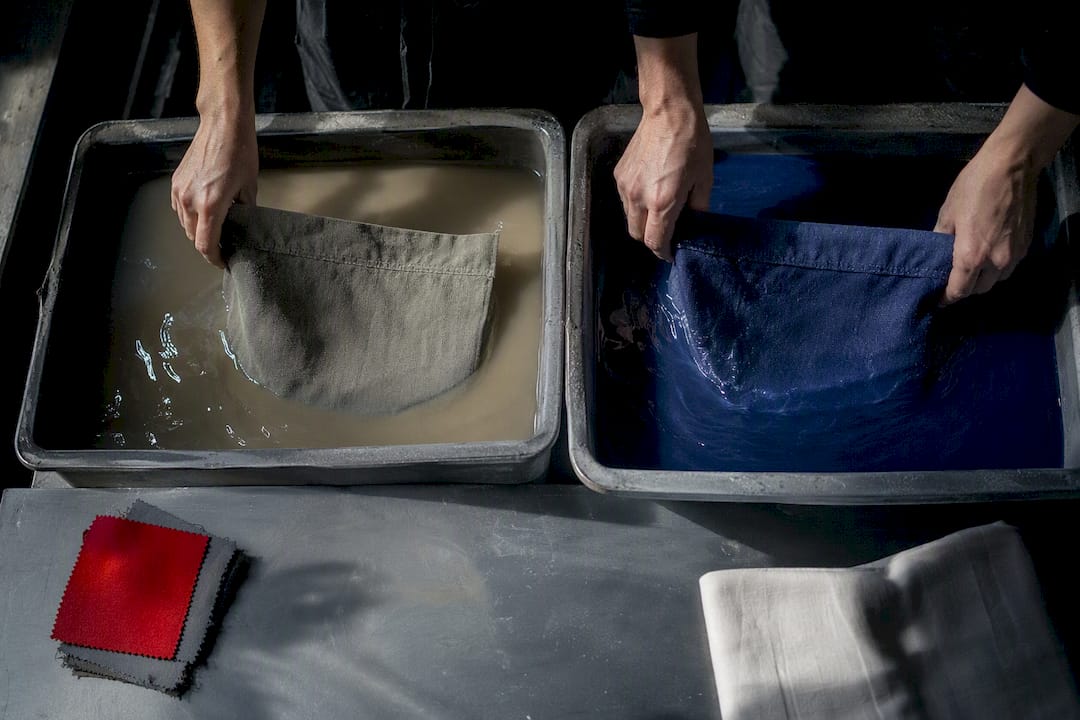
Pigment dyeing coats the outside of a finished garment with insoluble color particles held on by a binder, which is what gives you that soft, weathered look production teams love. Garment dyeing works differently: it soaks the assembled piece in soluble dye that actually penetrates the fibers, so color runs deeper and holds up better over time. If you want that lived-in, slightly faded fashion feel, pigment is your friend. If you care more about a garment lasting through years of washing, garment dye usually wins.
TL;DR:
- Pigment dyeing coats garments’ surface with insoluble color particles, resulting in a muted, worn-in look that may peel or fade faster during washing.
- Garment dyeing involves immersing finished pieces in dye baths, producing even coloration that penetrates fibers and lasts longer through repeated washes.
- Pigment-dyed fabrics are typically about 10% less colorful than fully penetrated dye jobs and are more prone to crocking without proper curing, while garment dyeing offers better color fastness.
- Cost-effective for small runs and quick turnaround, pigment dyeing requires careful binder curing to avoid fastness issues, whereas garment dyeing demands precise process control but yields more durable colors.
- Selecting the right method depends on whether visual softness and flexibility are priorities or long-term wash durability and color retention, with environmental impacts varying based on chemistry and water use.
Table of Contents
- 1. Pigment dyeing: what it is and how it looks
- 2. Garment dyeing: dyeing the finished piece
- 3. Durability, fastness, and cost compared
- 4. How to tell which dye method was used
- 5. Printing and decoration: what to watch for
- 6. How to choose and care for each type
- 7. Environmental impact of each dyeing method
- 8. Cost differences between the two processes
- 9. Why dye method matters for advocacy apparel
- 10. Wear the message, care for the fabric
- Sources
- FAQ
1. Pigment dyeing: what it is and how it looks
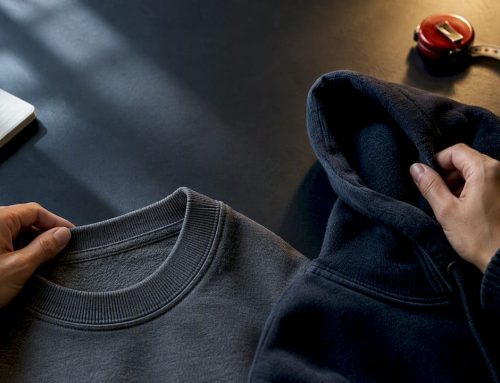
Pigment dyeing doesn’t dye anything in the traditional sense. It coats. The pigments themselves are insoluble particles, and since they can’t bond with fiber the way true dyes do, they need a binder to stick around at all, along with a cationic pretreatment that helps the fabric grab and hold color evenly. That combination is why pigment-dyed shirts and hoodies tend to look a little muted, a little worn-in, almost like they’ve already survived a summer. Because the color mostly sits on the surface, the inside of the garment often looks paler than the outside, sometimes noticeably so.
Production-wise, this happens after the garment is cut and sewn, not before, which is part of what makes pigment dyeing appealing to smaller brands working with tighter inventory. But it’s a process that punishes carelessness. Cotton Incorporated’s technical bulletin recommends a high liquor-to-fabric ratio of 20:1 along with staged temperature control, because uneven exhaustion during the cycle leads to blotchy, inconsistent color.
- Pigments require binders since they cannot chemically bond to fiber on their own.
- Inside-out color contrast is common and often intentional for the aesthetic.
- Lightfastness tends to be strong, but wash and rub resistance depend heavily on binder quality.
Pro Tip: If a pigment-dyed shirt feels slightly powdery or chalky to the touch before its first wash, that’s the binder layer. A gentle first wash on its own usually settles it down.
2. Garment dyeing: dyeing the finished piece
Garment dyeing skips the middle step. Instead of dyeing yarn or fabric before construction, the whole assembled garment goes into the dye bath, and the dye itself, often a reactive dye for cotton and other cellulosic fibers, actually penetrates the fiber structure rather than just sitting on top of it. That’s the core mechanical difference from pigment dyeing, and it’s why garment-dyed pieces usually show even color both inside and out, without that pale-lining giveaway.
A 2026 review of garment dyeing methods notes that reactive dyes remain the leading choice for cellulosic garments, and that getting a consistent shade across batches depends on tight recipe control and ongoing process monitoring rather than any one fixed formula.
- Reactive dyes bond chemically with cotton fibers rather than sitting on the surface.
- Some color bleeding in the first wash is normal and usually settles after that.
- Brands favor garment dyeing for tonal depth, over-dyeing older stock, or holding fewer pre-dyed inventory colors.
It’s worth knowing this method demands more precision up front, since the dye has to be reproducible enough to hit the same shade every time a brand reorders a color.
3. Durability, fastness, and cost compared
The performance gap between these two methods comes down to a simple fact: one method bonds with the fiber, the other rides on top of it. Garment dyes penetrate, so they generally hold color through repeated washing better than pigment coatings do. Pigment color depends entirely on how well the binder was cured and applied, and a weak binder means color loss accelerates with every wash cycle.
Crocking, that dry rubbing-off of color you sometimes see on new dark jeans, is a pigment-specific risk. Because the color sits on the surface, friction can transfer it to skin or other fabric if the cure wasn’t thorough. Cotton Incorporated’s guidance points to acrylic-based binders as one way to reduce that risk, though binder choice always trades against hand feel: a stronger binder improves fastness but can stiffen the fabric.
- Garment-dyed pieces typically resist washing loss better because dye penetrates the fiber itself.
- Pigment-dyed pieces resist light fading well but are more prone to crocking without proper binder curing.
- Stronger binders improve pigment fastness but often stiffen the finished hand.
- Pigment dyeing can run faster and require less pre-dyed inventory, though it may demand more quality checks per batch.
Pigment-dyed fabric often looks about 10% less colorful than an equivalent fully-penetrated dye job, which is exactly the muted effect fashion buyers are often chasing, not a flaw to correct.
Cost and durability pull in different directions here. Pigment systems can move faster through production, but a rushed cure means returns and complaints down the line. Garment dye asks for more process discipline before the garment ever ships, but it pays that discipline back in a longer wearable life.
4. How to tell which dye method was used
You don’t need a lab to figure this out. A few quick checks tell you almost everything.
- Check the inside of the garment against the outside. A big contrast usually means pigment dye; even color throughout usually means garment dye.
- Rub a light-colored cloth against the fabric while dry. Color transfer suggests pigment dye with an undercured binder.
- Run the first wash separately in cool water. Bleeding that fades quickly is typical of garment dye; surface color loss that continues wash after wash points to pigment.
- As a last resort, and only on a piece you’re not planning to sell or return, snip a small edge and look at the cut fiber. Pigment color rarely reaches the fiber’s core.
5. Printing and decoration: what to watch for
Decorators need to think about dye method before they think about ink. Pigment-dyed garments carry a real risk of dye migration, where residual surface color bleeds into a print during curing, especially under heat. The fix is usually low-bleed inks or a dye-blocker base layer, plus a thorough cure cycle that doesn’t cut corners.
Garment-dyed pieces bring a different challenge. Since the dye penetrates the whole fiber, discharge printing can strip the original color right out of the printed area, exposing whatever the fiber looked like before dyeing. That can be a design feature or an unwanted surprise, depending on whether the supplier planned for it.
- Ask suppliers for pretest swatches before committing to a full print run.
- Request written compatibility notes between the fabric’s dye method and your ink system.
- Wash printed pieces separately at first to catch migration issues before they spread to other garments.
Pro Tip: If you’re printing on a pigment-dyed base, ask your printer directly whether they’re using a dye-blocker. If they hesitate, that’s your answer.
For a real-world look at how printing choices interact with garment color, see our notes on printing dark tees and how ink and base fabric behave together in practice.
6. How to choose and care for each type
The right choice depends on what you’re actually optimizing for: look, wash life, printability, or budget. Here’s a practical way to work through it.
- Decide whether the weathered, softened look matters more to you than long-term color retention.
- If you’re printing logos or artwork, ask your supplier which dye method they use and request fastness test results before ordering.
- For pigment-dyed pieces, confirm the binder system and cure process; for garment-dyed pieces, ask about the dye class and expected wash stability.
- Always request swatches before a bulk order, especially for printed advocacy or branded apparel.
For care, the rules are simple across both methods: wash new garments alone the first time, use cool water and a gentle detergent, skip chlorine bleach entirely, and air-dry when you can rather than relying on high heat.
Pro Tip: Pick pigment dye for fashion pieces meant to look casually worn from day one. Pick garment dye for anything you want looking sharp after a hundred washes, like a piece carrying a message you want people to keep reading.

If you’re outfitting a booth or event and want more on apparel choices that hold up, our guide to advocacy apparel ideas covers the ground in more depth.
7. Environmental impact of each dyeing method
Neither method is automatically the greener choice, but they carry different environmental costs. Traditional pigment dyeing depends on binder chemistry, and the ratio of water to fabric matters a lot: industrial pigment garment dye cycles often run at a 20:1 liquor-to-fabric ratio with careful temperature ramping, which uses meaningful water and energy per batch to keep the pigment exhausting evenly.

Garment dyeing with reactive dyes has its own water and chemical footprint, tied to the dye bath, rinsing stages, and the wastewater treatment needed afterward. Some newer approaches are trying to close that gap. Mineral pigments have emerged as one option that can offer strong light and wash fastness while using less energy and easing wastewater handling compared to some conventional pigment systems.
For a brand thinking about sustainability, the honest answer is that both methods can be done responsibly or wastefully, and the details, binder chemistry, water ratios, wastewater treatment, matter more than the dye category itself. Asking a supplier what pigment or dye system they use, and whether they’ve adopted lower-impact options, tells you more than assuming one method is inherently cleaner than the other.
8. Cost differences between the two processes
Pigment dyeing tends to be the more budget-friendly route for smaller production runs. Because it happens after the garment is assembled, brands can hold undyed inventory and dye to order, which cuts down on unsold, mismatched stock. The tradeoff is quality control: a rushed or poorly cured binder cycle creates fastness problems that show up as returns, which quietly eats into any savings.
Garment dyeing with reactive dyes generally asks for more precision earlier in the process, tighter recipe control and consistent process monitoring, according to the 2026 review of garment dyeing methods. That precision usually comes with a higher per-unit cost, but it buys longer-lasting color and fewer wash-related complaints down the line.
For small advocacy or awareness brands working with limited runs, pigment dyeing often makes financial sense upfront. For anyone building a piece meant to be worn for years, the extra cost of proper garment dyeing tends to pay for itself in how the garment ages.
9. Why dye method matters for advocacy apparel
Every shirt and hoodie carrying a message should maintain visibility through multiple washes. Paying attention to dye method and binder quality is important for printed pieces, and including clear care guidance with orders helps preserve the message’s clarity.
— Michelle
10. Wear the message, care for the fabric
Whatever dye method a garment uses, the goal is the same: color and message that hold up to real life. Our Mental Health T-Shirts and Mental Health Hoodies And Sweatshirts are built with that in mind, designed by someone who lives the message they carry rather than just printing on it. Each piece features bold, original artwork meant to spark conversation and reduce stigma around schizophrenia and mental illness.
Before that first wash, check the care label. A cool wash, a gentle detergent, and skipping the dryer’s high heat setting will keep your artwork sharp for years, not just weeks. Browse the full shop to find a piece that fits your story.
Sources
- Garment dyeing: Mechanisms, process variables and advances in coloration technology – Wiley Online Library
- Technical bulletin: Garment dyeing with pigments – Cotton Incorporated
- Screenprinting
- Dyeing basics and pigment colorant properties – CottonWorks booklet
FAQ
Is pigment dyed the same as garment dyed?
No. Pigment dyeing coats the outside of a finished garment with insoluble color particles bonded by a binder, while garment dyeing soaks the assembled piece in soluble dye that penetrates the fiber itself. The two can look similar at a glance, but they perform very differently over repeated washes.
Which is better, dye or pigment?
Neither is universally better since they serve different goals. Garment dye generally holds color through washing better because it bonds with the fiber, while pigment dye often wins on that soft, weathered aesthetic and tends to resist fading from light fairly well.
Is garment dye better?
Garment dye tends to outperform pigment dye on long-term washfastness because the dye penetrates the fiber instead of sitting on the surface. Pigment dye still has its place for fashion pieces where a faded, casual look is exactly what you want from day one.
Which is the best form of dye in garments?
There isn’t a single best method, since the right choice depends on your priorities. Reactive dyes remain a leading option for cellulosic fabrics like cotton when even, lasting color matters most, while pigment systems suit garments where a weathered look and production flexibility come first.