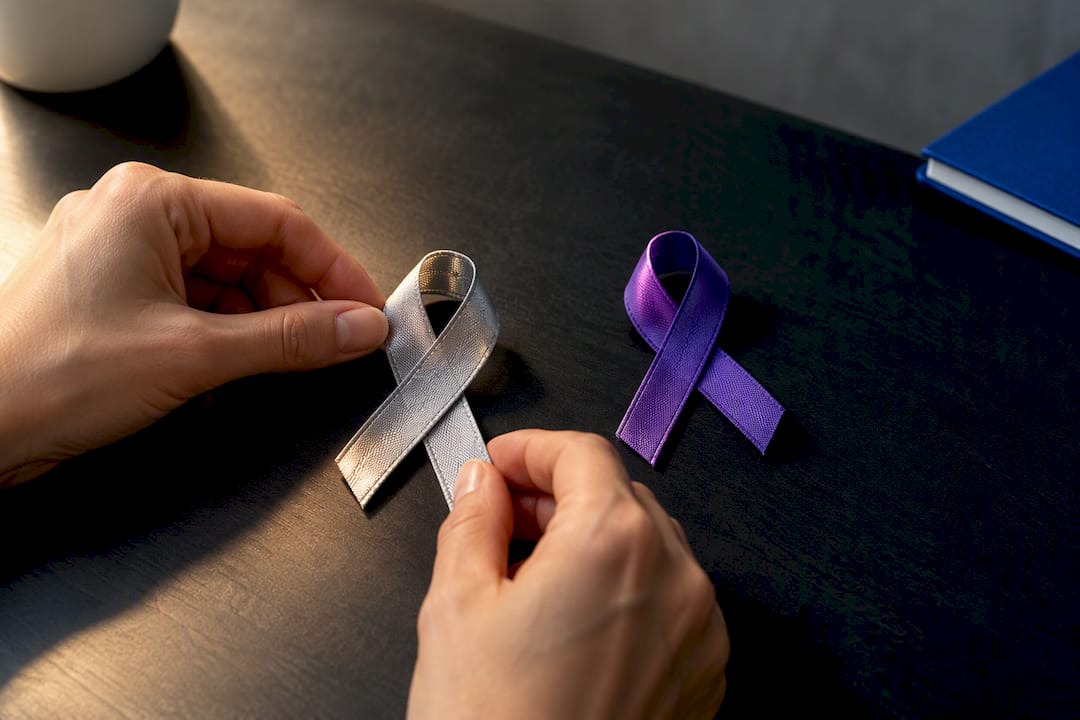
The silver ribbon is the color and symbol most widely used for schizophrenia awareness, adopted by hospitals and medical schools to represent brain disorders, hope, and stigma reduction. Some advocacy groups use purple instead for their own campaigns. Whichever color you see, it means the most when it’s paired with real information, not left to stand alone as a symbol without context.
TL;DR:
- The silver ribbon is the most common symbol for schizophrenia awareness, representing support, hope, and efforts to reduce stigma when paired with educational resources.
- Some organizations use purple for their campaigns, but there is no official color standard, so the organizing group’s branding determines the appropriate choice.
- Participating in awareness events involves wearing the designated color, sharing reliable resources, or adding explanatory labels to physical or digital displays; the focus should be on concrete education.
- Messaging should emphasize that many treated individuals can lead full lives, avoiding deterministic language and promoting human-first descriptions to fight stigma effectively.
- Wearable art and responsible advocacy, such as clothing with meaningful messages, can deepen conversations and promote understanding beyond simple ribbon symbols.
Table of Contents
- What the silver ribbon means and where it comes from
- Why some groups use purple and how to interpret multiple color conventions
- When colors are used: World Schizophrenia Day, awareness weeks, and participation ideas
- Responsible messaging: phrases to use, phrases to avoid, and a short checklist
- Schizophrenic.NYC and Michelle Hammer: how lived experience and wearable art support responsible advocacy
- Treat color as a doorway to action, not a label
- How Schizophrenic.NYC can help with visible, responsible advocacy
- Sources
- FAQ
What the silver ribbon means and where it comes from
Silver has become the color institutions reach for when they want to mark schizophrenia awareness in a visible, physical way. NEOMED’s World Schizophrenia Awareness Day event used a silver ribbon activity tied directly to education about recognizing symptoms, understanding treatment, and supporting recovery, not just a symbol handed out on its own. Mississippi State Hospital’s Silver Ribbon Campaign frames the color the same way: something you wear to show you care about people living with brain disorders or disabilities, while pointing toward treatment access, research, and education.
That framing matters because a ribbon by itself does not teach anyone anything. The organizations that use silver well treat it as an entry point, not the message itself. A few things the silver ribbon is generally used to represent:
- Support for people living with schizophrenia and related brain disorders
- Encouragement toward treatment, research, and long-term recovery
- A visible stand against the stigma that keeps people from seeking help
- Hope and resilience, echoed in silver’s reputation as a color tied to clarity and strength
What ties these institutional efforts together is the habit of attaching the ribbon to something concrete: a resource table, a printed handout, a link to a recognized source. The color opens the door. The information walks through it.
Why some groups use purple and how to interpret multiple color conventions
Not every organization has settled on silver. The BC Schizophrenia Society asks supporters to wear purple for National Schizophrenia and Psychosis Awareness Day, a campaign choice tied to its own branding rather than a rejection of silver’s institutional use. This is where a lot of confusion starts: people search for “the” color, and the honest answer is that no single body assigns an official color to every mental health condition the way, say, pink became attached to breast cancer awareness worldwide.
That means institutional adoption carries more weight than any one campaign’s preference. Silver shows up across hospitals, medical schools, and long-running awareness campaigns, which is why it functions as the closest thing to a default. Purple, when it appears, tends to be specific to the organization running that particular event.
A short checklist for sorting out which color applies where:
- Check who is organizing the event or campaign and use their stated color
- Look for labeled materials rather than guessing from a ribbon alone
- Include a link or reference to an authoritative source so the color is not doing the explaining by itself
Pro Tip: If you’re planning your own display and unsure which color to use, silver is the safer default since it carries the longer institutional track record, but always label it either way.
When colors are used: World Schizophrenia Day, awareness weeks, and participation ideas
May 24 is commonly observed as World Schizophrenia Day, and it’s the anchor point for most silver ribbon and purple campaign activity each year, including NEOMED’s event programming and other hospital-led efforts. If you want to participate, a few options work well without requiring much planning:
- Wear a ribbon, pin, or shirt in the color your local event or organization uses
- Set up an information table with printed materials from a recognized source
- Share NIMH’s shareable resources on social media instead of unsourced graphics
- Link any post or flyer back to a vetted page rather than letting the color stand alone
- Add a short line or QR code on physical displays explaining what the color represents
For a fuller rundown of dates and event ideas, our guide to schizophrenia awareness day covers the calendar in more depth.
Responsible messaging: phrases to use, phrases to avoid, and a short checklist
Yale School of Medicine’s guidance for World Schizophrenia Day centers on action over symbolism: learn the signs of psychosis, respond to someone without judgment, and encourage professional support, because earlier help tends to improve long-term outcomes. NIMH’s own shareable materials lean the same direction, noting that many people receiving treatment go on to work, study, and maintain relationships, which is worth saying out loud more often than it gets said.
Many people who receive treatment for schizophrenia can work, study, and maintain relationships, according to NIMH’s public resources. That single fact does more to fight stigma than any ribbon color could on its own.
A quick checklist for anyone writing copy for an event or a post:
- Use human-first language (“a person living with schizophrenia,” not a label that reduces someone to a diagnosis)
- Link to NIMH or Yale rather than repeating secondhand claims
- Avoid deterministic phrasing that implies someone with schizophrenia can’t recover or lead a full life
For readers who want a deeper look at what recovery actually involves, our guide on recovery in schizophrenia goes further into what that looks like day to day.
Schizophrenic.NYC and Michelle Hammer: how lived experience and wearable art support responsible advocacy
The brand was built on the idea that wearable art can start conversations that a ribbon alone can’t. The brand’s designs are meant to pair visibility with honesty, the same principle that runs through the institutional guidance above.
Confidence can get you anywhere, even when the paranoid voices are telling you how pathetic you are.
That kind of candor is the foundation of the brand’s approach: clothing and accessories that carry a message, not just a color, so anyone who sees them has something real to read, not just guess at.
Treat color as a doorway to action, not a label
A ribbon color, silver or purple, is only useful if it leads somewhere. Wear silver where the ribbon tradition fits, respect a campaign’s choice of purple when that’s what the organizer is running, and never let the color sit there unexplained. The point was never the color itself. It was always what happens after someone notices it: whether they learn something, whether they treat a person with schizophrenia with more patience, whether they point someone toward help instead of away from it.
— Michelle
How Schizophrenic.NYC can help with visible, responsible advocacy
If you want to show support in a way that actually says something, Schizophrenic sells mental health T-shirts, buttons, pillboxes, and original artwork designed to spark conversation instead of leaving people guessing at a color. Michelle Hammer also takes on public speaking and design and direction work for organizations that want a message with more depth than a ribbon can carry.
Pair any of these with a printed line or QR code pointing to NIMH or Yale’s resources, and you’ve turned a piece of clothing into an actual entry point for education. Browse the shop at Schizophrenic to find a piece that fits what you want to say.

This article is general information, not a substitute for advice from a qualified doctor. Consult a qualified healthcare professional about your own circumstances before acting on anything here.
Sources
- Digital shareables on schizophrenia – NIMH
- World Schizophrenia Day: Understanding Psychosis and How to Help | Yale School of Medicine
- World Schizophrenia Awareness Day | the PULSE | NEOMED
FAQ
Is there a color for schizophrenia?
Silver is the color most widely used for schizophrenia awareness, adopted by hospitals and medical schools for events like World Schizophrenia Awareness Day. Some campaigns use purple instead, so the color can vary by organizer.
Can you live a good life with schizophrenia?
Yes. NIMH notes that many people receiving treatment for schizophrenia go on to work, study, and maintain relationships, and earlier treatment tends to support better long-term outcomes.
What tattoo represents schizophrenia?
There is no single tattoo design tied officially to schizophrenia awareness, though some people choose the silver ribbon motif or personal symbols that reflect their own experience. Anyone considering one should treat it as a personal choice rather than a recognized symbol with fixed meaning.
What is the theme for schizophrenia awareness Week in 2026?
No official theme for an upcoming schizophrenia awareness week is publicly listed by NIMH, Yale, or NEOMED at this time. World Schizophrenia Day is generally observed on May 24, and organizations typically release their own event details closer to that date.
Recommended
- 3 Mental Health Ribbon Colors to Remember and When to Wear Them
- Why Wear Schizophrenia Awareness Apparel?
- What Is Schizophrenia Awareness Apparel?
- Schizophrenia Awareness Day: Dates, Purpose, and How to Help